
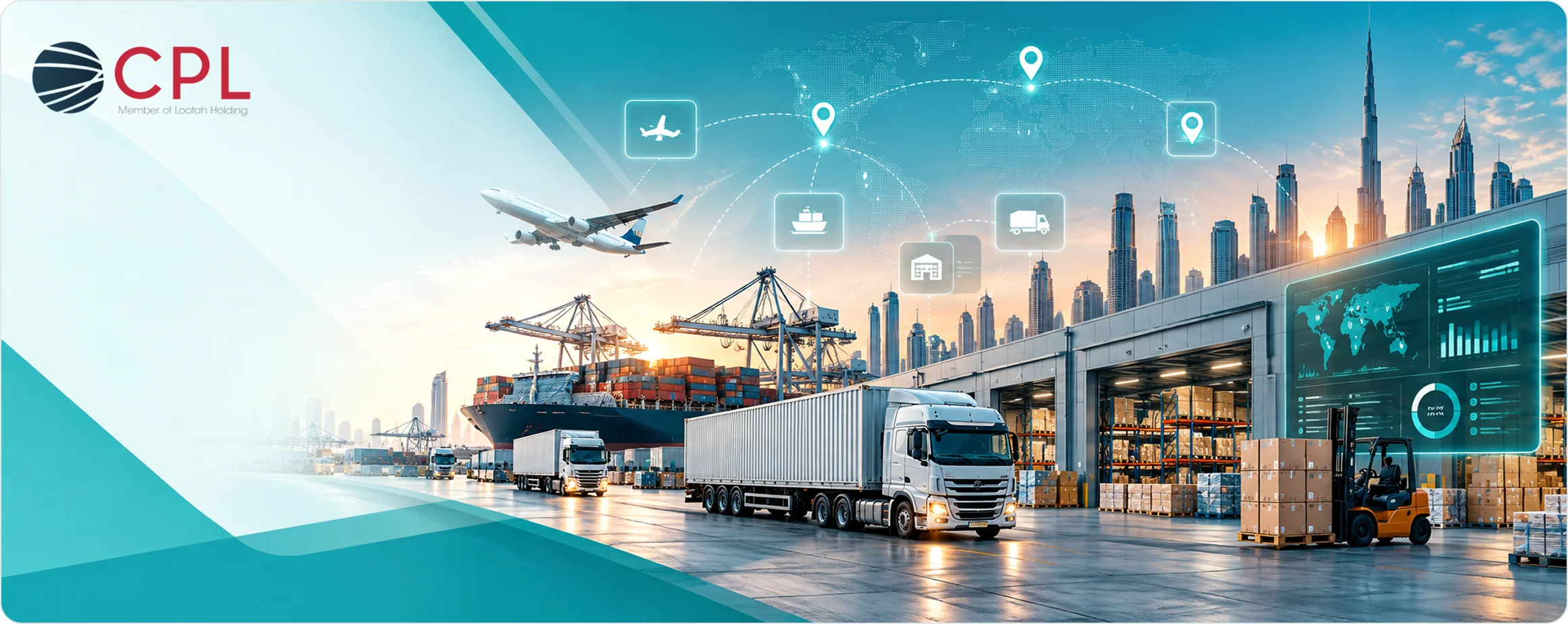


CPL Logistics × LogixPlatform: A case study in rapid implementation and measurable impact
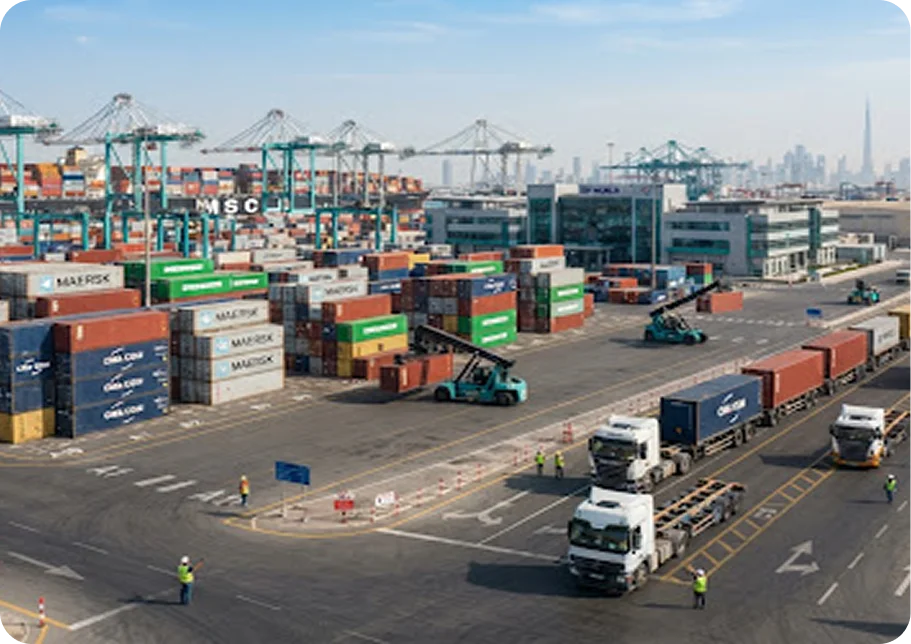
CPL Logistics, the logistics division of Lootah Holding in the UAE, operates from a strategic location at Al Maktoum Airport Street, Dubai—a prime hub connecting air, sea, and land transport networks across the region.
CPL Logistics faced common but critical hurdles that limited efficiency and growth. Their operations were hampered by disconnected systems and manual processes.
Fragmented systems across freight, warehouse, and finance created manual reconciliation burdens and no single source of truth for critical business decisions.
Lack of real-time tracking for shipments, inventory levels, and
performance KPIs hindered
proactive decision-making and
client service quality.
Paper-based warehouse processes and delayed documentation workflows caused bottlenecks in customs clearance, picking, packing, and dispatch operations.
Limited financial integration with
Microsoft 360 resulted in slow
invoicing cycles, billing errors, and
cash flow challenges that
impacted business operations.
An integrated, modular platform designed specifically for complex 3PL operations, combining logistics-specific functionality with enterprise-grade scalability.
Logistics-focused customer relationship management with contract tracking, SLA monitoring, and client-specific workflow management.
Complete freight forwarding suite managing air, sea, and road shipments with AWB, BOL, tracking, and carrier integration capabilities.
Advanced 3PL warehouse management system supporting multi-client inventory, inbound receiving, intelligent picking, and dispatch orchestration.
Comprehensive financial management with automated invoicing, customs duty calculations, and seamless Microsoft 360 synchronisation for accurate reporting.
The LogixGrid team worked alongside CPL’s operations, warehouse, and finance teams to ensure comprehensive business analysis and smooth user adoption through hands-on training sessions.
Business analysis and workflow mapping across all operational areas
Module configuration for FreightNX, WMS, CRM, and Finance systems
Custom workflow creation using NO-CODE engine for client-specific requirements
Rugged mobility device
deployment and warehouse floor integration
Comprehensive user training and successful go-live across all facilities
Order processing time reduced from 7–12 minutes to just 2–4 minutes per transaction
Warehouse productivity increased by 35–50% through optimised workflows and real-time data
Near-perfect accuracy achieved
through rugged device scanning, up from 85–90% baseline
Manual reconciliation effort decreased by 70–80% through automated system synchronisation
Real-time dashboards provide instant access to critical operational data across freight, warehouse, and financial operations—eliminating information silos and enabling proactive management.
Monitor air, sea, and road shipments with real-time status updates, carrier information, and estimated delivery times across all active consignments.
Track inbound receiving, putaway progress, active picking tasks, and dispatch schedules with SKU-level visibility across multi-client inventory.
View invoices generated, customs duties payable, cash flow impacts, and Microsoft 360 synchronisation status for complete financial transparency.
Receive automated notifications for delayed shipments, low stock levels, client SLA breaches, & operational exceptions requiring immediate attention.
The transformation from paper-based processes to mobile-enabled operations revolutionised warehouse productivity, enabling CPL to handle higher volumes with improved accuracy and faster turnaround times.
LogixPlatform’s NO-CODE engine enables CPL to rapidly onboard new clients with unique operational requirements—customising rates, SLAs, routing logic, customs workflows, and reporting formats without writing a single line of code.
This flexibility means CPL can respond to client needs in days rather than months, creating competitive advantage through agility whilst maintaining system stability and reducing dependence on technical resources.
Instant customization of customer rates, invoicing frequencies, and specialized delivery triggers.
Dynamic conditional parameters for cross-border customs declarations and bonded storage rules.
Intuitive visual interfaces allowing operational supervisors to tailor dispatch validations effortlessly.
Enterprise stability guaranteed with isolated version control and immediate rollout capability.
ROI achieved within 60–90 days through operational efficiency gains & accelerated billing cycles
14-day implementation showcasing the power of purpose-built logistics technology
Future-ready architecture supporting business growth and new service offerings
CPL Logistics and LogixGrid have demonstrated that integrated digital transformation—executed with the
right technology partner and shared vision—can revolutionise 3PL operations in record time, delivering
measurable impact across efficiency, visibility, accuracy, and client satisfaction.
Bring all your operations to a single system, streamlining workflows and boosting efficiency.
Business Case Study and Report
Company Overview
Challenges and Objectives
The Process
Proposed Solutions
The Word From Leading multinational 3PL
Metrics
A leading end-to-end logistics solutions provider in India, delivering integrated freight forwarding, warehousing, and supply chain services.
Leading multinational 3PL India is a major Japanese freight forwarding company. The organization provides international air and sea freight forwarding, customs handling, warehousing, and last-mile delivery services.
With a focus on customer service, operational excellence, and a productive work environment, Leading multinational 3PL India serves clients across industries including electronics, automotive, healthcare, and retail.
Its diverse client base requires logistics workflows that can adapt to different operational requirements while maintaining consistent service levels.

As Leading multinational 3PL India expanded its logistics operations, growing client requirements and manual workflows created challenges in efficiency, visibility, and scalability.

Each client had unique storage methods, order processing rules, product handling requirements, and reporting formats. Existing workflows were difficult to adapt without extensive manual intervention.
Difficulty scaling operations, adjusting to new client requirements, and maintaining consistent service levels.

Manual inventory updates, order picking, and shipment scheduling consumed time. Outdated scanning devices also resulted in inaccurate data, double-checking, and rework.
Processing backlogs, extended working hours, increased operating costs, and reduced staff productivity.

Inventory status, shipment tracking, and warehouse performance data were not consistently updated in real time. Information was spread across disconnected systems.
Incomplete operational information, longer decision-making cycles, and difficulty providing timely client updates.

Carrier label generation, printing, organizing, and shipment tracking were handled manually across multiple carrier systems.
Increased risk of label errors, repetitive work, inconsistent delivery
performance, and limited scalability.
The transformation focused on creating a scalable platform that could support client-specific workflows while improving operational efficiency and visibility.
Adapt workflows to diverse client requirements without compromising efficiency.
Connect client ERP and OMS systems to create a cohesive supply chain ecosystem.
Automate inventory, fulfillment, dispatch, and label generation processes.
Provide current inventory, shipment, and warehouse performance information.
LogixGRID leveraged the versatility of LogixPlatform to provide Warehouse Management, Logistics Management, and connected operational capabilities within a unified technology ecosystem.
Warehouse Management System designed to improve inventory accuracy, optimize stock locations, and automate fulfillment processes.
Logistics Management System supporting automated dispatch, delivery tracking, routing efficiency, and integration with connected logistics workflows.
The platform’s API gateway enabled connectivity with diverse client systems, including ERP, TMS, and EDI platforms, while scalable infrastructure supported increasing operational demands.
LogixGRID’s WMS was configured to support different product handling requirements, specialized order workflows, service-level agreements, and proprietary client system integrations.
The implementation of LogixGRID’s Warehouse Management System addressed core operational challenges through improved inventory accuracy, automation, mobility, and data-driven decision-making.
Real-time inventory tracking helped maintain accurate stock information across warehouse locations. Automated picking, packaging, and dispatch reduced manual intervention and supported faster order fulfillment.
Barcode scanning and RFID technology provided a stronger foundation for tracking inventory and shipments, while mobile access allowed warehouse workers to update stock information directly from the warehouse floor.
Advanced reporting and analytics provided operational insights into inventory levels, order fulfillment, and shipping performance, supporting more informed decisions.

The implementation combined process mapping, system customization, phased deployment, staff enablement, and technical collaboration.

Leading multinational 3PL and LogixGRID defined objectives, performance metrics, process requirements, and integration needs. Process mapping identified automation opportunities across warehouse and logistics workflows.
The WMS was configured to support Leading multinational 3PL’s diverse client requirements, specialized product handling, inventory tracking, and carrier label management workflows.
The system was deployed in phases across Leading multinational 3PL warehouses to minimize disruption. Staff training and transition support helped employees adopt the new workflows.
Awareness sessions, employee support, and on-ground assistance helped build confidence and encourage adoption of the new system.
Technical issues and integration challenges were addressed through coordinated LogixGRID and Leading multinational 3PL IT efforts, tailored API configurations, testing, and structured training.
The platform brought together operational capabilities designed to improve accuracy, efficiency, flexibility, and visibility.

The WMS implementation improved operational efficiency, resource utilization, client visibility, and the ability to support growing logistics requirements.
Client-specific customization allowed Leading multinational 3PL to adapt its workflows to specialized product handling, order management, and integration requirements. This flexibility supported a more personalized experience for its diverse client base.
The combination of automation, real-time data, and scalable infrastructure helped Leading multinational 3PL address the complexity of multi-client logistics while strengthening operational reliability.
The following outcomes are the quantified results reported in the supplied case- study document.

Reported results from the case-study document demonstrate improvements in fulfillment speed, cost
efficiency, customer satisfaction, scalability, and adoption.
Order processing time reduced from 2 hours to 1.2 hours per order.
98% inventory accuracy
30% increase in picking and packing speed
Automation and RFID integration reduced labor costs and error-related expenses.
Error-related expenses reduced by 50%.
Operational overheads reduced by 15%.
Reported on-time delivery performance improved from 92% to 99%.
Client satisfaction scores increased by 35%.
Real-time updates reported at 100% uptime.
Client onboarding time was reduced, enabling new clients to be onboarded in seven days.
Order capacity increased by 50%.
Capacity of up to 20,000 orders daily.
Employee training reported a 95% success rate within three weeks. System downtime was maintained at less than 0.1%, and custom API configurations reduced setup duration by 50%.
5 new warehouse locations integrated in three months.
| Performance Area | Reported Outcome |
|---|---|
| Order processing time | 40% reduction, from 2 hours to 1.2 hours |
| Inventory accuracy | 98% |
| Picking and packing speed | 30% increase |
| Labor costs | 25% reduction |
| Error-related expenses | 50% reduction |
| Operational overheads | 15% reduction |
| On-time delivery | Improved from 92% to 99% |
| Client satisfaction | 35% improvement |
| Client onboarding | 60% reduction in onboarding time |
| Order capacity | 50% increase, up to 20,000 orders daily |
| Warehouse integration | Five new locations in three months |
| Employee training | 95% success rate within three weeks |
| System downtime | Less than 0.1% |
The case study highlights several factors that supported the implementation and its operational outcomes.

Close collaboration between Leading multinational 3PL, LogixGRID, and its implementation teams aligned the solution with operational goals and client needs.

Structured training, awareness sessions, and on-ground support helped employees transition to improved workflows.

Flexible workflows and integrations helped Leading multinational 3PL accommodate different client requirements and growing order volumes.

WMS capabilities, RFID, mobile access, automation, analytics, and API
integrations supported operational modernization.
The LogixGRID implementation positioned Leading multinational 3PL India to continue expanding its logistics capabilities through technology- driven agility, improved visibility, and client-specific operational support.
The transformation demonstrates how connected warehouse and logistics systems can help address operational complexity while supporting service reliability and scalable growth.
Flexible workflows that can adapt to changing logistics requirements.
Integrated systems that support consistent data exchange and visibility.
Infrastructure designed to support expanding client and order volumes.
Discover how LogixGRID can help your organization connect warehouse operations, logistics workflows, and scalable technology into one platform.
Every industry has its founding narratives. Tech has the garage. Finance has the crisis. Logistics has the spreadsheet named “FINAL_FINAL_v3”.
But picture this instead.
A logistics manager somewhere in North America opens ten dashboards before coffee, all calibrated to disagree on the same data. She
clicks through them with the practiced resignation of someone fluent in logistical static. WMS here, TMS there, freight system in another
tab, CRM operating on a completely separate timeline. Information everywhere, understanding nowhere.
Each login solves a single function while collectively generating operational drag.
The kind of architecture that emerges when each department solves its own problem in its own decade, leaving behind a digital archaeological site where WMS lives in the Bronze Age, TMS thinks it’s in 2014, and CRM behaves like it’s allergic to integration.
Everyone knows the joke: logistics doesn’t run on software, it runs on the people who remember where the software breaks.
And here’s the part nobody admits out loud: For 3PLs, this fragmentation has quietly become the largest invisible tax on growth and the bill is now too large to ignore.
LogixGRID exists because the industry finally admitted the truth: the problem is not the people. It’s the ecosystem.
What follows is the anatomy of that ecosystem and the strategic realignment taking place among 3PLs who are tired of solving yesterday with yesterday’s tools.
Imagine the scale. Every container, every shipment, every driver, and every consignee is a node in a massive, dynamic network. Every handoff, every status check, and every exception alert is a potential point of failure. The human element, while indispensable for strategy and problem-solving, can’t keep pace with this velocity.
Here’s where the system often breaks:
“In a market exceeding US$100 billion, communication efficiency determines profitability.”
Historically, trade and communication have always been intertwined. In the 19th century, telegraph networks revolutionized shipping by giving port operators real-time access to vessel movements. Today, AI is the modern telegraph, but infinitely faster, smarter and predictive.
A typical 3PL today is a network of isolated subsystems: WMS, TMS, Freight Forwarding, YMS, fleet management, CRM, HRM, and finance systems all orbiting independently. None were designed to speak to each other out-of-the-box.
A 2024 logistics survey captured the industry’s collective sigh: integration with existing systems is the number one barrier to adopting new technology. The fragmentation is so widespread that even world-class 3PLs in Asia, Europe, and North America are slowing themselves down with duplicated data, manual reconciliation, and outdated decision frameworks.
You can see the paradox in action:
The very tools meant to authorize logistics end up suffocating it.
Manhattan Associates summarized it plainly. Distribution, transportation, labor, and yard management often operate in silos, separate truths, separate timelines, separate blind spots. In this world, a customer tracking portal is only as accurate as the slowest, most isolated system behind it.
It is a structural risk.
Siloed systems are expensive in the same way climate change is expensive: slowly, everywhere, and with disproportionate impact.
What makes the logistics industry uniquely interesting is that silos exist everywhere, but each region responds according to its economic patterning.
Asia Pacific
Fast growth created complicated system mosaics, yet the region is now a leader in digital unification. Dimerco’s integrated cloud system is a case study in real-time data flow, API transparency, and eliminating multi-portal fatigue for clients.
Middle East and MENA
Government-driven modernization pushes integration from the top. Saudi Arabia’s Fasah unified customs processes so effectively that clearance times fell from a week to hours. The region is leapfrogging incremental improvements and going straight to unified ecosystems.
Europe and Africa
Europe wrestles with legacy ERPs and country-specific systems but is steadily consolidating through cloud-native platforms. Africa’s younger logistics companies often skip legacy entirely, adopting integrated systems by default.
Latin America
Transitioning rapidly under e-commerce pressure. A Brazilian distributor saw measurable improvements in communication, cost efficiency, and OTIF after moving from fragmented processes to a unified ERP.
North America
Ironically, some of the world’s most sophisticated 3PLs still face massive internal silos due to acquisitions and legacy infrastructure. Even here, 58 percent of 3PLs report integration challenges. Control towers and API-driven architectures are finally bridging the decades-old gaps.
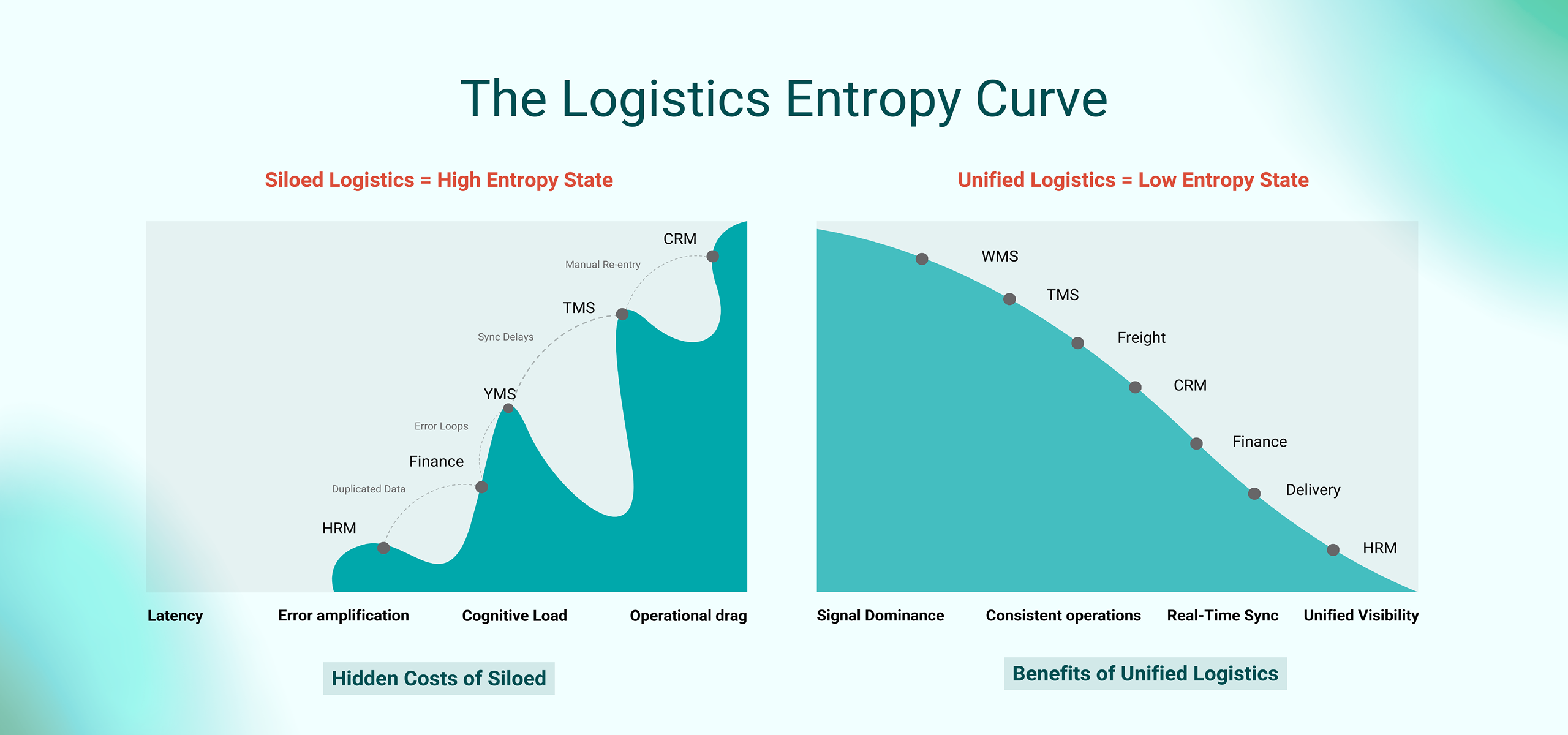
The strategic response to fragmentation falls into several patterns:
LogixGRID doesn’t arrive as a software provider. It arrives as the infrastructure beneath the infrastructure, the part of the stack that finally learns to think in full sentences.
Most logistics conclusions wrap up with optimism.
This one does not.
This one asks a question.
Imagine a warehouse twenty years from now.
Everything is unified, automated, visible, predictable.
Now imagine walking into that warehouse and discovering something strange:
It feels quiet.
Not peaceful.
Not calm.
Quiet in the way a solved puzzle becomes quiet.
No redundant keystrokes.
No conflicting databases.
No midnight reconciliations.
No managers triangulating the truth between systems.
No customers calling because they see gaps before you do.
No operations team doing heroics that should not be necessary.
Just synchrony.
Just clarity.
Just logistics as its own intelligence.
That is the world LogixGRID is designing. Not louder, faster, or shinier.
Just coherent.
And coherence, in the end, is the highest form of sophistication.
It’s simple: upgrade to LogixPlatform today. Move your logistics billing from manual, siloed, error-prone mess to automated, accurate, HASiL-compliant workflows across your entire operation.
Let us help you transform your invoicing, so your operations run smoother, your cash flows faster and your compliance is airtight.
LogixGRID solves the growing problem of fragmentation across WMS, TMS, freight, CRM, finance, and other systems that operate in silos. These disconnected tools create duplicated work, slow decisions, inconsistent data, and major operational inefficiencies. LogixGRID unifies these systems into a single coherent platform so that logistics teams operate with one shared truth.
Fragmentation leads to duplicate data entry, delayed visibility, compounding errors, and poor customer experience. It increases operating costs due to redundant systems, inflated safety stock, and slow decision-making. The PDF states that this creates “margin leakage at scale,” quietly eroding profitability across every shipment.
Regions follow unique patterns:
Top 3PLs use:
These strategies help them shift from reactive patching to predictive, systemwide intelligence.
LogixPlatform is a fully unified, AI-powered logistics operating environment where WMS, TMS, freight, CRM, delivery, and finance exist in one native data model.
LogixFlow is a no-code engine allowing companies to build custom workflows, SLAs, checklists, and validations without engineering. Together, they eliminate digital fragmentation and create operational coherence.
For years, we’ve all heard about 3PLs — the third-party logistics providers that keep goods moving through transportation, warehousing, and fulfillment. They’ve done their job well. But as supply chains grew borderless, layered, and data-hungry, execution alone wasn’t enough. Something bigger had to step in — a model that could see the entire chessboard. Enter Fourth-Party Logistics, or 4PL as we like to wink at it, ¡Hola!
In simple terms, 4PL is a supply chain integrator — it designs, orchestrates, and optimizes the entire network while coordinating multiple 3PLs, carriers, and systems through a control tower model.
Interestingly, the idea isn’t new. It traces back to the mid-1990s, when Procter & Gamble teamed up with Accenture to bring order to its sprawling logistics web. P&G didn’t just need more trucks or warehouses; it needed orchestration — one brain managing the entire operation. That collaboration quietly gave birth to what we now call the 4PL model.
Fast forward to today, and the same concept powers global giants like Maersk and DHL, who run multi-continent networks with real-time control, resilience, and transparency. Talk about a glow-up!
If 3PLs are the skilled drivers, 4PLs are the air-traffic controllers. One executes; the other orchestrates.
Scope: A 3PL handles specific functions — transport, warehousing, or distribution. A 4PL owns the entire strategy, designing and optimizing the ecosystem that multiple 3PLs operate within. It’s the difference between moving goods and moving a supply chain.
Accountability: 3PLs are vendors; 4PLs are single points of accountability. For a shipper, that means one contract, one governance model, and one set of performance KPIs — even if ten different carriers and warehouses are in play. No more “who messed up?”.
Asset Posture: Most 3PLs are asset-heavy. 4PLs stay asset-light, leveraging the right partners, carriers, and technology stacks for agility.
Technology: 4PLs are built on control towers, unified data platforms, and AI-driven insights. They bring predictive visibility across the chain, highlighting risks before they turn into costs.
Substantially, 3PLs execute logistics; 4PLs engineer it. Yes, there’s a difference — and a big one.
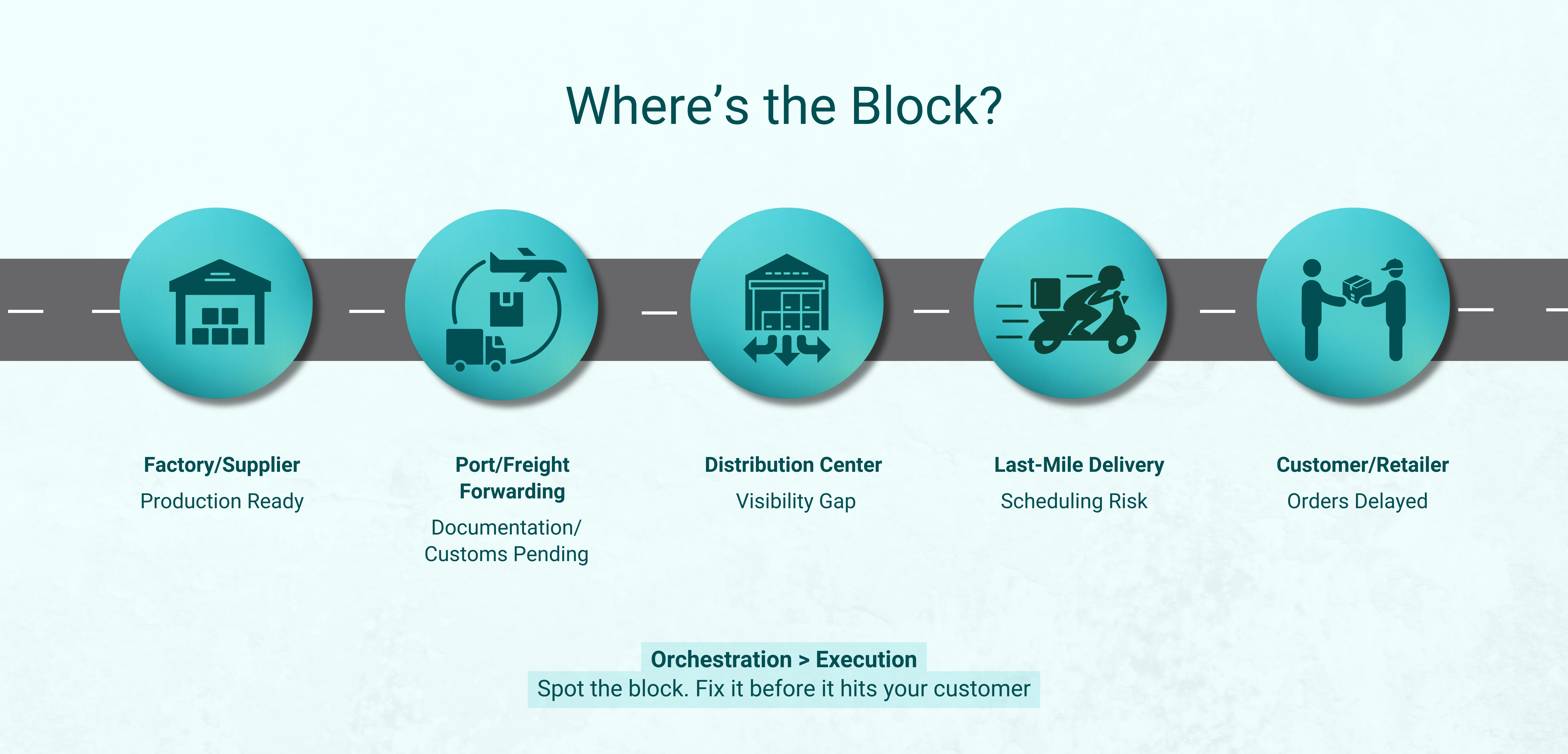
Order Collection (First Mile): Managing multiple vendor pickups, consolidating loads, routing intelligently, and implementing SLAs — all orchestrated by the 4PL while 3PL fleets execute, often powered by LogixDMS.
Imports & Freight Forwarding: 4PLs run procurement of carriers, lane design, documentation, and compliance. Tools like FreightNX create optimized playbooks and audit freight for cost accuracy.
Customs Brokerage: Through digital workflows, HS-code governance, and provider selection, 4PLs assure smooth clearance and data consistency, integrated with the control tower dashboard Alya/Analytics.
Warehousing & Distribution: From designing DC networks to monitoring KPIs across third-party warehouses, the 4PL ensures products are stored and moved efficiently under LogixWMS guidance.
Last-Mile Delivery: They optimize carrier mixes, monitor cost-to-serve analytics, and track OTIF (On-Time-In-Full) performance, turning delivery from a cost center into a differentiator, orchestrated via LogixDMS.
Freight Bill Audit & Payment (FBAP): 4PLs validate contracts, rates, and accessorials, resolving disputes and automating payment workflows to reduce leakages.
COD Oversight & Reconciliation: Especially in retail-heavy supply chains, 4PLs oversee cash-on-delivery processes, reconciliation, and reporting through control-tower dashboards like Alya/Analytics.
Each stage represents a project bucket, connected by one data layer and governed by one accountability framework.
Let’s turn on our imagination: a shipper operates five 3PLs across Asia and Europe. Reports arrive weekly, often through spreadsheets. Inventory visibility lags by 48 hours. Freight disputes grow monthly. Customer service discovers delays only after the damage is done.
What’s missing here — better carriers, better tech, or better orchestration?
The missing piece is orchestration. That Aha! moment.
A 4PL connects every data source, aligns each partner under shared KPIs, and manages exceptions in real time — turning fragmented operations into one cohesive ecosystem.
Inside the 4PL Operating Model
4PL engagements are structured under a Master Services Agreement (MSA) linked to SLAs and OLAs. The pricing model ties directly to performance KPIs like OTIF, cost-to-serve, dispute rate, and dwell time.
Governance follows a cadence: weekly operational reviews, monthly performance dashboards, and quarterly network redesign sessions — aligning cost, service, and agility.
At the heart of every 4PL lies the control tower — a multi-party data layer that integrates TMS, WMS, OMS, and carrier APIs. Exceptions are flagged automatically, not buried in spreadsheets.
A unified data model governs every entity — locations, SKUs, contracts, and partners — assuring consistency across systems.
AI models predict ETA deviations, flag disruption risks, and simulate scenarios, making supply chains proactive rather than reactive. Early-warning systems and what-if simulations drastically reduce expedite costs and disruptions. Basically, it thinks ahead so humans don’t have to panic later.
Modern 4PLs embed sustainability by optimizing mode mix, consolidating loads, and tracking carbon intensity within the same control tower. ESG performance becomes measurable, not just aspirational.
4PLs measure not just how goods move, but how intelligently they move.
These metrics don’t sit in silos — they’re interconnected. When dwell time drops, OTIF improves. When cost-to-serve aligns with carrier compliance, the network gains velocity.
Days 0-30:
Days 31-60:
Days 61-90:
In three months, a shipper can evolve from scattered data and siloed vendors to an orchestrated, measurable, and resilient logistics network.
4PLs succeed when trust is contractual, not just relational.
| Common Challenge | Traditional Approach | 4PL Outcome |
|---|---|---|
| First-mile pickups from multiple vendors | Each 3PL handles separately; coordination relies on manual follow-ups | 4PL designs and governs pickup routes, consolidates shipments, enforces SLAs, executed via managed 3PL fleets |
| Imports & freight forwarding complexity | Shipper or 3PL manages carriers individually; documentation often fragmented | 4PL orchestrates carrier procurement, lane design, compliance, and exception playbooks for seamless movement |
| Customs brokerage inefficiencies | Handled per shipment with inconsistent data; delays common | 4PL selects providers, enforces HS-code governance, and streamlines digital documentation workflows |
| Warehouse & DC network blind spots | 3PLs operate independently; inventory visibility limited | 4PL optimizes network design, strategically places inventory, and governs 3PL KPIs for efficiency |
| Last-mile delivery delays | Carriers selected by proximity or cost; reactive management | 4PL optimizes carrier mix, leverages cost-to-serve analytics, and manages OTIF performance proactively |
| Freight bill disputes & payment delays | Manual audits; slow dispute resolution | 4PL validates contracts/rates, handles accessorials, automates dispute resolution, and streamlines payment workflows |
| Payment collection / COD reconciliation gaps | Carrier-led collections; inconsistent reporting | 4PL defines policies, enables carriers, reconciles payments, and provides consolidated reporting via control tower |
| Lack of end-to-end visibility and predictive insight | Relies on periodic reports; reactive problem-solving | 4PL integrates multi-party data, runs exception-based workflows, and delivers predictive ETAs and KPI dashboards |
| Difficulty improving resilience without increasing cost | Expedited shipments, manual intervention, fragmented visibility | 4PL uses unified data, scenario planning, and early-warning systems to reduce disruptions while maintaining cost efficiency |
| Unclear ROI from 3PLs / fragmented accountability | Multiple vendors with separate KPIs; shipper struggles to measure impact | 4PL provides a single point of accountability, aligning all partners under shared KPIs and transparent governance |
4PL isn’t a replacement for 3PLs — it’s their evolution. As supply chains stretch across continents and data replaces guesswork, the orchestration layer becomes non-negotiable.
In the coming decade, every large enterprise will run a control tower, every logistics network will be data-governed, and every decision will hinge on predictive intelligence.
The 4PL model isn’t a luxury anymore — it’s the foundation of modern logistics resilience.
And those who embrace it early — with the right mix of partners, platforms, and purpose — will be the ones shaping the global logistics map of tomorrow.
Copacker San Diego, a leading Venezuelan warehousing and logistics company, faced mounting operational challenges while managing P&G inventory for its principal client, Empresas Polar, the official distributor of P&G’s products in Venezuela. Reliant on manual processes and Excel-based systems for inventory management, the company struggled with inventory accuracy, real-time visibility, and operational throughput. As the inventory volume grew, these traditional methods fell short of providing accurate, real-time visibility and detailed control across warehouse processes, creating major challenges in receiving, validating and storing shipments efficiently and securely.
To address these challenges, Empresas Polar required a reliable and scalable warehouse management system (WMS) to support growing inventory volumes and ensure efficient fulfillment.
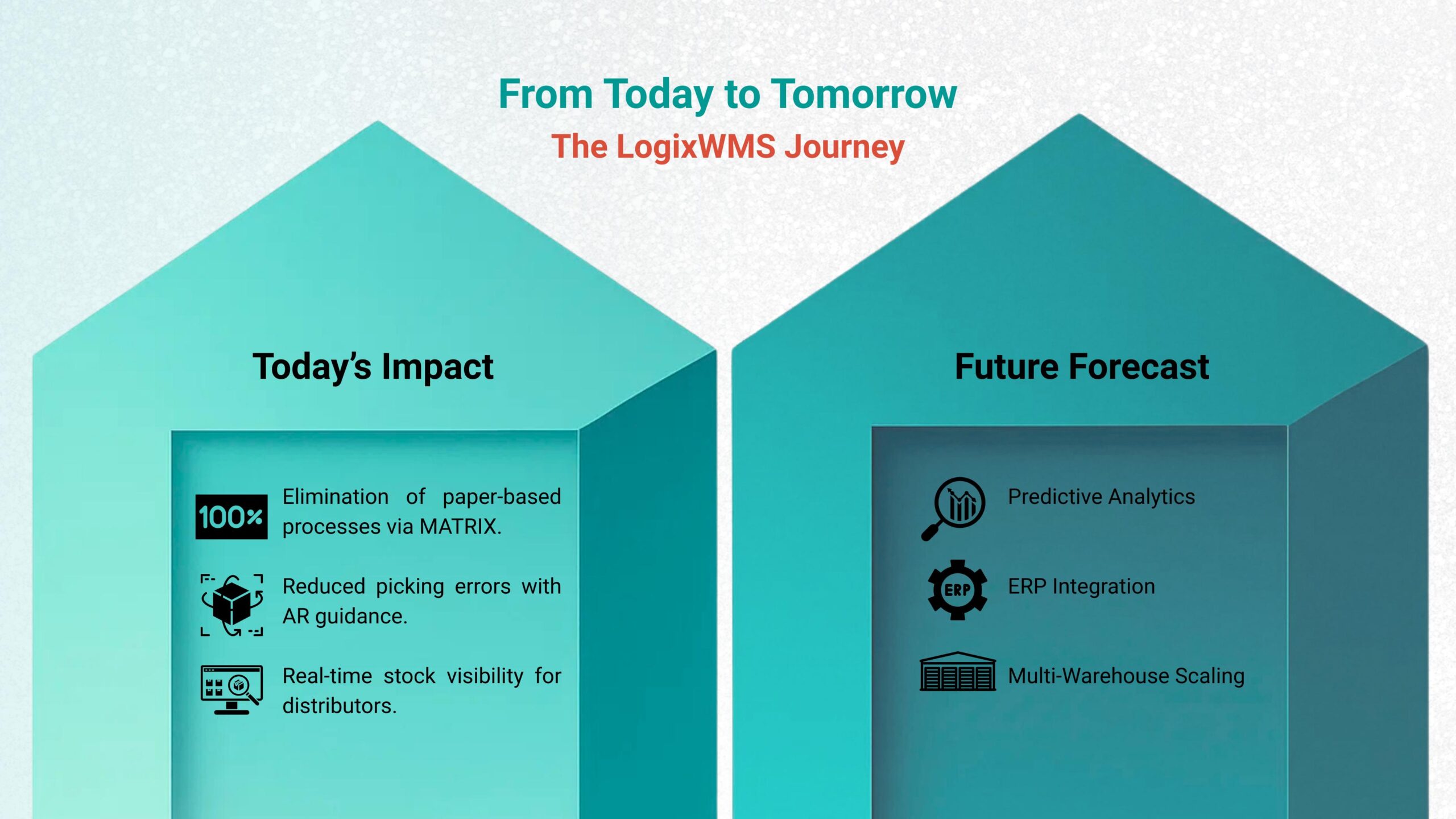
In collaboration with AA Consulting, a trusted local partner, Copacker San Diego adopted LogixWMS, an effective and end-to-end warehouse management solution implemented by LogixGrid. The system delivered real-time visibility, optimized palletization and picking, introduced the MATRIX Mobile app for Android operations, and integrated Augmented Reality (AR) for accuracy in tracking and picking. Post-implementation, Copacker San Diego achieved a leap in inventory accuracy (75% to 98%), increased operational efficiency, reduced costs, and assured near-perfect order fulfillment, directly supporting Empresas Polar’s distribution efficiency for P&G products.
Copacker San Diego plays an important role in Venezuela’s logistics infrastructure, specializing in high-volume warehouse management. As a key partner for Empresas Polar, which markets and distributes P&G inventory across the country, Copacker San Diego’s operations include:
With a highly trained workforce adept at using both computer systems and mobile devices, the company manages complex consumer goods logistics. However, increasing shipment volumes aggravated operational inefficiencies under their manual system.
“Every day felt like chasing after errors in spreadsheets,” recalled a Copacker operations lead. Their team depended heavily on Excel for tracking inventory but mismatches and delays were constant. Staff often spent hours reconciling numbers, while Empresas Polar lost confidence in the data.
From Empresas Polar’s side, the frustration was clear: “We couldn’t trust the numbers, we’d placed an order, and by the time it shipped, stock had already changed. It forced us to over-communicate and double-check everything.”
The result? Internal audits confirmed these struggles, showing just 75% inventory accuracy, meaning one in every four records was wrong. Both teams were caught in reactive firefighting, leaving little room to focus on strategic growth.
Lesson Learned:
Snippet: From spreadsheets to blindfolded operations.
Copacker adopted LogixWMS to replace manual workflows and bring real-time visibility to the warehouse. This was more than a tech upgrade, it restored confidence in data and simplified operations.
“The biggest relief was that everything moved to our phones,” said a warehouse supervisor. “We could scan, label, and update stock on the spot, cutting errors and saving time.”
Empresas Polar also saw immediate benefits: “Finally, we could check livestock levels without extra calls. It gave us confidence to plan and fulfill orders accurately.”
By combining mobile access, AR guidance, and automation, Copacker transformed daily operations, improving efficiency, accuracy, and staff confidence.
Lesson Learned:
Snippet: From spreadsheets to palm-sized control.
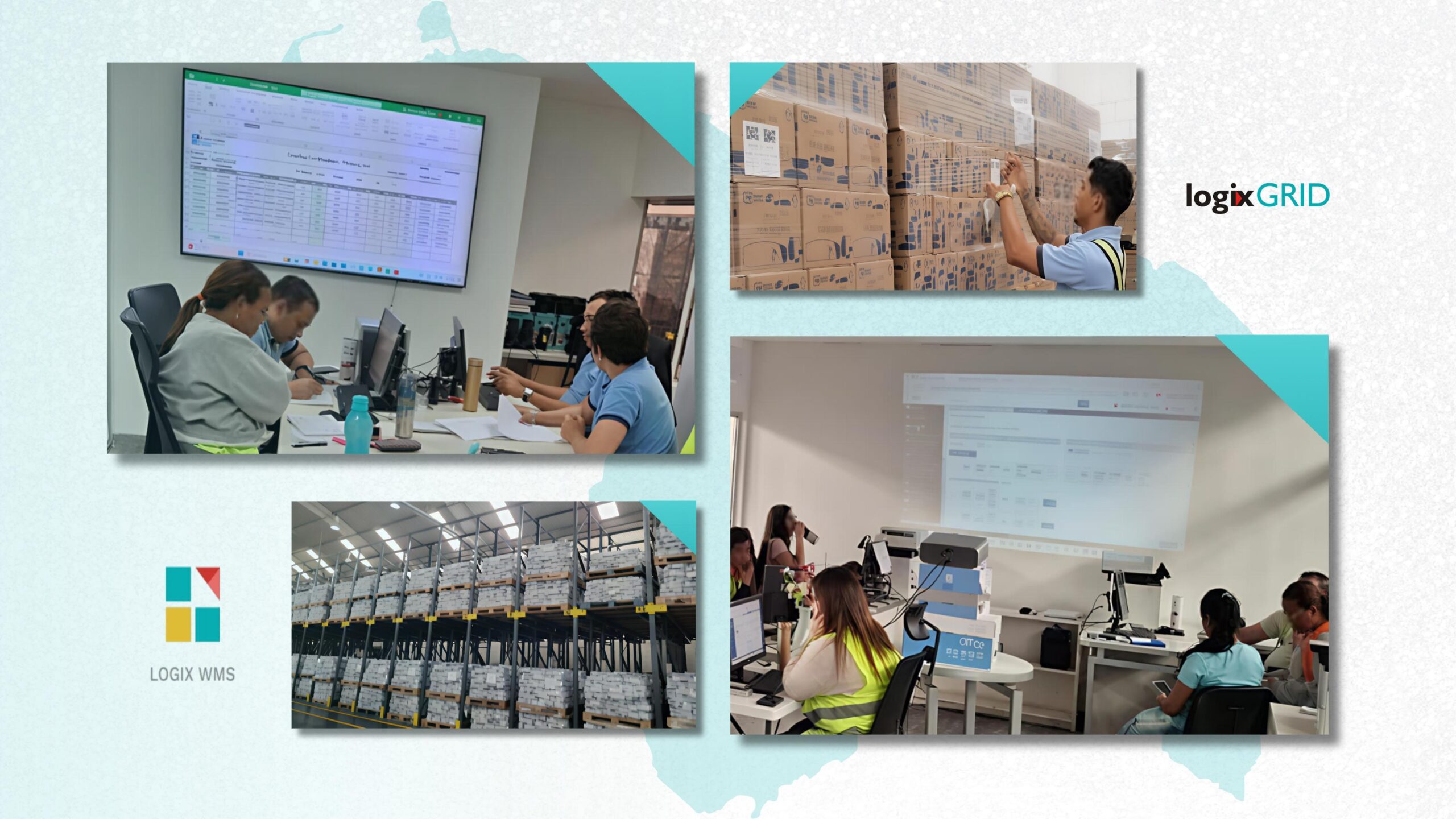
AA Consulting, founded in 2008, is a strategic LogixGrid partner in Venezuela. With expertise in engineering projects, production management, and logistics, the firm has executed over 55 projects across 15 companies in the country.
For Copacker San Diego, AA Consulting ensured:
Their local expertise combined with LogixGrid’s technology created a solution both technically sound and culturally adapted to Venezuela’s logistics environment.
The LogixWMS deployment delivered transformative improvements:
The project’s success was shaped by several critical factors:
Building on this success, Copacker San Diego plans to further expand its use of LogixWMS by:
With LogixGrid and AA Consulting as strategic partners, Copacker San Diego is positioned to strengthen its role as a logistics leader in Venezuela, ensuring reliable, efficient support for Empresas Polar’s distribution of P&G operations.
The partnership between Copacker San Diego, LogixGrid, and AA Consulting altered warehousing operations from manual, error-prone processes into a simplified, technology-driven system. LogixWMS delivered measurable gains in efficiency, accuracy and customer satisfaction, enabling Copacker San Diego to match the rigorous demands of its principal distributor and support the distribution of P&G products across Venezuela.
By aligning technology with operational realities, this case highlights how modern WMS solutions can redefine warehouse management for fast-moving consumer goods in challenging market environments.
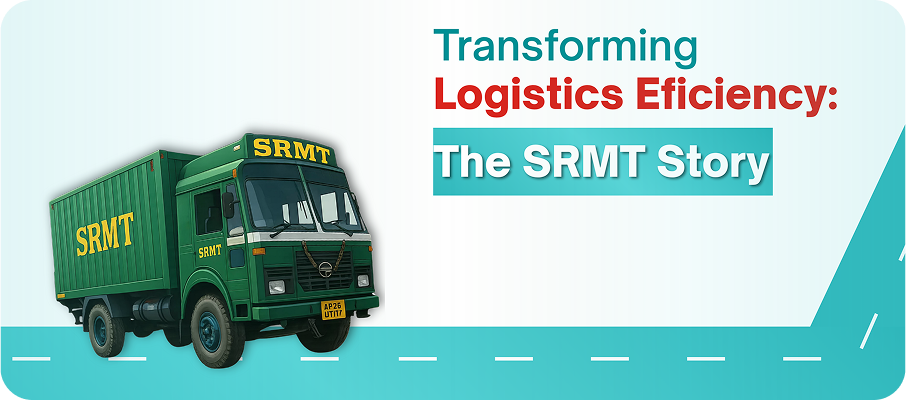
SRMT was founded in 1944 and has since grown to become one of India’s leading providers of logistics and supply chain solutions. They specialise in integrated consolidation, distribution and transportation services for a wide range of industries like automotive, pharmaceuticals, FMCG and manufacturing.
Key CapabilitiesSRMT operates across around 400 locations spread over the 5 states of Andhra Pradesh, Telangana, Tamilnadu, Karnataka and Puducherry, which include the Agents and the Transhipment Centers, supported by well established Infrastructure, Fleet both Own & Hired, skilled workforce and IT systems that enable real-time tracking, efficient inventory management and smooth financial processing.
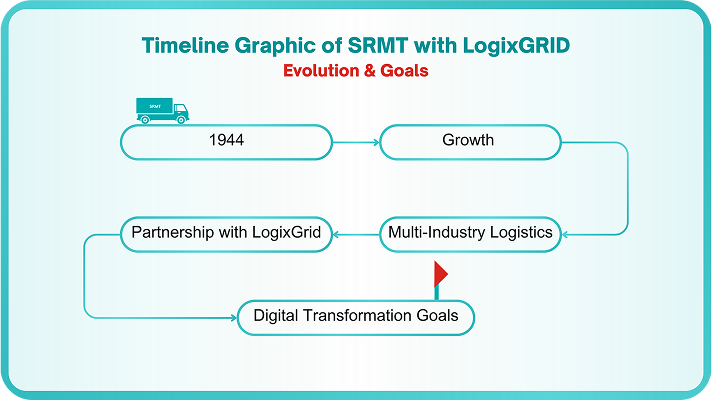
SRMT operates within the fast-paced and complex transportation and logistics industry, where operational efficiency and financial accuracy are important for maintaining competitive advantage.
1. Rate Matrix Computation:
Assuring precise and adaptive rate calculations is important for maintaining competitive pricing without sacrificing profitability.
2. Transit Expense Management:
Controlling variable and fixed transit related costs such as fuel, tolls and driver allowances.
3. Billing Efficiency:
The company requires a simplified billing workflow capable of generating accurate, timely invoices to reduce payment delays and build customer trust.
4. Agent Commission Management:
Accurate, transparent tracking of agent commissions and channel partners.
5. Improved Customer Visibility:
SRMT aims to provide real-time shipment tracking and communication capabilities.
Addressing these challenges LogixGrid ERP supports SRMT’s goal of using technology-driven solutions to improve agility, financial control and customer service.
Generally in the Logistics Industry the Freight Computation is based on 2 parameters: the rate and the weight, the rate varying from sector to sector. In SRMT we had 3 parameters including the distance.
Distance Matrix Submodule for Distance Computation : Automatically computes distance between origin and destination OUs (Operating Units) during shipment creation for real-time freight accuracy.
Customer Contract and Master Contract for Freight Calculation : Supports minimum distance and amount settings in both customer-specific and master contracts. During shipment entry, charges are auto-validated against agreements.
Key Benefits:Impact :
Simplifies pricing, reduces errors and enforces contract-compliant workflows.
Allows configurable demurrage rates based on warehouse storage duration, supporting both customer-specific and master terms.
Automated Demurrage Charge Computation at DeliveryDuring Delivery Run Sheet generation, waybills are auto-verified for demurrage eligibility, triggering alerts.
Demurrage Charge Receipt GenerationDemurrage charges are auto-calculated and collected before delivery.
Key Benefits:Accurate, timely charges improve financial and operational speed.
Allows flexible commission structures based on weight or tariff percentage for both pickup and delivery phases.
Automated Commission CalculationCommission is auto-computed for pickup and delivery using the relevant contract rate matrix.
Integration with Shipment BookingCommission processing is embedded in booking workflows, ensuring simultaneous agent compensation.
Key Benefits:Improves accuracy and speed in agent payments.
Combines customer/master contracts to control tariff-level discount eligibility.
Discount Requisition Process and Approval WorkflowOther than Contract discounts, discounts to walk-in customers is facilitated through the Discount Requisition module. Discount requests are routed to approvers and tracked in- system.
Automated Discount ApplicationApproved discounts are applied automatically; rejections trigger alerts to prevent misuse.
Key Benefits:Enables controlled and consistent discounting aligned with business rules.
Fuel costs are calculated using vehicle-specific mileage; driver allowances are based on travel distance and days.
Vehicle Route Submodule for Route and Fuel Expense ManagementTracks route and fuel data for cost optimization.
Vehicle Movement Submodule for Tracking Vehicle ActivityMonitors delays and inefficiencies via arrival/unloading timestamps.
Key Benefits:Reduces costs and enables smarter logistics decisions.
Tracks vehicle costs and issues alerts for document expiry.
Spare Parts Procurement via Purchase OrdersSupports optimal inventory through timely spare procurement.
Spare Parts Inbound and Inventory ManagementTracks receipts, inventory and inter-OU transfers.
Key Benefits:Improves fleet efficiency through proactive cost and stock management.
Supports all shipment related charges in a unified receipt.
Payment Collection and Posting to AccountsEnsures real time payment updates and account book synchronization.
Invoicing for Regular CustomersEnables multi-shipment invoicing and tracks invoice-level payments.
Key Benefits:Enhances financial discipline and scalability in billing operations.
Captures demurrage, extra, shortage and pilferage data for each waybill.
Print Functionality for Record MaintenancePrint-ready DEPS data supports audits and internal reviews.
Closing DEPS Once ClearedIssues are marked resolved after investigation, maintaining system hygiene.
Key Benefits:Reduces revenue loss and improves issue resolution timelines.
Customers access real time shipment statuses and locations via a 24/7 portal.
Business Reports and InsightsOffers shipment metrics, billing summaries and customizable reports with export options.
Key Benefits:Improves customer satisfaction and strengthens SRMT’s tech-forward image.
SMS APIs send automated milestone alerts for dispatch, arrival and delivery.
Automated Email Notifications for Shipment UpdatesEmails are triggered at each shipment stage with detailed info.
Key Benefits:Strengthens customer trust with consistent, automated updates.
| Feature / Module | Freight Charges | Demurrage | Commission | Discounts | Transit Expenses | Invoicing |
|---|---|---|---|---|---|---|
| Contract Type Used | Customer & Master | Customer & Master | Pickup/Delivery | Customer & Master | Route Based | Customer & Master |
| Automation Enabled | ✓ | ✓ | ✓ | ✓ | ✓ | ✓ |
| Real-Time Integration | ✓ | ✗ | ✗ | ✗ | ✓ | ✓ |
| Approval Workflow | ✗ | ✓ | ✓ Configurable | ✓ | ✗ | ✗ |
| Alerts & Notifications | ✗ | ✓ | ✓ | ✓ | ✓ | ✓ |
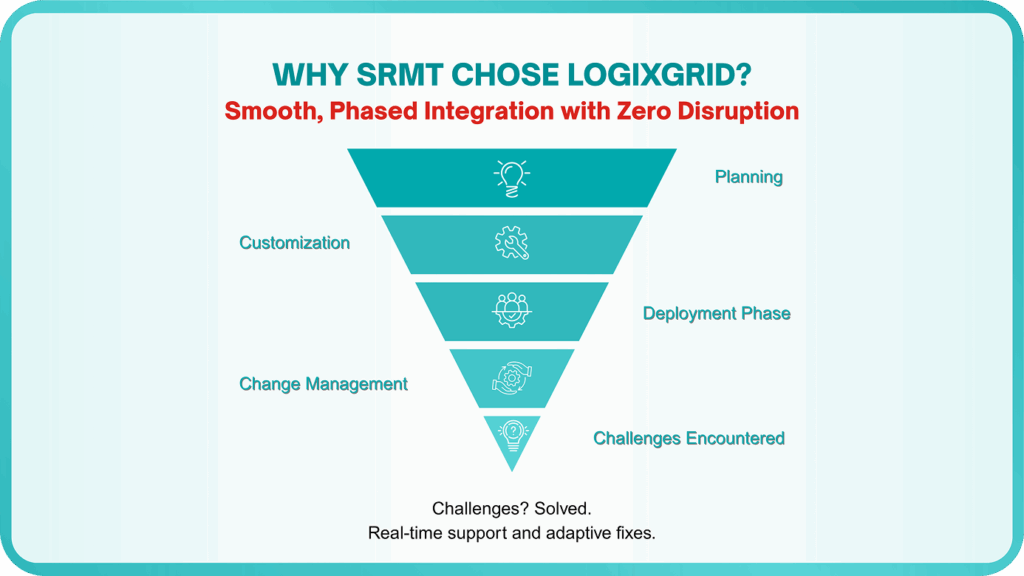
A structured and phased implementation approach was adopted to ensure smooth integration of LogixGRID within SRMT’s operations.
1. Planning Phase : SRMT and LogixGRID collaborated through workshops to align project goals and integration
points, ensuring a smooth transition.
2. Customization and System Configuration : LogixGRID was customized to reflect SRMT’s pricing, workflows and
regional compliance needs.
3. Deployment Phase : Phased deployment included staff training, data migration and testing to minimize risk.
4. Change Management : Change management involved training, documentation and feedback loops to drive user
adoption.
5. Challenges Encountered : Challenges like data issues and user adaptation were tackled through real-time
support and testing.
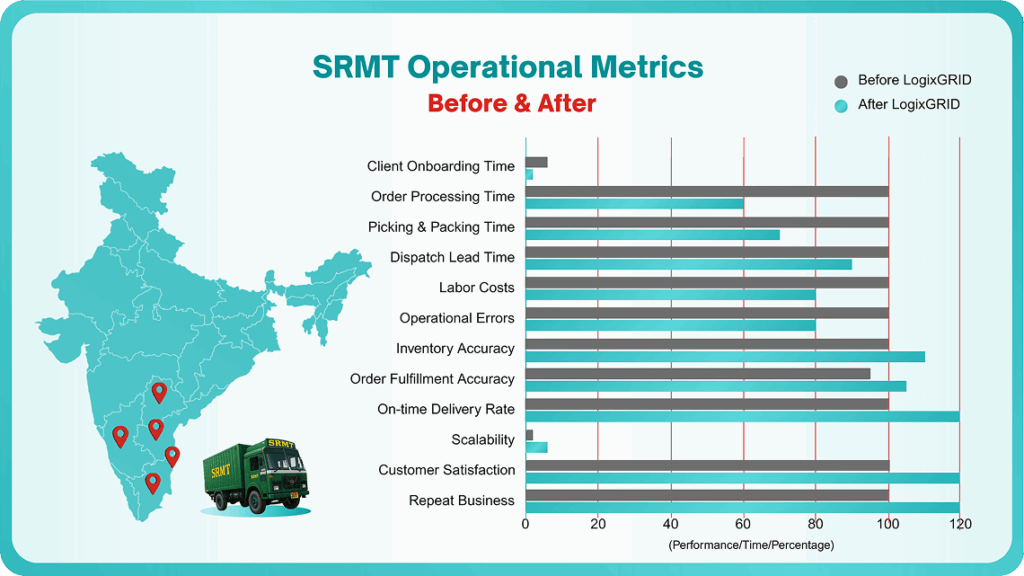
| Area | Freight Charges |
|---|---|
| Client Onboarding | ↓ 40% onboarding time (1–2 weeks vs. 4–6 weeks) |
| Order Efficiency |
↓ 30–50% processing time ↓ 25% picking/packing time ↑ 20% throughput ↓ 15% dispatch lead time |
| Cost Savings |
↓ 20–30% labor costs ↓ 15–25% overheads ↑ 10–15% profitability |
| Accuracy & Visibility |
↑ 98% inventory accuracy ↓ 85% stock discrepancies ↑ 99% order fulfillment accuracy ↑ 20% on-time delivery |
| Scalability | 3× order & client volume with no added manpower or complexity |
| Client Satisfaction |
↑ 15–20% CSAT ↑ 25% repeat business |
– Operations Manager, SRMT
“The LogixGRID invoicing module has simplified our financial workflows remarkably. Automation of invoicing and payment processing minimizes manual mistakes and frees up our team’s time. Real-time payment tracking and automatic ledger updates have enhanced financial transparency and eased reconciliation efforts. We now manage cash flow more proactively, supported by consistently accurate financial data.”
– Finance Manager, SRMT
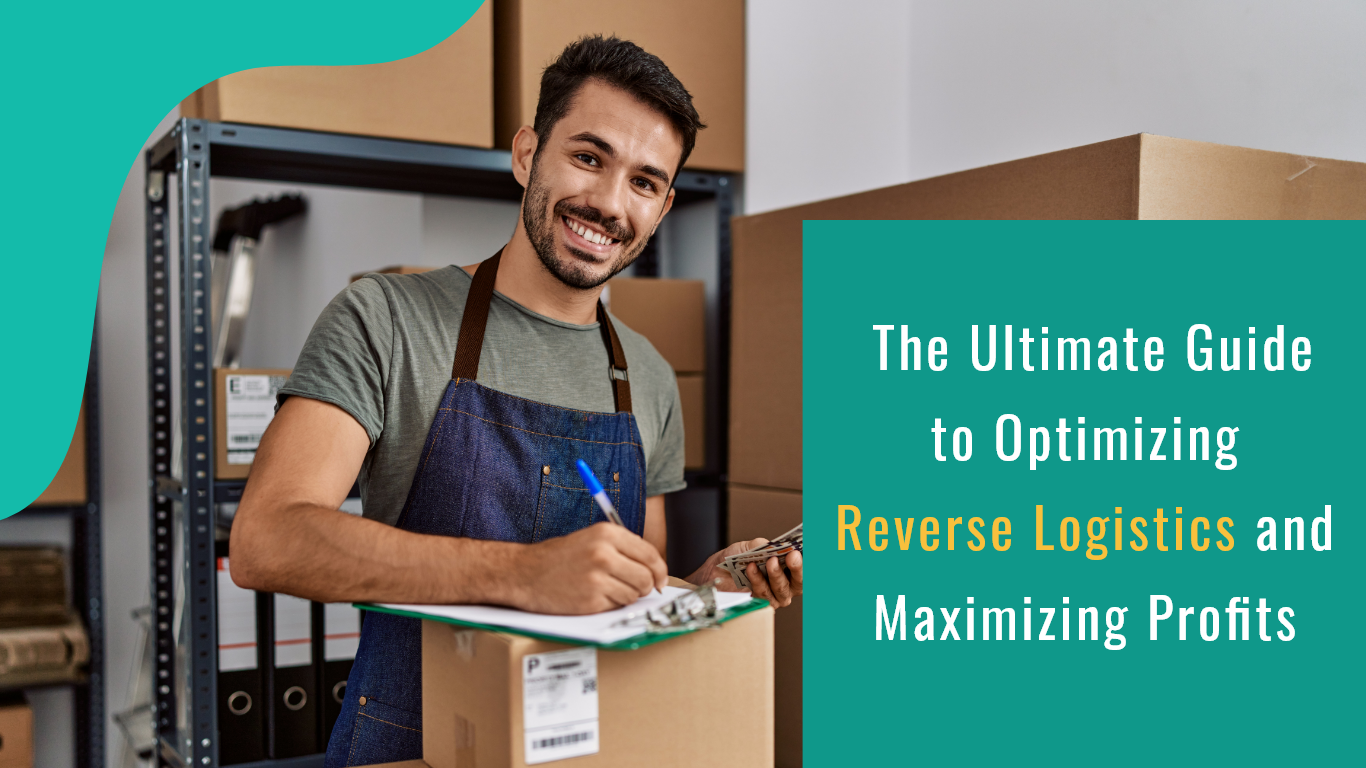
The e-commerce sector is evolving rapidly, driven by changing consumer demands and fluctuating market dynamics. As companies strive to meet customer expectations for faster, cheaper, and more flexible services, the efficiency of supply chains has become a critical success factor. Amid this transformation, a crucial yet often overlooked element of supply chain management has emerged in prominence: reverse logistics. This process, which deals with the return of products from customers back to warehouses or retail locations, is a key driver of operational flexibility, cost efficiency, environmental sustainability, and customer satisfaction.
Reverse logistics is no longer just an afterthought. As consumers become increasingly aware of their rights to returns and exchanges and more conscious of environmental concerns, businesses must prioritize robust reverse logistics systems to stay competitive. Understanding how reverse logistics works, its differences from traditional logistics, and its impact on business operations can equip companies with the tools to enhance customer loyalty and profitability.
Reverse logistics refers to the management of products as they flow backward through the supply chain, from the end consumer to the retailer or manufacturer. These products may be returned due to defects, the need for exchanges, or simply buyer’s remorse. Once received, the products are inspected, categorized, and either resold, refurbished, recycled, or, in cases where no other option exists, disposed of responsibly.
Far from being merely about managing returns, reverse logistics encompasses exchanges, product recalls, recycling programs, and initiatives for refurbishing and redistributing goods. Companies that excel in reverse logistics use it not only to recover costs but also to enhance customer satisfaction and comply with environmental regulations. For instance, brands like Apple have made reverse logistics a core part of their operations, refurbishing returned products and reselling them as certified pre-owned devices.
When implemented strategically, reverse logistics has the power to enhance customer trust, reduce waste, and improve a company’s bottom line. However, doing so requires understanding its nuances and integrating it seamlessly into broader supply chain processes.
Traditional logistics, also known as forward logistics, focuses on the movement of goods from the manufacturer to the end customer. It involves production, inventory management, warehousing, and distribution. In contrast, reverse logistics operates in the opposite direction, beginning with the customer and moving backward to the supplier or manufacturer.
The key distinction lies in complexity. While forward logistics is relatively linear, reverse logistics must account for additional challenges like tracking returns, assessing the condition of products, managing restocking or recycling processes, and ensuring proper disposal of unusable items. Furthermore, reverse logistics often involves coordination across multiple touchpoints, including retail locations, warehouses, and third-party logistics providers.
The increasing volume of e-commerce returns—estimated at over 20% of all online purchases—has highlighted the need for efficient reverse logistics. Poorly managed returns can erode profits and damage customer relationships. Conversely, a well-executed reverse logistics strategy can help businesses recover value from returned goods, enhance customer satisfaction, and establish a competitive edge in the market.
As e-commerce continues to dominate global retail, the emphasis on reverse logistics has grown. Today’s digital marketplace is marked by high customer expectations for easy returns and exchanges. In addition, environmental concerns have prompted companies to rethink their end-of-life product strategies.
A robust reverse logistics system impacts several critical areas of a business:
The importance of reverse logistics goes beyond short-term gains; it’s a strategic imperative for businesses looking to thrive in the competitive e-commerce landscape.
Given the challenges of managing returns, companies must adopt proactive measures to minimize return rates and optimize the reverse logistics process.
The first step to reducing returns is ensuring that products meet or exceed customer expectations. Implementing stringent quality control measures during manufacturing can prevent defects and inconsistencies from reaching consumers. By sourcing materials from reliable suppliers and conducting regular product testing, businesses can maintain high standards of quality.
Take Toyota, for instance, whose rigorous quality control processes have helped it maintain a reputation for reliability. Such measures not only reduce returns but also foster customer loyalty and trust.
Mismatched expectations are a leading cause of returns in e-commerce. Providing detailed and accurate product descriptions, along with high-quality images, can help customers make informed decisions. For fashion retailers, offering comprehensive sizing charts and virtual fitting tools can significantly reduce return rates.
Brands like ASOS and Zappos have successfully reduced returns by investing in tools that provide personalized sizing recommendations and showcase products from multiple angles. Additionally, user reviews and Q&A sections allow potential buyers to address their concerns before purchasing.
Accessible and responsive customer support can resolve issues without necessitating a return. By offering multiple support channels—such as live chat, email, and phone—businesses can address customer concerns quickly and effectively.
Proactive communication is equally important. Notifying customers about shipping delays or product issues in advance can prevent misunderstandings that lead to returns. Amazon’s success in this area is a testament to the value of keeping customers informed throughout the purchasing journey.
Return data provides valuable insights into why products are being sent back. By analyzing patterns and soliciting customer feedback, companies can identify problem areas and implement corrective actions. For example, if a particular product has a high return rate, the company can investigate whether the issue lies in its design, quality, or description.
Brands like Dell use return data and customer feedback to continuously improve their products and services, demonstrating the power of data-driven decision-making in reverse logistics.
Technology plays a pivotal role in streamlining reverse logistics. Advanced tools such as AI-driven analytics, real-time tracking systems, and automated notifications can enhance efficiency and improve the customer experience.
Companies that invest in technology are better equipped to handle the complexities of reverse logistics while maintaining high levels of customer satisfaction.
In an era of heightened environmental awareness, sustainability is a key consideration for reverse logistics. Businesses are increasingly adopting circular economy principles, which prioritize reusing and recycling products to minimize waste.
For example, Patagonia’s Worn Wear program encourages customers to return used clothing for repair or resale. This not only extends the lifecycle of products but also reinforces the company’s commitment to sustainability.
By integrating eco-friendly practices into reverse logistics, businesses can reduce their environmental footprint while enhancing their brand image.
LogixPlatform offers a comprehensive reverse logistics solution designed to address the unique challenges of e-commerce. Its platform integrates advanced technologies, such as AI-driven analytics and real-time tracking, to streamline the return process and optimize resource allocation.
Key features of LogixPlatform’s solution include:
By leveraging these capabilities, LogixPlatform enables businesses to turn reverse logistics into a competitive advantage.
Reverse logistics is no longer a secondary concern for e-commerce businesses; it’s a strategic necessity. From improving customer satisfaction to enhancing sustainability and reducing costs, the benefits of a well-executed reverse logistics strategy are immense.
As consumer expectations continue to evolve, businesses must adopt proactive measures to minimize returns and optimize their reverse logistics processes. By investing in quality control, accurate product information, responsive customer support, and advanced technology, companies can navigate the complexities of reverse logistics with ease.
In the fast-paced world of e-commerce, staying ahead requires a holistic approach to supply chain management—one that includes a robust and efficient reverse logistics system. For businesses seeking to enhance their capabilities, platforms like LogixPlatform offer the tools and insights needed to succeed. With the right strategies and technologies, reverse logistics can become a cornerstone of growth and sustainability in the competitive e-commerce landscape.
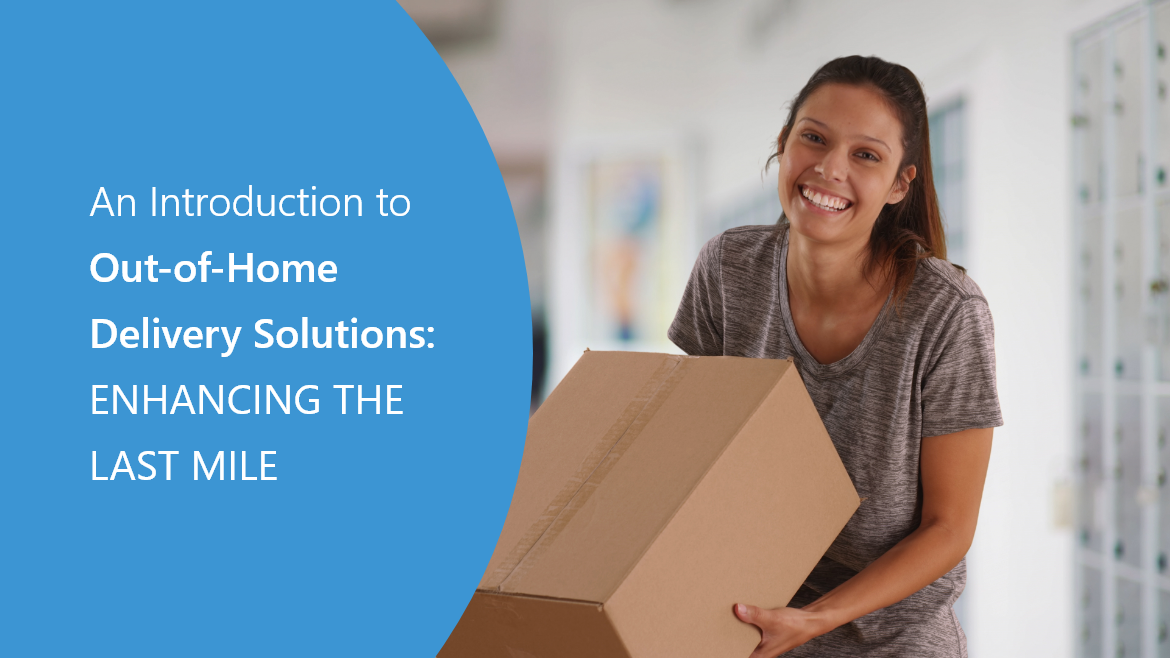
In the ever-changing world of logistics, innovation is the driving force behind consumer satisfaction and operational efficiency. Among the latest advancements, Out-of-Home (OOH) delivery solutions are transforming how businesses cater to consumer needs. By providing flexible, convenient options such as lockers, retail stores, and dedicated pick-up points, OOH delivery addresses the challenges of traditional home delivery while responding to the increasing demands of e-commerce.
The rise of OOH delivery solutions reflects a global shift in how logistics providers and retailers approach the “last mile” of delivery. In regions such as Europe, the trend has gained significant traction. According to the European Out-of-Home Delivery Options Survey 2022, an impressive 65% of consumers have used OOH delivery services at least once, signaling its growing importance in the logistics ecosystem.
This article delves into the fundamentals of OOH delivery, explores its benefits, and highlights best practices for businesses looking to integrate such solutions into their operations. We’ll also examine the evolving consumer landscape, the role of technology in advancing these services, and how companies like LogixPlatform are leading the charge with innovative PUDO (Pick-Up and Drop-Off) solutions.
At its core, Out-of-Home delivery refers to the practice of delivering parcels to specific locations where consumers can collect them at their convenience. These locations range from parcel lockers and convenience stores to post offices and purpose-built pick-up points. Unlike traditional home delivery, where the consumer is required to be available to receive a package, OOH delivery gives recipients the flexibility to choose when and where they retrieve their parcels.
The popularity of OOH delivery can be attributed to shifting consumer preferences, particularly among urban populations with unpredictable schedules. As lifestyles grow busier and the volume of online shopping continues to climb, OOH delivery offers a practical solution that benefits both consumers and logistics providers.
The growth of OOH delivery solutions is a response to the challenges inherent in home delivery. Failed delivery attempts, inconvenient delivery windows, and growing urban congestion have exposed inefficiencies in traditional methods. For consumers, OOH delivery represents freedom and convenience. For retailers and logistics companies, it is an opportunity to optimize operations, reduce costs, and improve sustainability.
A study by McKinsey & Company found that 70% of consumers prefer OOH delivery options because of the flexibility they offer. This preference is particularly strong in urban areas, where population density and traffic make doorstep delivery less practical. For businesses, offering multiple delivery options helps tap into this growing demand while improving the customer experience.
The benefits of OOH delivery extend beyond convenience for the consumer. It offers retailers and logistics providers new ways to improve efficiency, sustainability, and customer satisfaction.
Integrating OOH delivery into your logistics strategy requires careful planning and attention to detail. Here are some best practices to ensure a successful implementation:
The checkout process is a critical touchpoint for offering OOH delivery. Retailers should ensure that customers can easily view and select available pick-up locations. Interactive maps and filters that display nearby options are particularly effective. Clarity and simplicity are essential to avoid frustrating customers or deterring them from completing their purchase.
Clear communication is vital to building trust and ensuring a smooth customer experience. Retailers should provide detailed instructions on how to pick up parcels, including notifications and reminders about parcel availability and pick-up deadlines. Visual aids, such as video guides or infographics, can further simplify the process for first-time users.
The success of an OOH delivery network depends heavily on the strategic placement of pick-up locations. Collaborating with logistics providers to identify high-traffic areas—such as urban centers, retail hubs, and transportation terminals—can maximize convenience for customers. Businesses should also consider customer preferences, such as proximity to workplaces or residential areas.
Technology plays a crucial role in enhancing the efficiency and appeal of OOH delivery. Features like real-time tracking, automated notifications, and AI-driven analytics can improve operational performance and provide a better customer experience. For example, predictive analytics can help logistics providers forecast demand for certain pick-up locations, enabling more effective resource allocation.
Pick-Up and Drop-Off (PUDO) solutions are at the heart of OOH delivery, enabling businesses to streamline operations and offer a seamless experience to consumers. An effective PUDO solution combines extensive network coverage, robust security, and advanced features such as real-time tracking and automated notifications.
For example, LogixPlatform’s PUDO solution exemplifies best-in-class design, offering a comprehensive network of pick-up points, a user-friendly interface, and seamless integration with e-commerce platforms. Its focus on sustainability and scalability ensures that businesses can adapt to evolving market demands while maintaining efficiency and reliability.
As e-commerce continues to evolve, the importance of OOH delivery will only grow. With urbanization, changing consumer habits, and technological advancements shaping the logistics landscape, businesses must stay ahead of the curve by adopting flexible, innovative delivery solutions.
OOH delivery is not just a response to current challenges; it is a forward-looking strategy that positions retailers and logistics providers for long-term success. By prioritizing convenience, sustainability, and customer satisfaction, businesses can build stronger relationships with their customers and remain competitive in a dynamic market.
For businesses seeking a reliable and scalable OOH delivery solution, LogixPlatform’s PUDO offering sets the benchmark. With features like real-time tracking, secure storage, and intuitive user interfaces, it provides a seamless experience for both retailers and consumers. The solution’s commitment to sustainability and operational efficiency further enhances its value, making it a smart choice for businesses of all sizes.
By choosing LogixPlatform’s PUDO solution, retailers can unlock the full potential of OOH delivery, ensuring satisfied customers, reduced costs, and a positive environmental impact. As the logistics industry continues to innovate, solutions like these will be at the forefront of shaping the future of delivery. Learn more about how LogixPlatform can elevate your delivery capabilities, click here for detailed insights into our PUDO solutions.
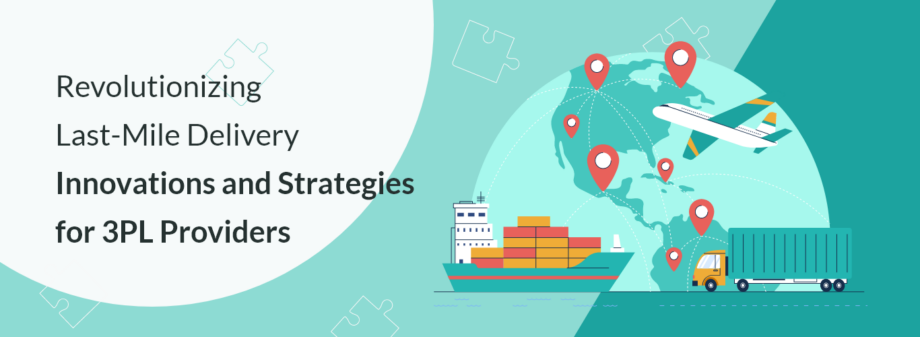
The final stage of delivery, known as last-mile delivery, has become an essential part of the supply chain, significantly affecting customer satisfaction and brand reputation. Due to the swift expansion of e-commerce and rising customer demands for speedy, reliable, and convenient deliveries, companies face growing pressure to innovate and enhance their last-mile delivery processes. This article delves into strategies to transform last-mile delivery and strategies for 3PL providers.
Improved Customer Satisfaction: Last-mile delivery represents the closest interaction between the retailer or service provider and the customer. This stage significantly influences overall customer satisfaction as it is the point where customers receive their orders. Timely, efficient, and convenient deliveries can enhance customer loyalty and encourage repeat business. According to a 2023 survey by Capgemini, 55% of consumers stated that they would switch to a competitor if the delivery service was unsatisfactory.
Competitive Advantage
In today’s competitive market, superior service can differentiate companies. Providing fast and reliable last-mile deliveries can be a significant competitive advantage, especially in e-commerce, where quick turnaround times are highly valued. A McKinsey report highlighted that 75% of consumers expect same-day delivery, reflecting the urgency for businesses to meet these expectations to stay ahead.
Cost Efficiency
Last-mile deliveries account for a significant portion of the total delivery cost—estimated at around 53% by Business Insider Intelligence. Optimizing last-mile logistics can help companies reduce expenses related to fuel, labor, and vehicle maintenance. Efficient routes and delivery scheduling can minimize unnecessary miles traveled and idle time, thereby improving cost efficiency.
Urbanization and Population Growth
Increasing urbanization and population density in many regions have surged the demand for last-mile delivery services. Delivering goods to densely populated areas presents unique challenges such as traffic congestion, limited parking, and narrow streets. Efficient last-mile solutions are essential to address these challenges and meet the growing demand for urban deliveries.
Urbanization and Population Growth
Consumers today expect greater flexibility and convenience in their delivery options. Offering multiple delivery choices, such as same-day delivery, time-specific delivery windows, and alternative pickup locations, enhances customer satisfaction and meets diverse needs and preferences. Research by Deloitte indicates that 88% of consumers are willing to pay for same-day or faster delivery services.
E-commerce Growth
The rapid growth of e-commerce has intensified the importance of last-mile deliveries. As more consumers shop online, the demand for efficient and reliable delivery services has increased exponentially. Retailers and logistics providers must continually innovate and optimize their last-mile operations to keep pace with the evolving demands of e-commerce.
Automation technologies are leading a significant transformation in last-mile operations, providing innovative solutions to overcome enduring challenges. Here are some of the main technologies revolutionizing last-mile logistics:
Advanced Route Optimization
Traditional methods of manual route planning are often inefficient and error-prone. However, with advanced route optimization software and the integration of GPS tracking systems, companies can analyze data in real-time to find the most efficient delivery routes. These algorithms consider various factors such as traffic patterns, delivery windows, and vehicle capacity to ensure deliveries are made cost-effectively and promptly. GPS tracking allows route optimization systems to make dynamic adjustments, reroute vehicles, and ensure deliveries stay on schedule, enhancing accuracy and efficiency.
Robotics and Automation in Warehouses
Efficiency in last-mile logistics begins at the core of the supply chain—in distribution centers and warehouses. The use of robotic arms, conveyor belts, and automated guided vehicles (AGVs) can greatly accelerate order processing. For instance, Amazon’s use of Kiva robots has increased warehouse efficiency by 20%, according to a 2022 report. Integrating robotic systems ensures precision and reliability in last-mile logistics.
Smart Lockers and Delivery Points
Smart lockers placed at convenient locations allow customers to pick up their packages at their convenience. These lockers can be accessed via QR codes or mobile apps, reducing the need for direct doorstep delivery and allowing for flexible pick-up times. Automated parcel stations store multiple packages securely, enhancing delivery flexibility.
Data Analytics and IoT
Data analytics can predict delivery times and optimize routes based on traffic patterns, weather conditions, and other factors. Internet of Things (IoT) devices track packages in real-time, providing customers with accurate delivery status updates and helping logistics companies manage their fleets more efficiently. Real-time tracking improves transparency and allows for better management of delivery schedules.
Partnering with Third-Party Logistics Providers
Collaborating with third-party logistics providers (3PLs) who excel in guaranteeing timely deliveries is an efficient approach. These providers manage and optimize distribution networks, enabling companies to enhance supply chain efficiency. By delegating logistics functions to 3PLs, companies can focus on their core activities while leveraging the expertise and resources of the logistics providers.
1. Enhanced Customer Experience
– Transparent Communication: Providing customers with real-time updates and multiple communication channels enhances transparency and trust. Real-time notifications about order status, delays, or delivery confirmations are crucial.
– Flexible Delivery Options: Offering same-day, next-day, and scheduled delivery options caters to diverse customer preferences. Flexibility in delivery schedules can significantly improve customer satisfaction.
– Easy Returns: Simplifying the return process enhances customer satisfaction and loyalty. A streamlined returns process, supported by easy-to-use online portals and efficient reverse logistics, is essential for customer retention.
2. Data-Driven Decision Making
– Big Data Analytics: Utilizing big data to understand delivery patterns, optimize routes, and improve operational efficiency is critical. Data analytics can help identify trends, forecast demand, and streamline logistics processes.
– Customer Feedback Analysis: Leveraging customer feedback to make informed improvements in service is vital. Regularly analyzing feedback can help identify pain points and areas for enhancement, ensuring continuous service improvement.
3. Strategic Partnerships
– Collaborations with Tech Firms: Partnering with technology companies to integrate advanced delivery solutions can drive innovation. Collaborations can bring in expertise in areas like AI, machine learning, and automation, enhancing last-mile logistics.
– Alliances with Retailers: Working closely with retailers to ensure seamless supply chain and last-mile delivery processes fosters a collaborative approach. Effective partnerships can lead to synchronized operations and improved service delivery.
4. Scalable Infrastructure
– Micro-Warehousing: Establishing small, localized warehouses reduces delivery times and costs. Micro-warehouses located close to urban centers can significantly enhance delivery speed and efficiency.
– Dynamic Fleet Management: Scaling the delivery fleet up or down based on demand fluctuations ensures optimal resource utilization. Dynamic fleet management systems can adjust to peak and off-peak periods, maintaining efficiency.
5. Technology Integration
– Unified IT Systems: Integrating various IT systems ensures smooth data flow and coordination between different stages of delivery. Unified systems enhance visibility and control over logistics operations.
– Blockchain: Utilizing blockchain for secure and transparent tracking of goods can enhance trust and efficiency. Blockchain technology ensures data integrity and provides a transparent, tamper-proof record of transactions.
Reverse Logistics and Return Management: Efficient return management is crucial for maintaining customer satisfaction and reducing costs. According to the National Retail Federation, returns accounted for $428 billion in lost sales for US retailers in 2020. Implementing robust reverse logistics strategies can help recover value from returned goods, minimize losses, and enhance customer loyalty.
Customer Satisfaction: A study by MetaPack revealed that 96% of consumers consider delivery a key part of their online shopping experience. Ensuring timely and reliable last-mile deliveries can significantly boost customer satisfaction and loyalty.
Delivery Efficiency: The use of drones and autonomous vehicles is becoming increasingly prevalent in last-mile delivery. Companies like UPS and Amazon are pioneering the use of drones, which can significantly reduce delivery times and costs, especially in urban areas.
Cost Reduction: Efficient route planning and optimization can lead to substantial cost savings. According to a report by Geotab, route optimization can reduce fuel consumption by up to 20%, translating into significant cost reductions.
For 3PL providers, the revolution in last-mile delivery is driven by a combination of technological innovations and strategic planning. By adopting advanced solutions and strategies such as those offered by eComGlobus, 3PL providers can enhance their service offerings, increase operational efficiency, and meet the evolving demands of customers. Embracing these changes is essential for staying competitive in the dynamic logistics industry.
If you are ready to improve your reverse logistics management or looking for a solution to increase efficiency, go to eComGlobus. For more insights on warehouse technology and optimizing warehouse processes, follow us on LinkedIn and Facebook. If you have other inquiries or suggestions, please contact us here. We’ll be happy to hear from you.
In the dynamic landscape of e-commerce and logistics, precision in order processing and shipping logistics is imperative for sustaining customer satisfaction and operational efficiency. This business case encapsulates the transformative journey of two distinct entities – an e-commerce company grappling with burgeoning sales and a mid-sized logistics firm endeavoring to optimize shipping processes. Through the implementation of the LogixPlatform and integration of shipping Application Programming Interfaces (APIs), both entities experienced remarkable improvements in efficiency, cost-effectiveness, and customer experience.
A mid-sized logistics company confronted obstacles in optimizing shipping processes:
The integration of LogixPlatform shipping APIs yielded significant business outcomes:
In conclusion, the integration of LogixPlatform and shipping APIs exemplifies the transformative potential of technological solutions in revolutionizing logistics and e-commerce operations. By surmounting operational hurdles, both entities realized enhanced efficiency, cost savings, and elevated customer satisfaction, underscoring the pivotal role of technological innovation in driving business growth and competitiveness in today’s digital era.