
LogixGRID | Logistics and Warehouse Automation Platform

Automated vs Manual Order

Automated vs Manual Order

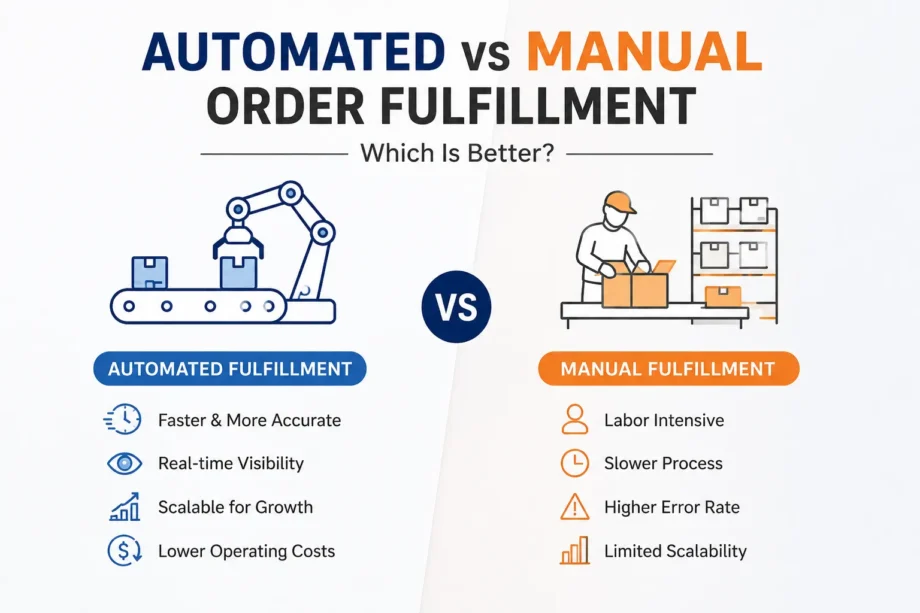
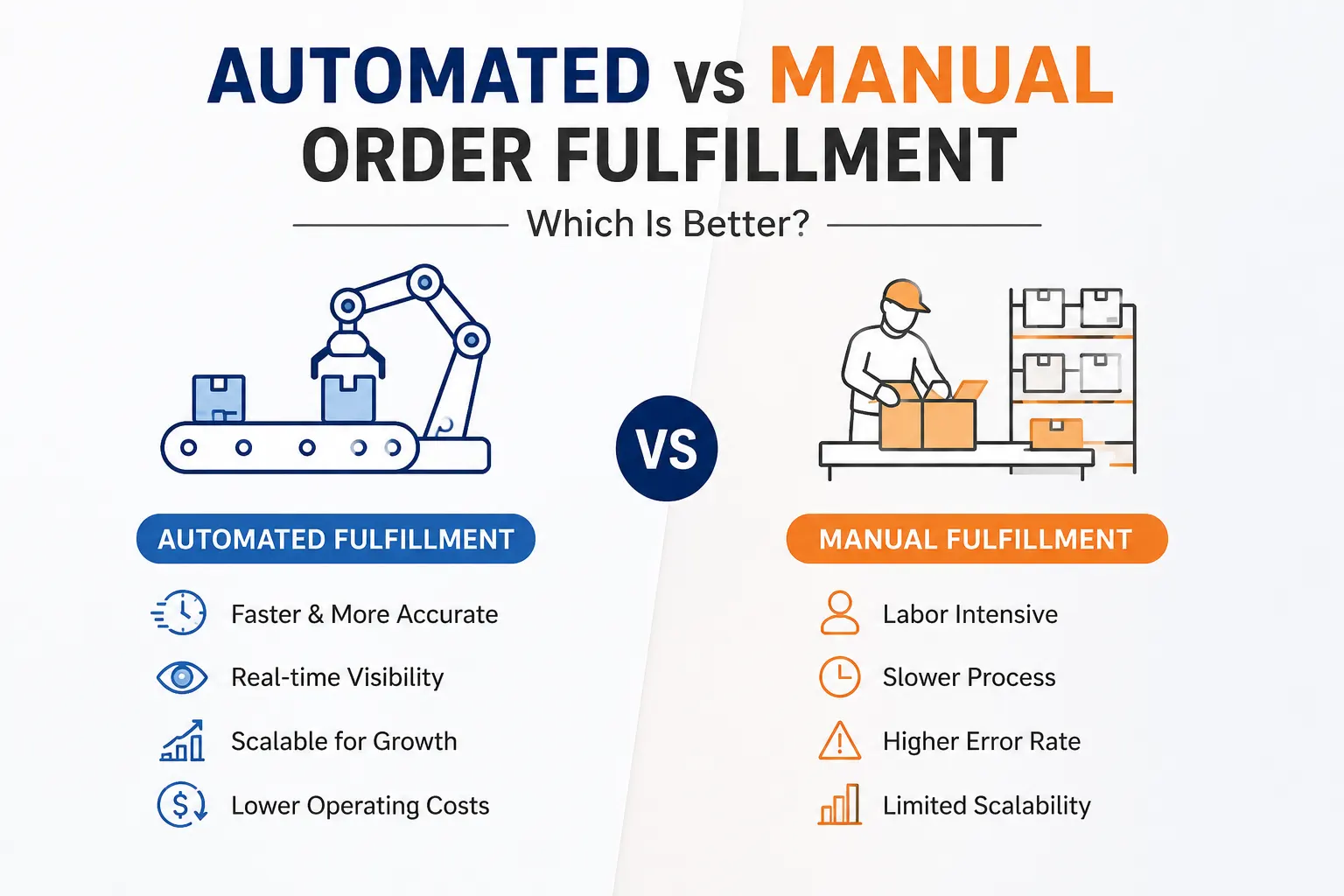
Automated vs Manual Order Fulfillment: Which Is Better?

Midnight hits. A tired shopper taps the buy button on their phone. They fall asleep expecting a delivery truck by sunrise. Magic? Not quite. Moving merchandise from a dusty warehouse shelf to a front porch hides a brutal string of unseen operations. Figuring out automated vs manual order fulfillment goes far beyond picking flashy software over human muscle. You have to find an operational fit. 

Getting a product out the door requires heavy lifting. You have to lock down the sale and clear the payment. Then comes verifying stock. Someone has to grab the items, pack the box, print the tag, and hunt down the delivery driver. Do not forget to track the route and deal with returned items later. A basic manual setup might hum along nicely for fifty daily orders. Push that to five hundred or five thousand, and the whole building grinds to a halt. The smartest operational move? Pick the system that holds accuracy steady and keeps visibility crystal clear when daily chaos multiplies.

What Order Fulfillment Really Involves

From Order to Delivery

To grasp the core differences, we must look at the complete lifecycle of a purchase. Every single step represents a potential handoff point.

Customer Order

Order Validation

Inventory Check

Order Allocation

Picking

Packing

Shipping & Dispatch

Tracking

Delivery / Return

Systems driven by humans and machines differ drastically at every one of these handoff moments, not merely when a worker walks down an aisle to grab a product. Information changes hands repeatedly.

Manual Fulfillment: How It Actually Works

People Drive Every Handoff

Look at standard setups on platforms like O2VEND. Manual processing usually relies on a person handling every step from order entry to shipping. A worker stares at an inbox or a basic portal, waiting for sales to roll in. They physically check the stockroom or type an update into a spreadsheet. After that, a person has to assign the goods, get picking instructions printed, create shipping labels by hand, change the dispatch status, and send a message to the buyer. Once closing time hits, somebody has to sit down and reconcile the books by hand.

Where the Hidden Delay Starts

Delays hide in the empty spaces between tasks. A worker waits for someone else to finish checking the stockroom. One computer program holds information that another lacks. A single order gets double-checked for absolutely no reason. A stock update happens too late, meaning a second customer just bought a sold-out item. Shipping labels get generated separately from the primary sales record.

The main disadvantages of manual order fulfillment stem from information moving slowly between isolated workers and disconnected software, rather than humans moving too slowly. Managers often miss how these disadvantages of manual order fulfillment ruin customer trust over time. Eventually, the worst disadvantages of manual order fulfillment drag the whole business down.

Automated Fulfillment Changes the Workflow

Rules Replace Repetitive Handoffs

Software steps in to connect the dots instantly. It links order intake, stock validation, allocation, picking guidelines, carrier selection, label generation, notifications, tracking, and exceptions without a single pause. Platforms like LogixGRID handle these connections through custom APIs, real-time dashboards, and carrier integrations. There is zero waiting around for a spreadsheet update.

Automation Is Not “No Humans”

Here lies the true secret. Debating automated vs manual order fulfillment does not mean looking for ways to fire your entire staff. Automation simply takes human attention away from mindless, repetitive clicking. It points your team toward handling exceptions, making strategic decisions, and supervising the overall flow. Machines do the routing while humans do the thinking.

Manual vs Automated Fulfillment Process

Comparing the approaches side by side reveals a massive shift in how data travels. A true manual vs automated fulfillment process comparison shows that software wins mostly because it maintains a continuous data stream between stages, rather than just doing individual tasks faster.

Fulfillment Stage Manual Approach Automated Approach
Order entry Human entry or import System integration
Stock check Manual lookup Real-time system validation
Allocation Employee decision Rule-based allocation
Picking Printed list instructions Digital or mobile workflows
Packing Manual verification System-guided process
Label creation Separate or manual Automated generation
Carrier selection Human choice Configurable rules
Tracking Manual updates Automated status flow
Exceptions Employee discovers issue Alerts and workflows
Reporting Spreadsheet consolidation Dashboard analytics

When studying this setup, notice how a manual vs automated fulfillment process differs fundamentally. The manual side requires a person to push the data forward at every single step. Connectivity beats raw speed every single time.

The Benefits You Notice And the Ones You Don’t

Speed Is Only the First Benefit

When comparing a manual vs automated fulfillment process, everyone looks at the clock first. A digitized system delivers faster order processing, cuts out repetitive data entries, speeds up label generation, and fires off status updates instantly. It also reduces your reliance on a single employee who holds all the operational secrets in their head. The most obvious automated order fulfillment benefits save you time immediately.

The Less Obvious Gains

The deeper automated order fulfillment benefits hide beneath the surface. You get lower coordination overhead since managers spend less time delegating basic tasks. Traceability skyrockets. Process execution becomes entirely consistent. You catch exceptions way earlier, gather vastly superior operational data, and can onboard new staff in days instead of months. These hidden gains replace fragile tribal knowledge with hardcoded operational rules.

Where Manual Fulfillment Still Wins

Despite the common downfalls mentioned earlier, human hands remain the smarter choice under certain conditions. Extremely low daily volumes make complex software unnecessary. When you sell completely custom products, deal with unpredictable workflows, or build strange one-off creations, you need a real person making judgment calls at every single step. Startups still trying to figure out their target market usually do better when they keep things manual. If the technology costs more than the problem it solves, stick to clipboards. Manual labor is not automatically a bad thing. Problems only surface when your team drowns under an overwhelming flood of repetitive daily tasks.

Pros and Cons of Automated Fulfillment

Evaluating the pros and cons of automated fulfillment keeps expectations grounded.

Pros Cons
Faster repetitive processing Initial implementation cost
Consistent workflows Integration complexity
Better visibility Requires process standardization
Easier scaling Staff training required
Reduced data entry burden Poor configuration speeds up bad processes
Better auditability System downtime halts operations

The Automation Trap

Reviewing the pros and cons of automated fulfillment reveals one massive trap door. Software cannot fix a bad workflow. It only forces a terrible workflow to run at lightning speed. Bad SKU mapping or wrong inventory rules will trigger absolute chaos. Flawed carrier rules or duplicate order glitches create huge messes much faster than any human worker ever could. The system merely follows the instructions you provide.

The Numbers Behind the Decision

Forget about throwing out random industry statistics. Think about a basic illustrative calculation instead.

Say your warehouse receives 100 orders daily. If human handling takes 6 minutes per order, you face 600 minutes total. That equals 10 hours of staff time every single day. If technology cuts out 3 minutes of repetitive clicking per order, you save 300 minutes. That brings you down to 5 staff hours daily. Over 26 operating days, you save 130 staff hours a month.

When analyzing automated vs manual order fulfillment, actual math beats guesswork. Your true financial calculation must include the software price, integration fees, labor costs, rework expenses, returns, SLA penalties, and the opportunity cost of doing nothing.

To accurately answer is automated order fulfillment better than manual, you have to run these numbers for your specific warehouse.

Is Automated Order Fulfillment Better Than Manual?

If you are wondering is automated order fulfillment better than manual, this decision matrix can guide you.

Situation Better Fit
Very low volume Manual
High repetitive volume Automated
Many sales channels Automated
Complex custom orders Hybrid
Frequent exceptions Hybrid
Real-time inventory requirement Automated
Highly variable processes Hybrid
Rapid scaling Automated

Usually, the answer leans toward yes. Growing companies juggling multiple sales channels, heavy SKU counts, and complex daily setups definitely need the upgrade. Yet, the choice is never completely absolute. When board members ask is automated order fulfillment better than manual, point them to the daily data. Figuring out the right path depends entirely on your current scale and complexity.

Why LogixGRID Fits the Automation Gap

One Platform, Multiple Operational Layers

Unlocking true automated order fulfillment benefits requires flexible software like LogixGRID. It acts as the ultimate companion for logistics operations needing more than a basic order processor. The system brings a lot to the table with dedicated modules. You get Logix WMS for running the warehouse, Logix LMS for managing logistics, and Logix TMS for handling transportation. They also pack in Logix DMS to manage deliveries and Logix CMS for tracking couriers. Need more? You can plug into Logix NEO for on-demand delivery tasks, or use Logix FreightNX, Logix Finance, and the Logix Shipping API. They even throw in LogixCRM, LogixDocs, and LogixForms.

When examining automated vs manual order fulfillment, having customizable tools makes all the difference. Instead of trapping your operation inside rigid software boundaries, they provide custom building blocks. LogixStudio and LogixFlow let you map out totally unique workflows, personalized rules, and fresh dashboards straight from the ground up. The main question is not merely deciding to digitize. It is finding technology that adapts to the way your supply chain actually functions.

The Smarter Answer: Automate the Right Parts

Understanding the pros and cons of automated fulfillment leads directly to a hybrid approach. The smartest warehouse operators digitize the repetition and reserve human judgment for the exceptions. You might want automated inventory validation paired with human approval for highly unusual bulk purchases. You can set up instant carrier selection but flag shipping delays for human intervention. System-generated customer notifications work perfectly until a major escalation requires a genuine apology from a real person.

Read more: What Is an Automotive Logistics Management System?

Conclusion

Human-driven processing absolutely works in the right context. Yet, digital intervention becomes mandatory as volume and complexity rise. Debating automated vs manual order fulfillment is never really about making human workers disappear. The true measure of success is whether your team spends less time moving raw data from one screen to another and more time solving meaningful logistical problems.

Acronyms Used 

FAQs

1. What is automated vs manual order fulfillment?

Automated fulfillment uses software and workflows to handle repetitive tasks, while manual fulfillment relies mainly on people.

2. What are the main automated order fulfillment benefits?

Faster processing, fewer manual errors, better inventory visibility, and easier scaling are key benefits.

3. What are the disadvantages of manual order fulfillment?

It can take more time, create data-entry errors, and become difficult to manage as order volumes grow.

4. What are the pros and cons of automated fulfillment?

Automation offers speed and consistency but may require upfront investment, integration, and staff training.

5. Is automated order fulfillment better than manual?

For growing, high-volume operations, automation is usually better, while smaller or highly customized operations may prefer a manual or hybrid approach.

The Silent Revolution in Logistics: Building the Unified Brain of Modern 3PLs

Every industry has its founding narratives. Tech has the garage. Finance has the crisis. Logistics has the spreadsheet named “FINAL_FINAL_v3”.
But picture this instead.
A logistics manager somewhere in North America opens ten dashboards before coffee, all calibrated to disagree on the same data. She
clicks through them with the practiced resignation of someone fluent in logistical static. WMS here, TMS there, freight system in another
tab, CRM operating on a completely separate timeline. Information everywhere, understanding nowhere.
Each login solves a single function while collectively generating operational drag.

And here’s the plot twist: This isn’t incompetence. It’s a systemic design.

The kind of architecture that emerges when each department solves its own problem in its own decade, leaving behind a digital archaeological site where WMS lives in the Bronze Age, TMS thinks it’s in 2014, and CRM behaves like it’s allergic to integration.
Everyone knows the joke: logistics doesn’t run on software, it runs on the people who remember where the software breaks.

“Global logistics has become a museum of siloed software stitched together by human patience.”

And here’s the part nobody admits out loud: For 3PLs, this fragmentation has quietly become the largest invisible tax on growth and the bill is now too large to ignore.
LogixGRID exists because the industry finally admitted the truth: the problem is not the people. It’s the ecosystem.
What follows is the anatomy of that ecosystem and the strategic realignment taking place among 3PLs who are tired of solving yesterday with yesterday’s tools.

The Communication Problem in a $100+ Billion Market

Imagine the scale. Every container, every shipment, every driver, and every consignee is a node in a massive, dynamic network. Every handoff, every status check, and every exception alert is a potential point of failure. The human element, while indispensable for strategy and problem-solving, can’t keep pace with this velocity.

Here’s where the system often breaks:

  1. Vague or Late ETAs: A 2025 DHL shopper data report highlighted rising frustration among consumers, with 52% citing “long delivery times” as a pain point, up from 46% the previous year. Ambiguous or delayed updates compound this frustration, even if deliveries are technically on time.
  2. Port Dwell and Demurrage Fees: Poor communication about congestion can lead to costly, avoidable penalties. According to Container xChange’s 2023 report, the average two-week demurrage and detention fee is around US$1,219 per container. Without timely information, teams can’t act proactively to minimize these charges.
  3. Channel Mismatch: The GCC is a digital-first region, with near-universal social and messaging penetration, 100% active social IDs in the UAE, and 99.6% in Saudi Arabia. WhatsApp has become the lingua franca for communication, from drivers to BCOs. Updates buried in emails or portals risk invisibility.
  4. Manual Handoffs During Disruptions: When a critical event occurs at 2 a.m., a human drafting a notice at 9 a.m. introduces unnecessary delay. This slow response can cascade, compounding disruption and impacting downstream operations.

“In a market exceeding US$100 billion, communication efficiency determines profitability.”
Historically, trade and communication have always been intertwined. In the 19th century, telegraph networks revolutionized shipping by giving port operators real-time access to vessel movements. Today, AI is the modern telegraph, but infinitely faster, smarter and predictive.

The Silo Paradox: More Software, Less Supply-Chain Intelligence

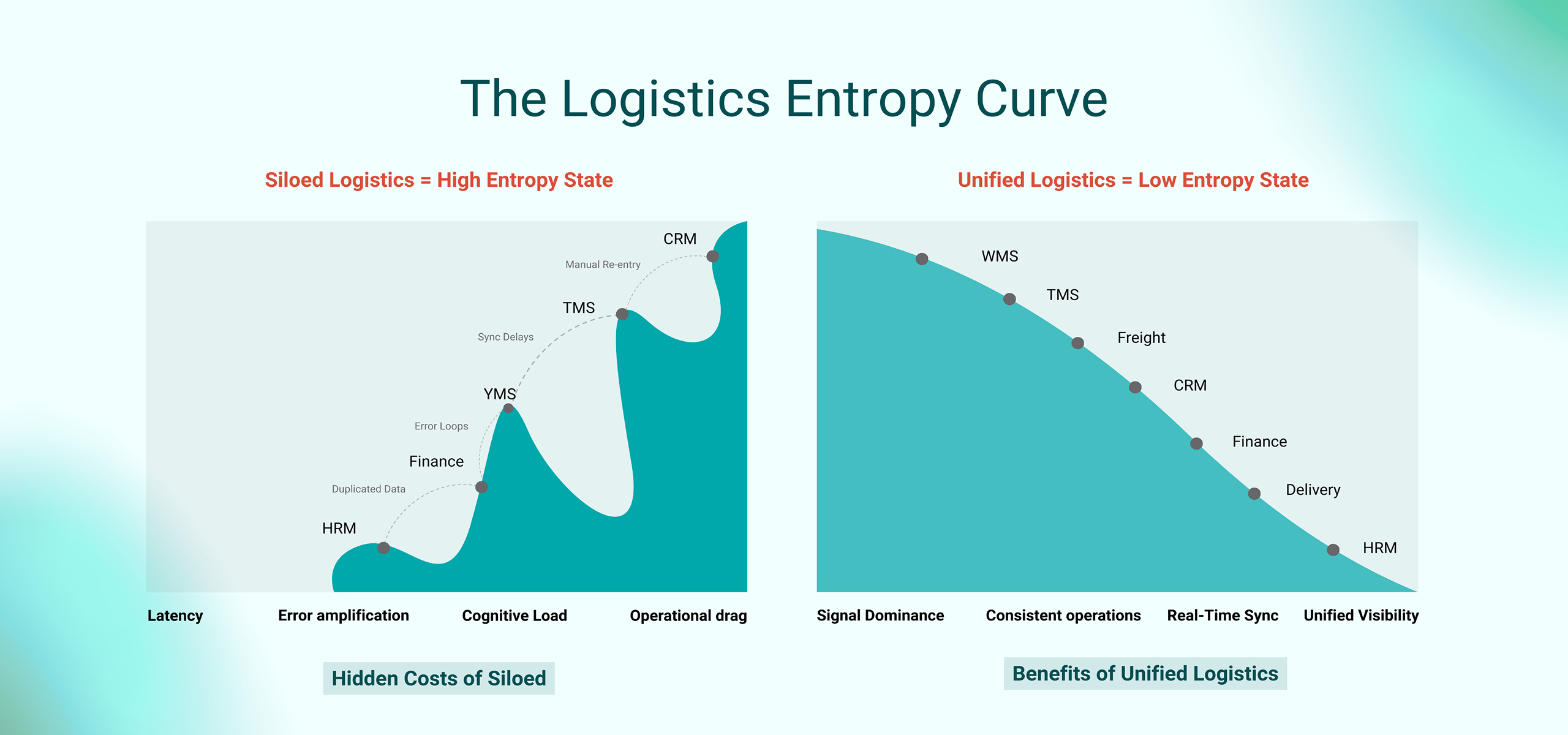
A typical 3PL today is a network of isolated subsystems: WMS, TMS, Freight Forwarding, YMS, fleet management, CRM, HRM, and finance systems all orbiting independently. None were designed to speak to each other out-of-the-box.
A 2024 logistics survey captured the industry’s collective sigh: integration with existing systems is the number one barrier to adopting new technology. The fragmentation is so widespread that even world-class 3PLs in Asia, Europe, and North America are slowing themselves down with duplicated data, manual reconciliation, and outdated decision frameworks.
You can see the paradox in action:

More Software
Means More Data
Means More Noise
Means Slower Decisions
Means Worse Performance.

The very tools meant to authorize logistics end up suffocating it.
Manhattan Associates summarized it plainly. Distribution, transportation, labor, and yard management often operate in silos, separate truths, separate timelines, separate blind spots. In this world, a customer tracking portal is only as accurate as the slowest, most isolated system behind it.
It is a structural risk.

Margin Leakage by Design: How Fragmentation Taxes Every Shipment

Siloed systems are expensive in the same way climate change is expensive: slowly, everywhere, and with disproportionate impact.

Duplicate Work
Teams become human middleware. Export from WMS. Re-enter into TMS. Copy to CRM. Re-check in a spreadsheet with a five percent error rate. Multiply that across clients, shifts, and months. This is operational entropy disguised as work.
Decision Latency
“You cannot set up what you cannot see.”
Inventory visibility lags. Shipment issues surface hours late. Managers operate with stale data. Lumenalta’s finding is blunt: disruptions get sluggish responses that cost sales and inflate expenses.
Compounding Errors
Every manual transfer invites a domino chain of miscounts, wrong addresses, backorders, refunds, and quiet margin erosion.
Poor Customer Experience
Visibility becomes a luxury instead of a standard. Clients log into multiple systems. Customer teams chase information across departments. Trust evaporates.
Higher Operating Costs
Fragmentation forces companies to maintain overlapping systems, redundant databases, expensive integrations, and inflated safety stocks. CIO surveys reveal that 90 percent believe outdated systems block innovation. Consolidation, meanwhile, can cut IT and operational costs by up to 65 percent.
This is not inefficiency. It is margin leakage at scale.

A Global Map of the Same Problem, Solved Differently

What makes the logistics industry uniquely interesting is that silos exist everywhere, but each region responds according to its economic patterning.

Asia Pacific
Fast growth created complicated system mosaics, yet the region is now a leader in digital unification. Dimerco’s integrated cloud system is a case study in real-time data flow, API transparency, and eliminating multi-portal fatigue for clients.

Middle East and MENA

Government-driven modernization pushes integration from the top. Saudi Arabia’s Fasah unified customs processes so effectively that clearance times fell from a week to hours. The region is leapfrogging incremental improvements and going straight to unified ecosystems.

Europe and Africa
Europe wrestles with legacy ERPs and country-specific systems but is steadily consolidating through cloud-native platforms. Africa’s younger logistics companies often skip legacy entirely, adopting integrated systems by default.

Latin America
Transitioning rapidly under e-commerce pressure. A Brazilian distributor saw measurable improvements in communication, cost efficiency, and OTIF after moving from fragmented processes to a unified ERP.

North America
Ironically, some of the world’s most sophisticated 3PLs still face massive internal silos due to acquisitions and legacy infrastructure. Even here, 58 percent of 3PLs report integration challenges. Control towers and API-driven architectures are finally bridging the decades-old gaps.

The theme is universal. Integration is no longer competitive optimization. It is survival.

How Leading 3PLs Are Engineering Their Escape From Silo Gravity


The strategic response to fragmentation falls into several patterns:

Unified Platforms and ERPs
Replacing islands with a connected continent. DHL, Dimerco, and global leaders now run their operations on single, shared platforms where inventory, transport, and finance live in the same world.
API and Middleware Integration
For those who cannot replace systems, the solution is connectivity. Event-driven architecture, message buses, and APIs create a synchronized nervous system that unifies multiple tools.
Cloud Migration
Cloud-native logistics architectures reduce technical debt, accelerate innovation, and simplify scaling.
Process Redesign and Change Management
A unified system without unified behavior is still fragmented. High-performing 3PLs map flows, retrain teams, and build cross-functional operational intelligence.
Data Analytics and Automation
Once data lives in one reality, AI, ML, and automation become possible. Not as terminology. As everyday accelerators of accuracy and throughput.
This is how the industry moves from patching symptoms to anticipating systems.

LogixGRID: The Platform That Turns Complexity Into Coherence

LogixGRID doesn’t arrive as a software provider. It arrives as the infrastructure beneath the infrastructure, the part of the stack that finally learns to think in full sentences.

LogixPlatform
An AI-powered logistics automation environment containing WMS, TMS, freight, CRM, finance, delivery, and more. All in one integrated, native data model. Warehouse updates instantly inform transport. Financials auto-sync. Clients and teams operate in the same truth-space.
LogixFlow
A no-code creation engine that lets logistics companies build, customize, reshape, and evolve workflows without writing a line of code. Unique checklists, onboarding flows, SLAs, quality controls, custom validations. Built visually. Activated instantly.
External Integrations
Carrier networks. ERPs. E-commerce platforms. Accounting tools. All connected through plug-and-play connectors and APIs.
LogixGRID removes the need for digital duct tape. It replaces the archipelago with a unified continent.

If You Didn’t Skim, You Already Know the Answer

Most logistics conclusions wrap up with optimism.
This one does not.
This one asks a question.
Imagine a warehouse twenty years from now.
Everything is unified, automated, visible, predictable.
Now imagine walking into that warehouse and discovering something strange:
It feels quiet.
Not peaceful.
Not calm.
Quiet in the way a solved puzzle becomes quiet.

“That silence is the sound of logistics without silos.”

No redundant keystrokes.
No conflicting databases.
No midnight reconciliations.
No managers triangulating the truth between systems.
No customers calling because they see gaps before you do.
No operations team doing heroics that should not be necessary.

Just synchrony.
Just clarity.
Just logistics as its own intelligence.

That is the world LogixGRID is designing. Not louder, faster, or shinier.
Just coherent.

And coherence, in the end, is the highest form of sophistication.

Ready to Transform?

It’s simple: upgrade to LogixPlatform today. Move your logistics billing from manual, siloed, error-prone mess to automated, accurate, HASiL-compliant workflows across your entire operation.
Let us help you transform your invoicing, so your operations run smoother, your cash flows faster and your compliance is airtight.

Talk to Logistics Experts

FAQ’s

LogixGRID solves the growing problem of fragmentation across WMS, TMS, freight, CRM, finance, and other systems that operate in silos. These disconnected tools create duplicated work, slow decisions, inconsistent data, and major operational inefficiencies. LogixGRID unifies these systems into a single coherent platform so that logistics teams operate with one shared truth.

Fragmentation leads to duplicate data entry, delayed visibility, compounding errors, and poor customer experience. It increases operating costs due to redundant systems, inflated safety stock, and slow decision-making. The PDF states that this creates “margin leakage at scale,” quietly eroding profitability across every shipment.

Regions follow unique patterns:

  • Asia Pacific leads in integrated cloud systems with real-time data flow.
  • Middle East & MENA drive integration through government-led modernization.
  • Europe & Africa steadily move toward cloud-native consolidation.
  • Latin America accelerates unification under e-commerce growth.
  • North America battles legacy silos from acquisitions but increasingly uses APIs and control towers.

Top 3PLs use:

  • Unified ERP platforms
  • API-driven integration
  • Cloud migration
  • Process redesign & team retraining
  • Analytics, automation & AI

These strategies help them shift from reactive patching to predictive, systemwide intelligence.

LogixPlatform is a fully unified, AI-powered logistics operating environment where WMS, TMS, freight, CRM, delivery, and finance exist in one native data model.

LogixFlow is a no-code engine allowing companies to build custom workflows, SLAs, checklists, and validations without engineering.
 Together, they eliminate digital fragmentation and create operational coherence.

4PL Orchestration – Redefining the Future of Supply Chain Management Beyond 3PL

For years, we’ve all heard about 3PLs — the third-party logistics providers that keep goods moving through transportation, warehousing, and fulfillment. They’ve done their job well. But as supply chains grew borderless, layered, and data-hungry, execution alone wasn’t enough. Something bigger had to step in — a model that could see the entire chessboard. Enter Fourth-Party Logistics, or 4PL as we like to wink at it, ¡Hola!

In simple terms, 4PL is a supply chain integrator — it designs, orchestrates, and optimizes the entire network while coordinating multiple 3PLs, carriers, and systems through a control tower model.

Interestingly, the idea isn’t new. It traces back to the mid-1990s, when Procter & Gamble teamed up with Accenture to bring order to its sprawling logistics web. P&G didn’t just need more trucks or warehouses; it needed orchestration — one brain managing the entire operation. That collaboration quietly gave birth to what we now call the 4PL model.

Fast forward to today, and the same concept powers global giants like Maersk and DHL, who run multi-continent networks with real-time control, resilience, and transparency. Talk about a glow-up!

3PL vs 4PL: The Executive Contrast

If 3PLs are the skilled drivers, 4PLs are the air-traffic controllers. One executes; the other orchestrates.

Scope: A 3PL handles specific functions — transport, warehousing, or distribution. A 4PL owns the entire strategy, designing and optimizing the ecosystem that multiple 3PLs operate within. It’s the difference between moving goods and moving a supply chain.

Accountability: 3PLs are vendors; 4PLs are single points of accountability. For a shipper, that means one contract, one governance model, and one set of performance KPIs — even if ten different carriers and warehouses are in play. No more “who messed up?”.

Asset Posture: Most 3PLs are asset-heavy. 4PLs stay asset-light, leveraging the right partners, carriers, and technology stacks for agility.

Technology: 4PLs are built on control towers, unified data platforms, and AI-driven insights. They bring predictive visibility across the chain, highlighting risks before they turn into costs.

Substantially, 3PLs execute logistics; 4PLs engineer it. Yes, there’s a difference — and a big one.

Where 4PL Adds Value: The End-to-End Chain

Order Collection (First Mile): Managing multiple vendor pickups, consolidating loads, routing intelligently, and implementing SLAs — all orchestrated by the 4PL while 3PL fleets execute, often powered by LogixDMS.

Imports & Freight Forwarding: 4PLs run procurement of carriers, lane design, documentation, and compliance. Tools like FreightNX create optimized playbooks and audit freight for cost accuracy.

Customs Brokerage: Through digital workflows, HS-code governance, and provider selection, 4PLs assure smooth clearance and data consistency, integrated with the control tower dashboard Alya/Analytics.

Warehousing & Distribution: From designing DC networks to monitoring KPIs across third-party warehouses, the 4PL ensures products are stored and moved efficiently under LogixWMS guidance.

Last-Mile Delivery: They optimize carrier mixes, monitor cost-to-serve analytics, and track OTIF (On-Time-In-Full) performance, turning delivery from a cost center into a differentiator, orchestrated via LogixDMS.

Freight Bill Audit & Payment (FBAP): 4PLs validate contracts, rates, and accessorials, resolving disputes and automating payment workflows to reduce leakages.

COD Oversight & Reconciliation: Especially in retail-heavy supply chains, 4PLs oversee cash-on-delivery processes, reconciliation, and reporting through control-tower dashboards like Alya/Analytics.

Each stage represents a project bucket, connected by one data layer and governed by one accountability framework.

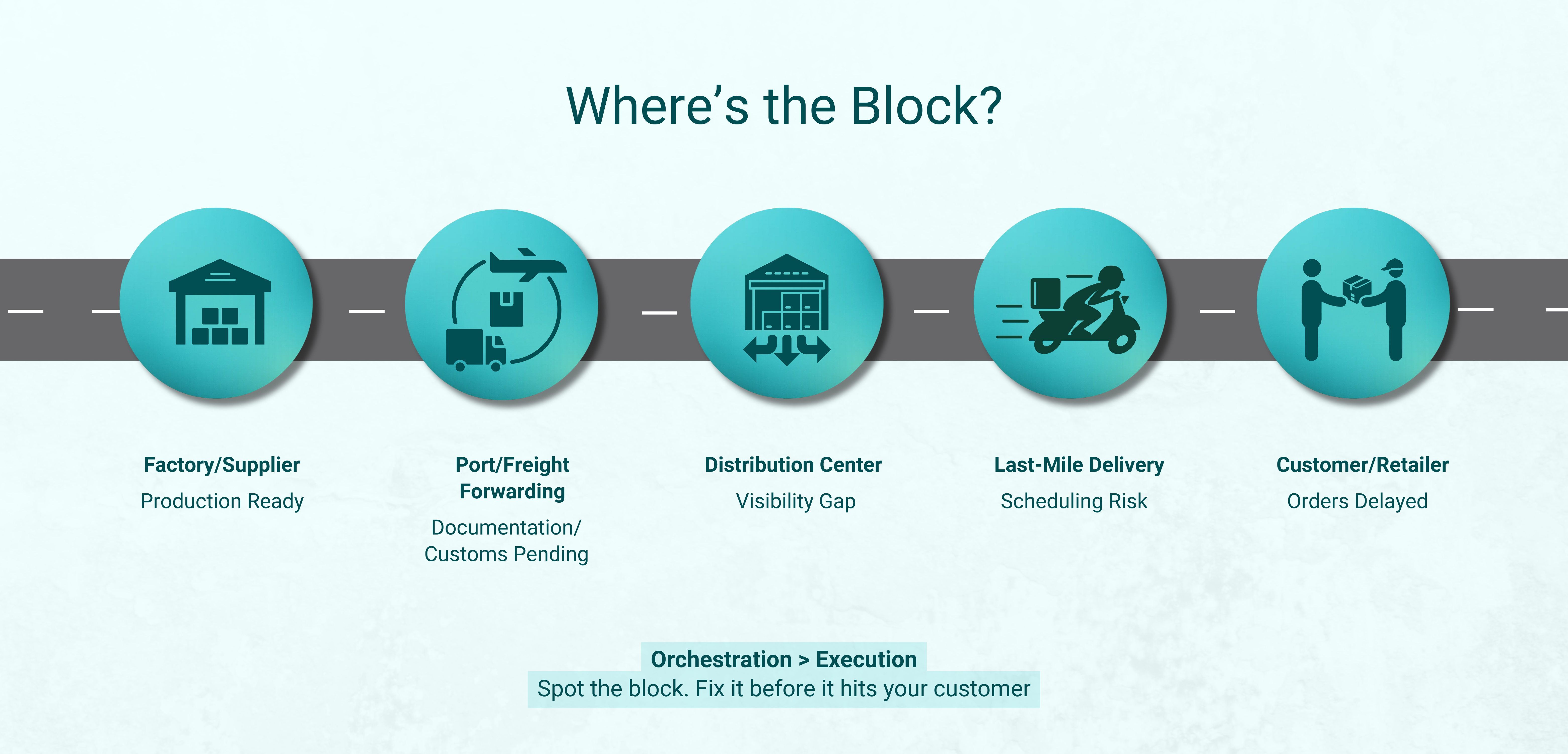
Spot the Block?

Let’s turn on our imagination: a shipper operates five 3PLs across Asia and Europe. Reports arrive weekly, often through spreadsheets. Inventory visibility lags by 48 hours. Freight disputes grow monthly. Customer service discovers delays only after the damage is done.

What’s missing here — better carriers, better tech, or better orchestration?

The missing piece is orchestration. That Aha! moment.

A 4PL connects every data source, aligns each partner under shared KPIs, and manages exceptions in real time — turning fragmented operations into one cohesive ecosystem.

Inside the 4PL Operating Model

  • 1. Commercials & Governance

    4PL engagements are structured under a Master Services Agreement (MSA) linked to SLAs and OLAs. The pricing model ties directly to performance KPIs like OTIF, cost-to-serve, dispute rate, and dwell time.

    Governance follows a cadence: weekly operational reviews, monthly performance dashboards, and quarterly network redesign sessions — aligning cost, service, and agility.

    2. Control Tower & Data Foundation

    At the heart of every 4PL lies the control tower — a multi-party data layer that integrates TMS, WMS, OMS, and carrier APIs. Exceptions are flagged automatically, not buried in spreadsheets.

    A unified data model governs every entity — locations, SKUs, contracts, and partners — assuring consistency across systems.

    3. Resilience & AI

    AI models predict ETA deviations, flag disruption risks, and simulate scenarios, making supply chains proactive rather than reactive. Early-warning systems and what-if simulations drastically reduce expedite costs and disruptions. Basically, it thinks ahead so humans don’t have to panic later.

    4. Sustainability

    Modern 4PLs embed sustainability by optimizing mode mix, consolidating loads, and tracking carbon intensity within the same control tower. ESG performance becomes measurable, not just aspirational.

The KPI Stack that Runs a 4PL

4PLs measure not just how goods move, but how intelligently they move.

Executive KPIs:

  • Perfect Order / OTIF
  • Cost-to-Serve
  • Inventory Turns
  • Carbon Intensity

Operational KPIs:

  • Dwell Time
  • Carrier Compliance
  • Forecast Accuracy
  • Exception Cycle Time
  • Invoice Dispute Rate

These metrics don’t sit in silos — they’re interconnected. When dwell time drops, OTIF improves. When cost-to-serve aligns with carrier compliance, the network gains velocity.

The 90-Day Playbook to Stand Up a 4PL

Days 0-30:

  • Baseline lanes, costs, and SLAs
  • Ingest contracts and data
  • Connect top carriers
  • Launch FBAP pilot on top-spend lanes

Days 31-60:

  • Run carrier re-bids
  • Publish milestone tracking across the chain (PO → origin → DC → delivery)
  • Release KPI Dashboard v1

Days 61-90:

  • Fix data quality gaps
  • Expand FBAP coverage to 80%+ of spend
  • Enable AI-driven ETA prediction
  • Present network redesign options
  • Deploy rapid custom workflows via LogixFlow

In three months, a shipper can evolve from scattered data and siloed vendors to an orchestrated, measurable, and resilient logistics network.

Risks and How to Ease Them

  • Single-Provider Lock-In: Mandate open standards and data ownership clauses. The shipper should always own its data.
  • Misaligned Incentives: Balance gain-share models with baseline guarantees and transparent scorecards.
  • Black-Box Decisions: Demand transparency — both in how the control tower prioritizes decisions and how data flows are governed.

4PLs succeed when trust is contractual, not just relational.

FAQ: How 4PL Solves Common Supply Chain Challenges

Common ChallengeTraditional Approach4PL Outcome
First-mile pickups from multiple vendorsEach 3PL handles separately; coordination relies on manual follow-ups4PL designs and governs pickup routes, consolidates shipments, enforces SLAs, executed via managed 3PL fleets
Imports & freight forwarding complexityShipper or 3PL manages carriers individually; documentation often fragmented4PL orchestrates carrier procurement, lane design, compliance, and exception playbooks for seamless movement
Customs brokerage inefficienciesHandled per shipment with inconsistent data; delays common4PL selects providers, enforces HS-code governance, and streamlines digital documentation workflows
Warehouse & DC network blind spots3PLs operate independently; inventory visibility limited4PL optimizes network design, strategically places inventory, and governs 3PL KPIs for efficiency
Last-mile delivery delaysCarriers selected by proximity or cost; reactive management4PL optimizes carrier mix, leverages cost-to-serve analytics, and manages OTIF performance proactively
Freight bill disputes & payment delaysManual audits; slow dispute resolution4PL validates contracts/rates, handles accessorials, automates dispute resolution, and streamlines payment workflows
Payment collection / COD reconciliation gapsCarrier-led collections; inconsistent reporting4PL defines policies, enables carriers, reconciles payments, and provides consolidated reporting via control tower
Lack of end-to-end visibility and predictive insightRelies on periodic reports; reactive problem-solving4PL integrates multi-party data, runs exception-based workflows, and delivers predictive ETAs and KPI dashboards
Difficulty improving resilience without increasing costExpedited shipments, manual intervention, fragmented visibility4PL uses unified data, scenario planning, and early-warning systems to reduce disruptions while maintaining cost efficiency
Unclear ROI from 3PLs / fragmented accountabilityMultiple vendors with separate KPIs; shipper struggles to measure impact4PL provides a single point of accountability, aligning all partners under shared KPIs and transparent governance

Implementation Blueprint:

  • Week 1–2: Discovery, lane baseline, KPI setup
  • Week 3–4: Integrations and FBAP pilot (LogixTMS & FreightNX)
  • Week 5–8: Vendor pickup orchestration (LogixDMS) and tower v1 (Alya/Analytics)
  • Week 9–12: Customs, COD reconciliation, KPI cadence. Rapid workflow apps (LogixFlow)

Where the Industry is Headed

4PL isn’t a replacement for 3PLs — it’s their evolution. As supply chains stretch across continents and data replaces guesswork, the orchestration layer becomes non-negotiable.

In the coming decade, every large enterprise will run a control tower, every logistics network will be data-governed, and every decision will hinge on predictive intelligence.

The 4PL model isn’t a luxury anymore — it’s the foundation of modern logistics resilience.

And those who embrace it early — with the right mix of partners, platforms, and purpose — will be the ones shaping the global logistics map of tomorrow.

Optimizing Warehouse Operations in Venezuela: A LogixWMS Implementation Case Study

Executive Summary

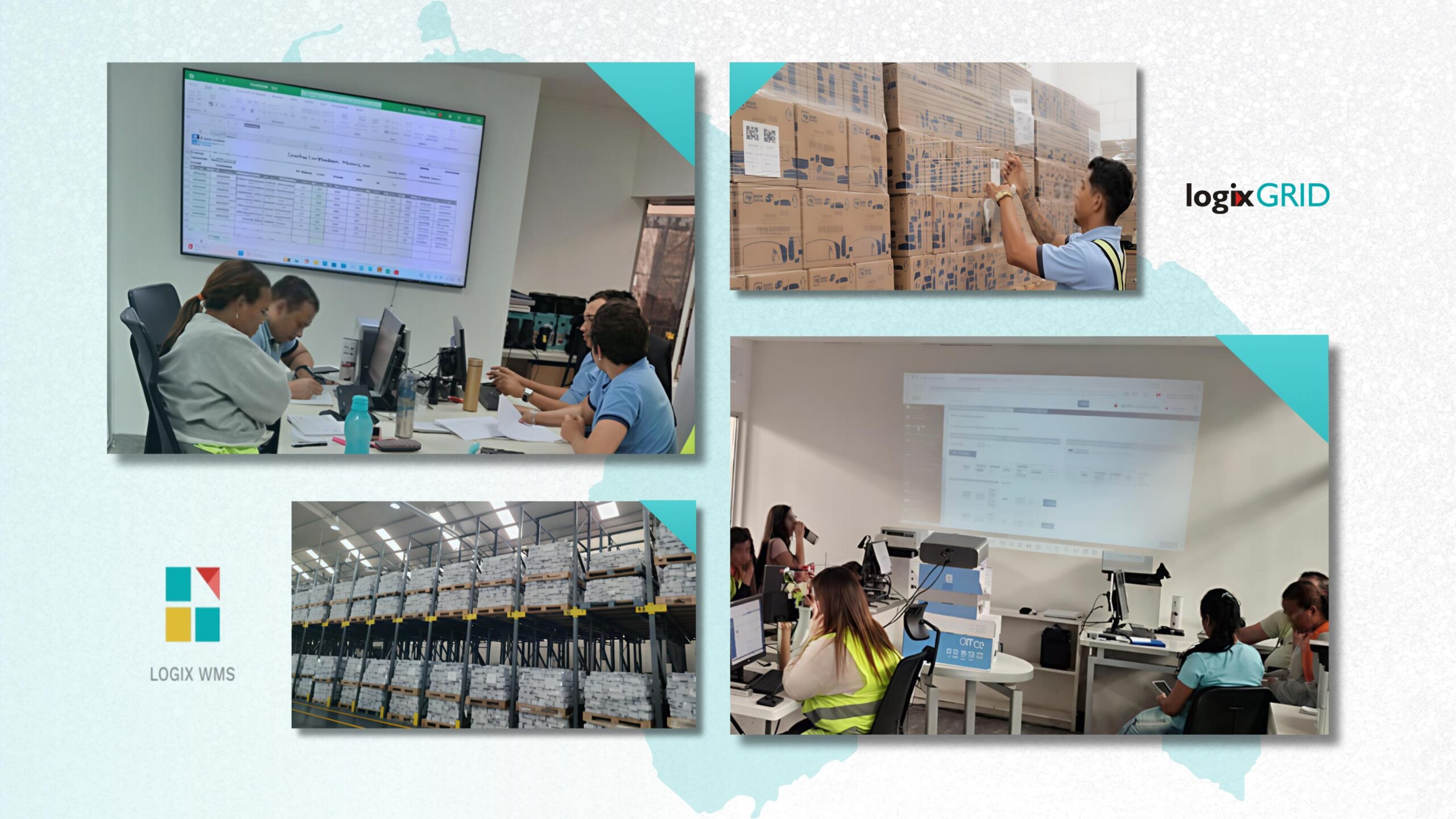
Copacker San Diego, a leading Venezuelan warehousing and logistics company, faced mounting operational challenges while managing P&G inventory for its principal client, Empresas Polar, the official distributor of P&G’s products in Venezuela. Reliant on manual processes and Excel-based systems for inventory management, the company struggled with inventory accuracy, real-time visibility, and operational throughput. As the inventory volume grew, these traditional methods fell short of providing accurate, real-time visibility and detailed control across warehouse processes, creating major challenges in receiving, validating and storing shipments efficiently and securely.

To address these challenges, Empresas Polar required a reliable and scalable warehouse management system (WMS) to support growing inventory volumes and ensure efficient fulfillment.

In collaboration with AA Consulting, a trusted local partner, Copacker San Diego adopted LogixWMS, an effective and end-to-end warehouse management solution implemented by LogixGrid. The system delivered real-time visibility, optimized palletization and picking, introduced the MATRIX Mobile app for Android operations, and integrated Augmented Reality (AR) for accuracy in tracking and picking. Post-implementation, Copacker San Diego achieved a leap in inventory accuracy (75% to 98%), increased operational efficiency, reduced costs, and assured near-perfect order fulfillment, directly supporting Empresas Polar’s distribution efficiency for P&G products.

Client Profile: Copacker San Diego

Copacker San Diego plays an important role in Venezuela’s logistics infrastructure, specializing in high-volume warehouse management. As a key partner for Empresas Polar, which markets and distributes P&G inventory across the country, Copacker San Diego’s operations include:

  • Receiving imported P&G products in containers.
  • Labeling products with Empresas Polar information.
  • Storing goods systematically for traceability.
  • Preparing and dispatching shipments to Empresas Polar’s distribution centers.

With a highly trained workforce adept at using both computer systems and mobile devices, the company manages complex consumer goods logistics. However, increasing shipment volumes aggravated operational inefficiencies under their manual system.

The Challenge: Manual Processes and Visibility Gaps

“Every day felt like chasing after errors in spreadsheets,” recalled a Copacker operations lead. Their team depended heavily on Excel for tracking inventory but mismatches and delays were constant. Staff often spent hours reconciling numbers, while Empresas Polar lost confidence in the data.

From Empresas Polar’s side, the frustration was clear: “We couldn’t trust the numbers, we’d placed an order, and by the time it shipped, stock had already changed. It forced us to over-communicate and double-check everything.”

Critical operational challenges:

  • Inventory tracking inefficiencies: Excel-based processes prevented real-time visibility, creating uncertainty about stock levels.
  • Rising volumes and operational bottlenecks: Increasing P&G shipments worsened delays in receiving, labeling, storing, and dispatching goods.
  • Customer fulfillment impact: Lack of timely, accurate data led to slower order processing and occasional mismatches with Empresas Polar’s expectations.
  • Scaling limitations: Manual workflows constrained Copacker San Diego’s ability to grow operations without multiplying errors or labor effort.

The result? Internal audits confirmed these struggles, showing just 75% inventory accuracy, meaning one in every four records was wrong. Both teams were caught in reactive firefighting, leaving little room to focus on strategic growth.

Lesson Learned:

  • Manual tracking does not scale with increasing inventory. Implementing a WMS is essential for accuracy and operational efficiency.
  • Ensuring processes are scalable prevents errors from compounding as volumes grow.

Snippet: From spreadsheets to blindfolded operations.

The Solution: A Mobile-First WMS Transformation

Copacker adopted LogixWMS to replace manual workflows and bring real-time visibility to the warehouse. This was more than a tech upgrade, it restored confidence in data and simplified operations.

“The biggest relief was that everything moved to our phones,” said a warehouse supervisor. “We could scan, label, and update stock on the spot, cutting errors and saving time.”

Empresas Polar also saw immediate benefits: “Finally, we could check livestock levels without extra calls. It gave us confidence to plan and fulfill orders accurately.”

Key features included:

  1. MATRIX Mobile App: Enabled operators to handle receiving, labeling, storing, and picking directly on Android devices, eliminating paper-based processes.
  2. Palletization & De-palletization: Optimized storage and simplified bulk handling for faster order assembly.
  3. Fast Picking & Route Optimization: Intelligent algorithms reduced travel time for staff and improved picking speed.
  4. AR Integration: Visual guidance minimized picking and labeling errors while easing new staff training.
  5. Custom Handling & Compliance: Ensured P&G labeling protocols, lot tracking, expiration management and storage standards were met.
  6. Comprehensive Visibility & Reporting: Real-time dashboards gave management insights into inventory, movements, and operational performance for better decision-making.

By combining mobile access, AR guidance, and automation, Copacker transformed daily operations, improving efficiency, accuracy, and staff confidence.

Lesson Learned:

  • Automation and mobile access significantly reduce human errors in fast-paced warehouse environments.
  • Integrating AR guidance can simplify complex picking and labeling tasks, improving both speed and accuracy.
  • Customizing workflows to specific product and client requirements ensures compliance and smooth operations.

Snippet: From spreadsheets to palm-sized control.

The Implementation Partner: AA Consulting

AA Consulting, founded in 2008, is a strategic LogixGrid partner in Venezuela. With expertise in engineering projects, production management, and logistics, the firm has executed over 55 projects across 15 companies in the country.

For Copacker San Diego, AA Consulting ensured:

  • Ideal project management and system integration.
  • Complete training for warehouse staff.
  • Ongoing support aligned with local market needs.

Their local expertise combined with LogixGrid’s technology created a solution both technically sound and culturally adapted to Venezuela’s logistics environment.

Results and Tangible Benefits

The LogixWMS deployment delivered transformative improvements:

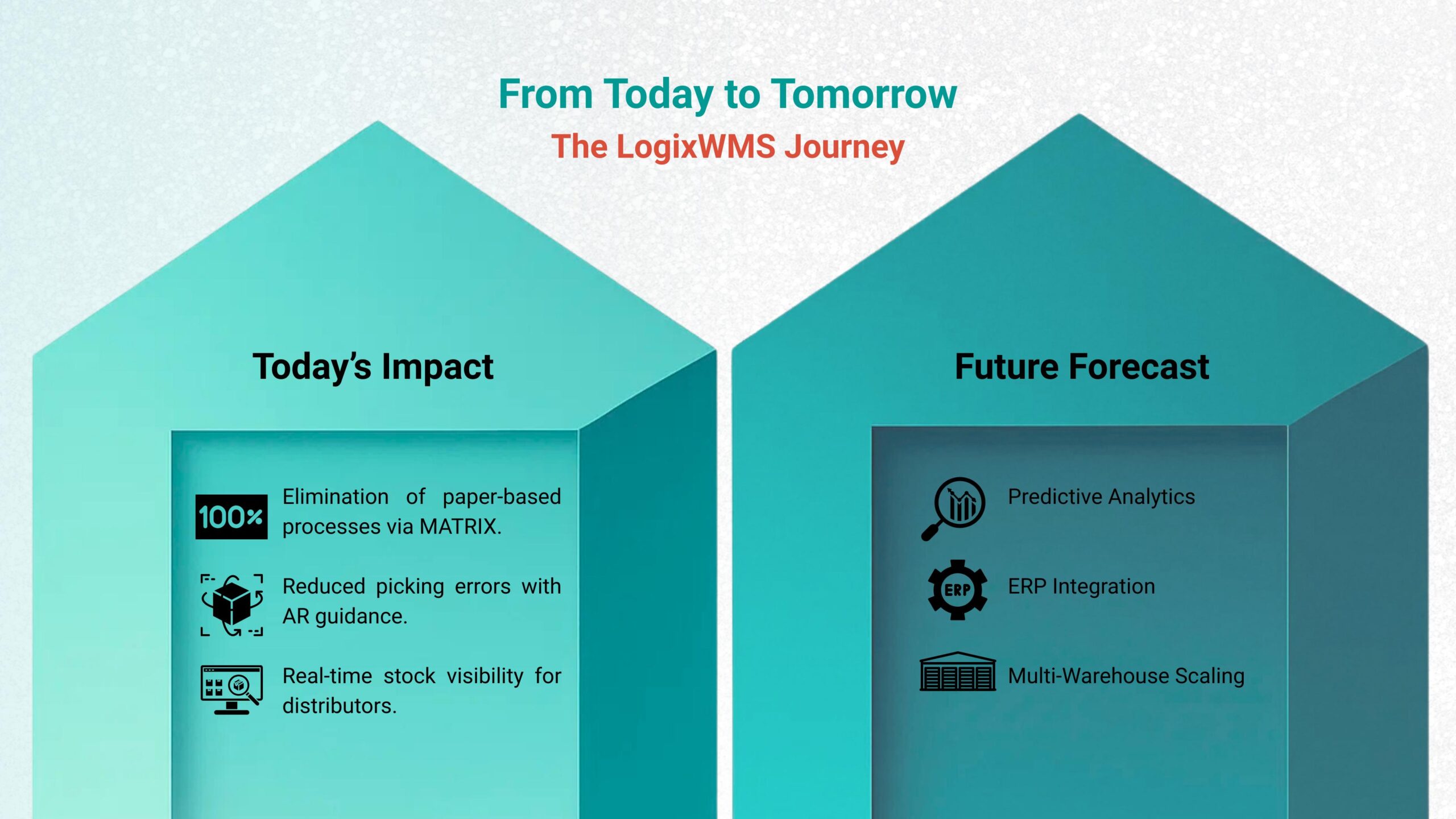
  • Inventory Accuracy: Increased from 75% to 98%, significantly reducing discrepancies and stock reconciliation issues.
  • Operational Efficiency: Receiving times dropped by 25%, while order picking throughput increased by 30%.
  • Cost Reduction: Overall operational costs fell by 18%, guided by labor optimization, error reduction, and space utilization.
  • Fulfillment Rates: Order fulfillment for Empresas Polar improved to 99%, with reduced lead times and improved delivery accuracy.
  • Visibility and Reporting: Real-time dashboards and customizable reports authorized proactive inventory and demand planning.
  • Employee Engagement: Staff quickly adopted the MATRIX Mobile app and AR tools, reporting reduced strain, fewer errors, and higher job satisfaction.

Key Success Factors

The project’s success was shaped by several critical factors:

  1. Collaborative Partnership: Strong cooperation between Copacker San Diego, LogixGrid, and AA Consulting ensured alignment with strategic goals and Empresas Polar’s requirements.
  2. Training and Change Management: AA Consulting’s training programs enabled smooth adoption of new workflows, minimizing resistance to change.
  3. Scalability of LogixWMS: The system easily scaled to handle growing P&G volumes, future-proofing Copacker San Diego’s operations.
  4. Innovative Technology Integration: The MATRIX Mobile app and AR features improved efficiency and accuracy beyond traditional WMS capabilities.

Future Outlook

Building on this success, Copacker San Diego plans to further expand its use of LogixWMS by:

    • Integrating more deeply with Empresas Polar’s ERP systems.
    • Using advanced analytics for predictive demand and inventory insights.
    • Extending LogixWMS to additional warehouses in its network.

With LogixGrid and AA Consulting as strategic partners, Copacker San Diego is positioned to strengthen its role as a logistics leader in Venezuela, ensuring reliable, efficient support for Empresas Polar’s distribution of P&G operations.

Beyond Today: What’s Next

The partnership between Copacker San Diego, LogixGrid, and AA Consulting altered warehousing operations from manual, error-prone processes into a simplified, technology-driven system. LogixWMS delivered measurable gains in efficiency, accuracy and customer satisfaction, enabling Copacker San Diego to match the rigorous demands of its principal distributor and support the distribution of P&G products across Venezuela.

By aligning technology with operational realities, this case highlights how modern WMS solutions can redefine warehouse management for fast-moving consumer goods in challenging market environments.