
LogixGRID | Logistics and Warehouse Automation Platform

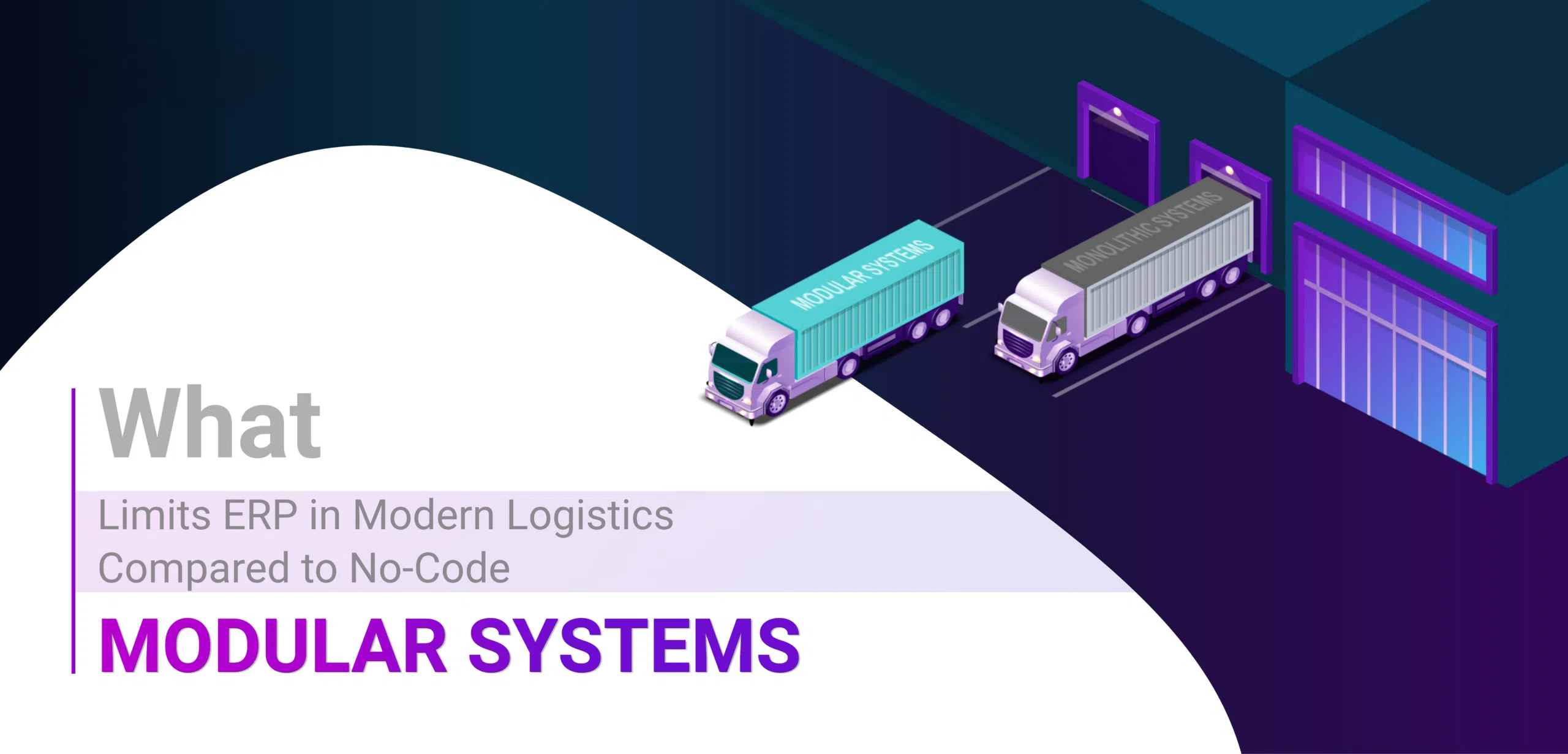
Modular Logistics vs SAP: Why No-Code is Replacing Legacy ERP in Supply Chain Execution

In global logistics, speed is a result and execution is what determines it. In modern supply chain execution, systems designed to centralize and control operations are now being tested by conditions that demand constant change, rapid response and real-time decision-making. The traditional “big suite” model, led for decades by platforms like SAP ERP, is no longer holding up under modern logistics demands. What was built to impose control is now slowing operations at the exact points where speed determines outcomes.
SAP ERP established itself as the core system for enterprise operations by bringing finance, human resources, and supply chain processes into a single, unified platform. That promise of a “single source of truth” was aligned with a business structure that prioritized stability and standardization. Logistics today operates differently. Workflows shift frequently, exceptions are constant and operational decisions cannot wait for system-level coordination. In this context, tightly connected systems begin to introduce friction rather than remove it, especially when compared to modular logistics systems designed for flexibility. This is where no-code modular systems are starting to replace traditional ERP-driven models.

What are the limitations of SAP for high-volume logistics execution?

The issue is structural rigidity. In SAP, even minor changes are forced through multiple layers, turning simple operational adjustments into system-wide exercises that slow execution by design.
As a result, three operational constraints consistently emerge: long deployment cycles, high training overhead and slow customization.
The first is deployment time. Implementations are not measured in weeks or even months, but often in years. Because deployments are tightly coordinated, configuration and testing often extend across multiple system layers before rollout. By the time the system is fully rolled out, parts of it are already misaligned with how the business actually operates.
The second is usability. The interface is dense, and operating it effectively often requires certified training. This creates dependency on a limited talent pool and increases operational friction.
The third is customization. Making even simple changes involves ABAP programming, external consultants, and extended development timelines. Instead of enabling quick operational adjustments, every change is pushed through development cycles that delay execution and disconnect systems from real-time operations. This creates a lag between identifying an issue in operations and implementing a fix within the system.
These limitations show up clearly in day-to-day operations.

In real operations In SAP In Modular Systems (LogixFlow)
Change required in routing rule for a specific client Raised as a request, passed to developers, validated across dependent workflows before implementation Updated directly within the workflow without affecting unrelated operations
A process breaks during live operations Issue is identified, escalated, and manually resolved after analysis System detects the condition and triggers predefined actions automatically
Issue identified with predefined corrective action Still waiting for development cycles and approvals before action Fix is implemented immediately at the workflow level
A new client requires a different operational flow Requires system-level configuration and alignment across modules Add or adjust a module and configure logic specific to that client
Shipment volume spikes unexpectedly Increased coordination required, changes become slower to implement Workflows continue independently without added system dependency
Ops team wants direct control over execution Dependent on technical teams and system constraints Controlled directly by operations through no-code interface

The difference becomes clearer when you look at how execution flows through the system.

What is a modular logistics engine and how does it work in modern operations?

As logistics operations become more dynamic, the need for systems that can evolve without systemic disruption has increased. Modular systems address this by decoupling operations into independent components that can be deployed and modified without affecting the entire system.
Platforms like LogixGrid’s, LogixPlatform and LogixFlow represent this approach. Instead of a single, unified system, they provide a library of over 200 specialized modules built for distinct logistics use cases such as express operations, cross-border workflows, courier management, reverse logistics, and 3PL billing. These modules can be combined based on operational requirements, allowing businesses to construct systems that align with how they function in practice.
LogixFlow builds on this approach with a no-code interface where operations teams design workflows directly. Changes no longer depend on development cycles. Instead, they can be configured directly within the system using visual logic, reducing turnaround time and removing dependency on technical intermediaries. The result is a system where execution logic can evolve in parallel with operations.

Why does no-code enable faster execution compared to ABAP in logistics systems?

The difference between ABAP-driven customization and no-code configuration is not just technical. It directly impacts execution speed. In SAP operations, customization is gated by development pipelines, which means execution is always delayed by design. In a no-code system, workflow adjustments can be implemented as soon as the requirement is identified.
This shift compresses the time between decision and execution. A logistics manager can configure routing logic, exception handling rules or process variations without waiting for backend changes. The system stops delaying execution and starts acting at the speed of operations instead of holding it back.

Why do specialized logistics modules perform better than generic ERP features?

ERP systems are built for broad enterprise coverage, which results in generalized features that don’t match how logistics actually operates. In logistics, this creates a mismatch between system capability and operational specificity. Processes such as air freight handling or 3PL billing require detailed, domain-specific logic that generic systems are not optimized for.
Modular platforms address this by offering pre-built components structured for logistics scenarios. LogixPlatform’s modules are designed for specific operational contexts, allowing businesses to implement functionality that directly reflects their workflows. This removes the need for constant workarounds and allows the system to align directly with operational reality instead of forcing adjustments.

How does AI improve execution control in logistics systems compared to traditional ERP analytics?

The third is control and monitoring. While SAP provides data and reporting, the responsibility for interpretation and action remains largely manual. LogixFlow introduces AI-driven capabilities that move beyond passive analytics. The system can identify disruptions, suggest corrective actions such as rerouting, and trigger alerts based on business rules. This reduces the gap between detection and response, where traditional systems rely on manual intervention after visibility. The system moves from passive visibility to direct intervention, removing the delay between identifying a problem and acting on it.

Why does modular deployment reduce cost and risk in logistics systems?

The fourth is deployment and cost structure. Traditional ERP implementations often require large-scale, end-to-end rollouts. This “all or nothing” approach increases both risk and investment. Modular systems allow for incremental adoption. A company can deploy specific components, such as warehousing or cross-border management, without replacing the entire system. Implementation effort is limited to targeted areas instead of requiring enterprise-wide coordination. This reduces disruption to ongoing operations during system rollout.

How do modular logistics systems handle high-volume logistics operations more effectively than ERP?

The fifth is scalability. One of the primary concerns when moving away from established ERP systems is the ability to handle high data volumes. LogixFlow addresses this by maintaining the processing capabilities required for large-scale logistics operations while retaining flexibility at the workflow level. Scaling does not introduce additional system rigidity or require restructuring workflows. Operational processes can continue adapting even as transaction volumes increase.

What actually happens when logistics volume increases?

As logistics volume increases, systems are expected to process more transactions without degrading performance. However, volume also introduces variability, requiring more frequent adjustments across workflows.
In SAP-based environments, increased volume amplifies system interdependencies. Changes become harder to isolate, and the effort required to implement them rises. The system becomes more stable, but less adaptable.
In modular systems, volume does not introduce the same level of constraint. Workflows operate independently, allowing adjustments to be made without affecting unrelated processes. This maintains execution speed even as operational complexity increases.

Why are modular, no-code systems replacing traditional ERP?

The shift away from rigid ERP systems is not a matter of preference. It is already happening at the operational level. Logistics execution no longer waits for systems to catch up. They move, and systems either support that movement or slow it down.
Platforms like SAP were built to enforce structure. In modern logistics, that structure now slows response where speed matters most. In conditions where workflows change daily, a system that requires coordination, development cycles, and external dependency for every adjustment becomes a limitation.
Modular, no-code systems are a structural correction, not an upgrade. They remove the dependency between change and complexity, allowing operations to respond without friction.
At this point, the trade-off is already visible in how teams operate. Some are still waiting on systems to catch up. Others have moved to systems that keep up with them.

Key Takeaways

  • Execution delays in SAP come from routing changes through multiple system layers
  • Modular systems keep execution within workflows, reducing dependency on development cycles
  • No-code allows ops teams to adjust routing, billing, and exception handling directly
  • Performance breaks under variability, not just volume

FAQ’s

Yes. SAP handles financials, while modular systems manage routing, workflows, and execution.

Routing rules and process logic can be updated directly without development cycles.

Each client’s workflow is configured independently, without affecting other operations.

Workflows can be updated directly without relying on development teams.

When operations involve frequent routing changes, exceptions, or client-specific workflows.

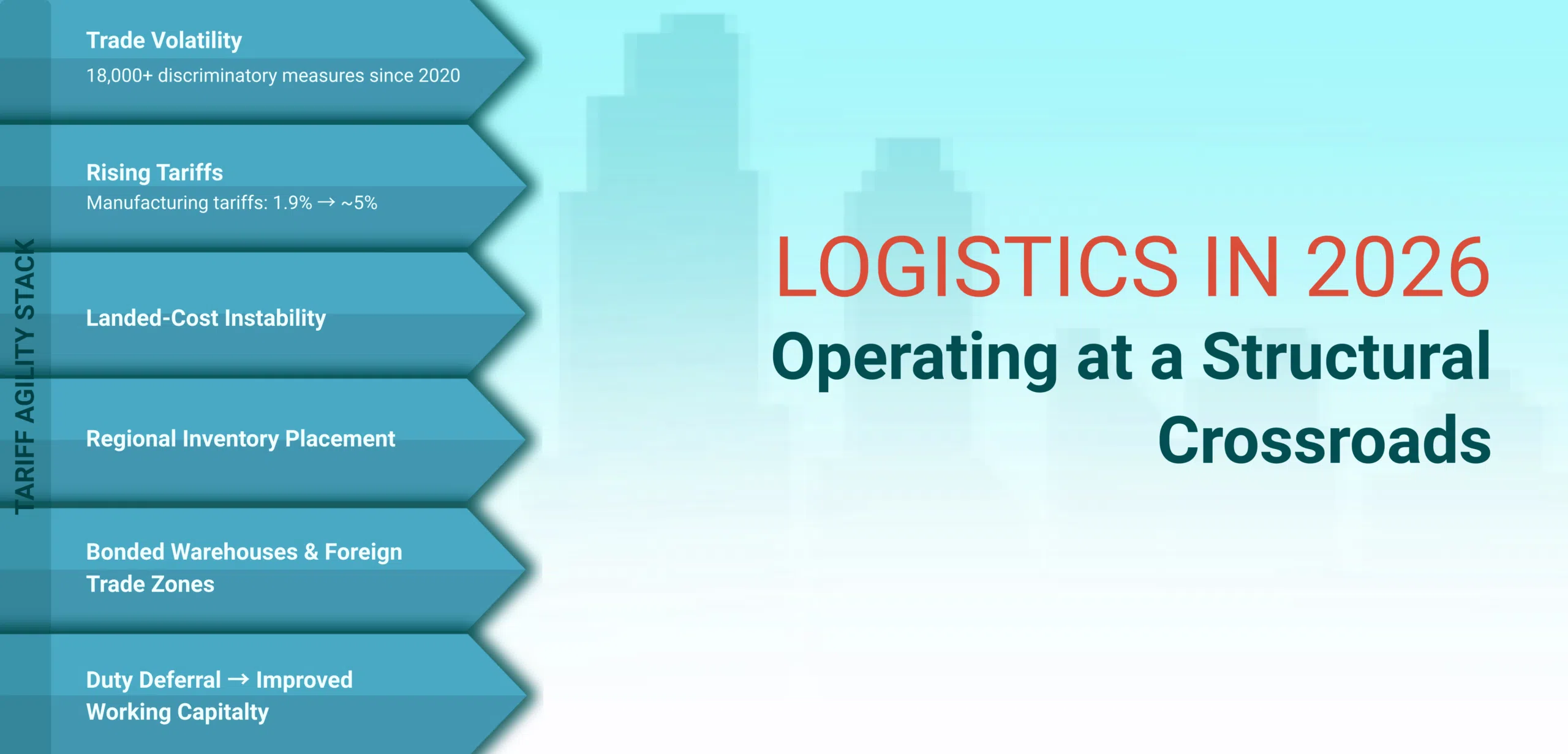
Logistics in 2026: Operating at a Structural Crossroads

In 2026, the global logistics and warehousing industry entered a structurally different phase. The assumptions that governed supply chains for decades, including stable trade rules, cost-first optimization, and predictable global flows, no longer hold.
The operating environment is now defined by policy volatility, regional realignment, and an increasing gap between planning intent and operational reality. For senior leadership, the performance criteria have shifted. Efficiency remains important, but it is no longer sufficient on its own. Agility, resilience, and structural independence now determine long-term competitiveness.
This shift is structural.

From Optimization to Structure

Cost Predictability | Cost Variability
Global Standardization | Regional Divergence
Just-in-Time | Inventory Optionality
Manual Planning | AI-mediated Planning
Static Routes | Simulated Rerouting
Efficiency Metrics | Resilience Metrics

1. The Protectionist Pivot: Mastering Tariff Agility

For most organizations, trade policy has become an active source of operational instability, directly affecting pricing, contracts, and inventory decisions.
This instability is not theoretical. Since 2020, approximately 18,000 discriminatory trade measures have been implemented globally. In the first ten months of 2025 alone, 2,500 new measures were introduced, according to Global Trade Alert. The cumulative effect has been rapid fragmentation of previously stable trade corridors.
The financial impact is direct. Trade-weighted average tariffs on manufacturing rose from 1.9 percent in 2024 to nearly 5 percent in 2025, forcing many organizations to revise landed-cost calculations multiple times within a single year. Cost certainty, once assumed, is now conditional.
Because cost models can no longer be locked in with confidence, executive strategy is shifting away from pure Just-in-Time models toward regionally distributed inventory and sourcing structures. This objective is operational optionality.
Bonded warehouses and Foreign Trade Zones are seeing renewed strategic importance. By deferring duties until the point of sale or domestic entry, companies reduce capital lock-up and retain flexibility in markets where tariff structures change frequently. In an environment of higher interest rates and tighter working capital, this approach provides measurable financial benefit.
Tariff agility is becoming a baseline requirement for operating at scale.

Baseline Operating Assumptions for 2026

Trade policy will continue to shift within planning cycles
Regional strategies will diverge rather than converge
Tariff exposure will remain difficult to lock over the long term
Disruption response will need to be pre-modeled
Human-only planning will fall behind system speed

2. A World of Fragments: The 2026 Regional Outlook

One of the central challenges for logistics leaders in 2026 is that a single global strategy no longer works across regions. Each major region now operates under distinct cost structures, regulatory demands, and capacity constraints, forcing organizations to manage fragmentation inside their own networks.
The result is coordination complexity, where decisions optimized for one region often degrade performance in another.

North America

North America has consolidated its position as a reshoring and nearshoring hub. By 2026, 69 percent of supply chains serving U.S. customers are located within the Americas, according to Prologis Research.
Warehouse utilization has reached 85.5 percent, creating capacity constraints that accelerate investment in automation. Automated Storage and Retrieval Systems are no longer viewed as efficiency upgrades but as necessary responses to labor availability and throughput requirements.

Asia-Pacific

Asia-Pacific continues to function as both a manufacturing base and a consumption market, but production is more geographically distributed than in previous cycles. Manufacturing shifts to Vietnam, Thailand, and Indonesia have driven demand for high-density and vertically optimized warehousing.
India stands out within the region. With projected 9.2 percent CAGR through 2026, growth is being driven by large-scale infrastructure upgrades, including freight corridors, expressways, port digitization, and tax-driven supply chain consolidation.

Europe

In Europe, regulatory pressure has reshaped logistics priorities. From January 2026, the EU Emissions Trading System fully applies to maritime transport, requiring carriers to account for 100 percent of emissions.
This affects routing decisions, carrier selection, and total transport cost structures. At the same time, logistics real estate remains constrained. Vacancy rates in core hubs such as Germany remain below 5 percent, limiting expansion flexibility despite increasing compliance requirements.

Latin America and Africa

Latin America and Africa are gaining importance as manufacturing and transit regions rather than peripheral markets. Manufacturing exports now account for 40 percent of Mexico’s GDP, reinforcing its role as a critical nearshoring destination.
In Africa, the adoption of digital customs platforms has materially reduced clearance times. Early adopters, including Egypt and South Africa, have recorded 30 to 50 percent improvements, improving reliability in cross-border movement.

Oceania

Australia and New Zealand are prioritizing supply chain security through domestic capability building. Investments are focused on local manufacturing buffers, strategic inventory positioning, and technology-enabled maritime monitoring to protect long trade lanes with limited redundancy.

What Often Goes Unaddressed

Many organizations continue to treat trade policy, regional operations, geopolitical risk, and technology as separate planning domains. In practice, these factors now interact continuously. Decisions made in isolation increasingly compound risk rather than reduce it.

3. Geopolitics as a Meta-Risk

By 2026, geopolitical disruptions routinely invalidate logistics plans that were operationally sound only weeks earlier. Energy access, regulatory alignment, and geographic proximity to demand centers now play a decisive role in network design.
This has led to a shift toward what many organizations describe as a “flight to quality,” favoring locations with reliable infrastructure, stable governance, and predictable energy supply.
Critical chokepoints such as the Suez and Panama canals continue to operate, but their reliability is no longer taken for granted. To address this exposure, many organizations are implementing digital twins of their logistics networks. These systems support real-time simulation of route closures and capacity disruptions with rerouting decisions occurring within minutes rather than hours.
The practical outcome is a move away from reactive crisis management toward pre-modeled response scenarios embedded within planning systems.

An Operational Implication

If a major trade measure were introduced this quarter, could cost models be adjusted without renegotiating contracts?
If a critical chokepoint were disrupted for ten days, could routes be recalculated without executive escalation?
If demand shifted regions mid-year, would planning systems adapt without manual overrides?
If the answer to any of these is no, the constraint is structural.

4. From Human-Centered to AI-Mediated Operations

Technology now functions as the primary decision framework within logistics operations, rather than a supporting layer. Traditional human-centered planning models are no longer able to keep pace with the volume, speed, and interdependence of logistics decisions.
As a result, by 2026, 73 percent of executives expect their supply chains to rely heavily on AI-driven systems. Already, 24 percent of organizations report that AI-based planning systems influence daily operational decisions.
Spending patterns reflect this shift. Nearly 40 percent of freight forwarders and 3PLs are allocating more than 25 percent of their 2026 technology budgets to autonomous or semi-autonomous systems.
Measured outcomes are consistent across early adopters. These organizations report approximately 15 percent reductions in logistics costs and 35 percent improvements in inventory management performance. Beyond cost, AI adoption is changing planning timelines. Decision-making is becoming continuous rather than periodic, driven by real-time data rather than static forecasts.
Human expertise has not been replaced. Its role has changed. Leadership focus is moving from operational resolution toward governance, exception design, and system oversight.

What Has Quietly Become Non-Negotiable

Tariff-aware inventory design
Region-specific operating models
Pre-modeled disruption scenarios
AI-mediated planning at scale
Infrastructure decisions aligned to policy risk

Leadership at the Structural Level

After years of volatility, policy shock, and planning breakdowns, the defining characteristic of logistics leadership in 2026 is structural readiness.
Organizations that perform well are not necessarily faster or larger. They are designed to operate under volatility without repeated reconfiguration. They have regional flexibility, tariff-sensitive infrastructure, geopolitical risk models, and AI-mediated planning rooted into daily operations.
The industry has moved beyond incremental optimization. Structural design now determines resilience, cost stability, and responsiveness.
For leadership teams, the challenge is no longer whether change is needed, but whether current operating structures are capable of sustaining performance under permanently altered conditions.

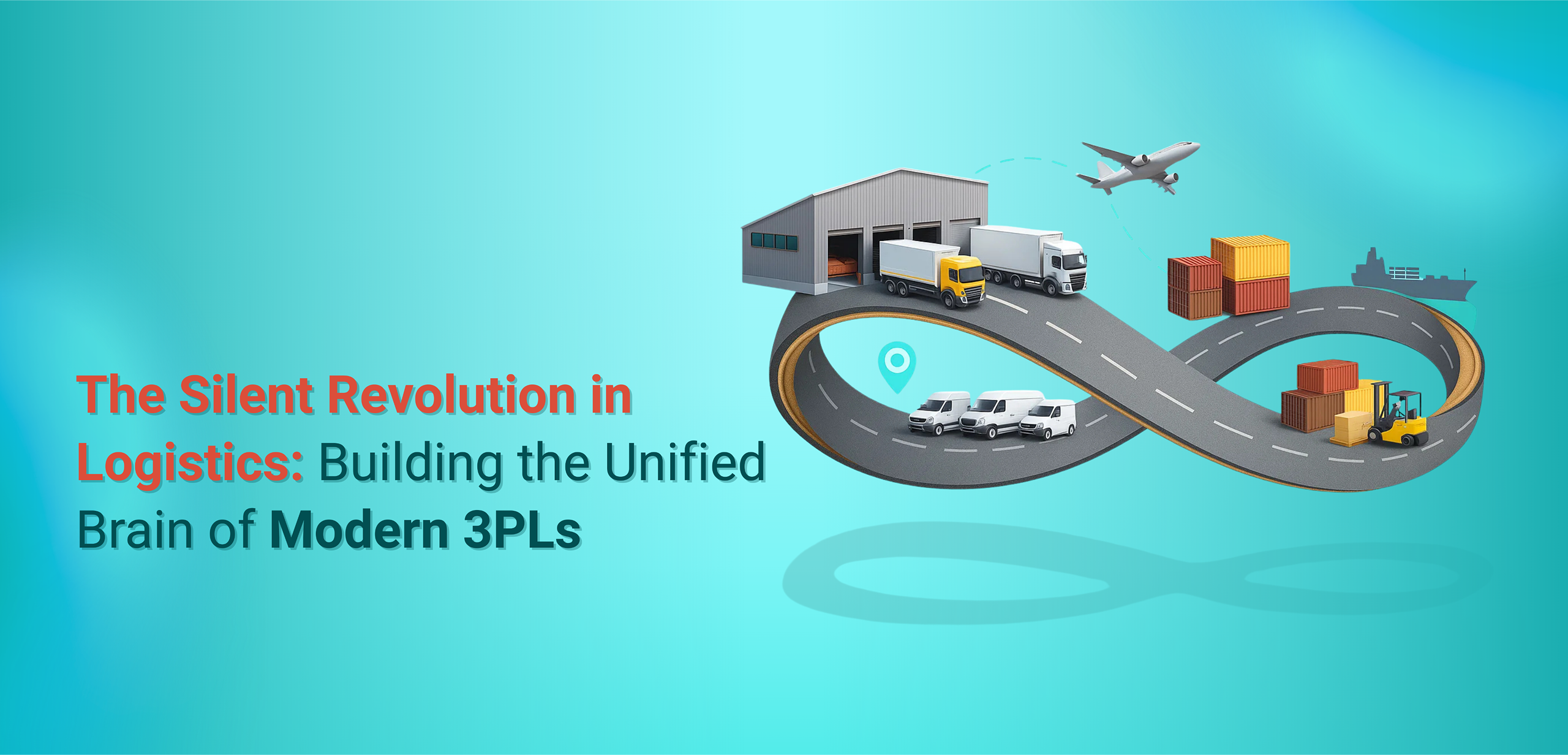
The Silent Revolution in Logistics: Building the Unified Brain of Modern 3PLs

Every industry has its founding narratives. Tech has the garage. Finance has the crisis. Logistics has the spreadsheet named “FINAL_FINAL_v3”.
But picture this instead.
A logistics manager somewhere in North America opens ten dashboards before coffee, all calibrated to disagree on the same data. She
clicks through them with the practiced resignation of someone fluent in logistical static. WMS here, TMS there, freight system in another
tab, CRM operating on a completely separate timeline. Information everywhere, understanding nowhere.
Each login solves a single function while collectively generating operational drag.

And here’s the plot twist: This isn’t incompetence. It’s a systemic design.

The kind of architecture that emerges when each department solves its own problem in its own decade, leaving behind a digital archaeological site where WMS lives in the Bronze Age, TMS thinks it’s in 2014, and CRM behaves like it’s allergic to integration.
Everyone knows the joke: logistics doesn’t run on software, it runs on the people who remember where the software breaks.

“Global logistics has become a museum of siloed software stitched together by human patience.”

And here’s the part nobody admits out loud: For 3PLs, this fragmentation has quietly become the largest invisible tax on growth and the bill is now too large to ignore.
LogixGRID exists because the industry finally admitted the truth: the problem is not the people. It’s the ecosystem.
What follows is the anatomy of that ecosystem and the strategic realignment taking place among 3PLs who are tired of solving yesterday with yesterday’s tools.

The Communication Problem in a $100+ Billion Market

Imagine the scale. Every container, every shipment, every driver, and every consignee is a node in a massive, dynamic network. Every handoff, every status check, and every exception alert is a potential point of failure. The human element, while indispensable for strategy and problem-solving, can’t keep pace with this velocity.

Here’s where the system often breaks:

  1. Vague or Late ETAs: A 2025 DHL shopper data report highlighted rising frustration among consumers, with 52% citing “long delivery times” as a pain point, up from 46% the previous year. Ambiguous or delayed updates compound this frustration, even if deliveries are technically on time.
  2. Port Dwell and Demurrage Fees: Poor communication about congestion can lead to costly, avoidable penalties. According to Container xChange’s 2023 report, the average two-week demurrage and detention fee is around US$1,219 per container. Without timely information, teams can’t act proactively to minimize these charges.
  3. Channel Mismatch: The GCC is a digital-first region, with near-universal social and messaging penetration, 100% active social IDs in the UAE, and 99.6% in Saudi Arabia. WhatsApp has become the lingua franca for communication, from drivers to BCOs. Updates buried in emails or portals risk invisibility.
  4. Manual Handoffs During Disruptions: When a critical event occurs at 2 a.m., a human drafting a notice at 9 a.m. introduces unnecessary delay. This slow response can cascade, compounding disruption and impacting downstream operations.

“In a market exceeding US$100 billion, communication efficiency determines profitability.”
Historically, trade and communication have always been intertwined. In the 19th century, telegraph networks revolutionized shipping by giving port operators real-time access to vessel movements. Today, AI is the modern telegraph, but infinitely faster, smarter and predictive.

The Silo Paradox: More Software, Less Supply-Chain Intelligence

A typical 3PL today is a network of isolated subsystems: WMS, TMS, Freight Forwarding, YMS, fleet management, CRM, HRM, and finance systems all orbiting independently. None were designed to speak to each other out-of-the-box.
A 2024 logistics survey captured the industry’s collective sigh: integration with existing systems is the number one barrier to adopting new technology. The fragmentation is so widespread that even world-class 3PLs in Asia, Europe, and North America are slowing themselves down with duplicated data, manual reconciliation, and outdated decision frameworks.
You can see the paradox in action:

More Software
Means More Data
Means More Noise
Means Slower Decisions
Means Worse Performance.

The very tools meant to authorize logistics end up suffocating it.
Manhattan Associates summarized it plainly. Distribution, transportation, labor, and yard management often operate in silos, separate truths, separate timelines, separate blind spots. In this world, a customer tracking portal is only as accurate as the slowest, most isolated system behind it.
It is a structural risk.

Margin Leakage by Design: How Fragmentation Taxes Every Shipment

Siloed systems are expensive in the same way climate change is expensive: slowly, everywhere, and with disproportionate impact.

Duplicate Work
Teams become human middleware. Export from WMS. Re-enter into TMS. Copy to CRM. Re-check in a spreadsheet with a five percent error rate. Multiply that across clients, shifts, and months. This is operational entropy disguised as work.
Decision Latency
“You cannot set up what you cannot see.”
Inventory visibility lags. Shipment issues surface hours late. Managers operate with stale data. Lumenalta’s finding is blunt: disruptions get sluggish responses that cost sales and inflate expenses.
Compounding Errors
Every manual transfer invites a domino chain of miscounts, wrong addresses, backorders, refunds, and quiet margin erosion.
Poor Customer Experience
Visibility becomes a luxury instead of a standard. Clients log into multiple systems. Customer teams chase information across departments. Trust evaporates.
Higher Operating Costs
Fragmentation forces companies to maintain overlapping systems, redundant databases, expensive integrations, and inflated safety stocks. CIO surveys reveal that 90 percent believe outdated systems block innovation. Consolidation, meanwhile, can cut IT and operational costs by up to 65 percent.
This is not inefficiency. It is margin leakage at scale.

A Global Map of the Same Problem, Solved Differently

What makes the logistics industry uniquely interesting is that silos exist everywhere, but each region responds according to its economic patterning.

Asia Pacific
Fast growth created complicated system mosaics, yet the region is now a leader in digital unification. Dimerco’s integrated cloud system is a case study in real-time data flow, API transparency, and eliminating multi-portal fatigue for clients.

Middle East and MENA

Government-driven modernization pushes integration from the top. Saudi Arabia’s Fasah unified customs processes so effectively that clearance times fell from a week to hours. The region is leapfrogging incremental improvements and going straight to unified ecosystems.

Europe and Africa
Europe wrestles with legacy ERPs and country-specific systems but is steadily consolidating through cloud-native platforms. Africa’s younger logistics companies often skip legacy entirely, adopting integrated systems by default.

Latin America
Transitioning rapidly under e-commerce pressure. A Brazilian distributor saw measurable improvements in communication, cost efficiency, and OTIF after moving from fragmented processes to a unified ERP.

North America
Ironically, some of the world’s most sophisticated 3PLs still face massive internal silos due to acquisitions and legacy infrastructure. Even here, 58 percent of 3PLs report integration challenges. Control towers and API-driven architectures are finally bridging the decades-old gaps.

The theme is universal. Integration is no longer competitive optimization. It is survival.

How Leading 3PLs Are Engineering Their Escape From Silo Gravity


The strategic response to fragmentation falls into several patterns:

Unified Platforms and ERPs
Replacing islands with a connected continent. DHL, Dimerco, and global leaders now run their operations on single, shared platforms where inventory, transport, and finance live in the same world.
API and Middleware Integration
For those who cannot replace systems, the solution is connectivity. Event-driven architecture, message buses, and APIs create a synchronized nervous system that unifies multiple tools.
Cloud Migration
Cloud-native logistics architectures reduce technical debt, accelerate innovation, and simplify scaling.
Process Redesign and Change Management
A unified system without unified behavior is still fragmented. High-performing 3PLs map flows, retrain teams, and build cross-functional operational intelligence.
Data Analytics and Automation
Once data lives in one reality, AI, ML, and automation become possible. Not as terminology. As everyday accelerators of accuracy and throughput.
This is how the industry moves from patching symptoms to anticipating systems.

LogixGRID: The Platform That Turns Complexity Into Coherence

LogixGRID doesn’t arrive as a software provider. It arrives as the infrastructure beneath the infrastructure, the part of the stack that finally learns to think in full sentences.

LogixPlatform
An AI-powered logistics automation environment containing WMS, TMS, freight, CRM, finance, delivery, and more. All in one integrated, native data model. Warehouse updates instantly inform transport. Financials auto-sync. Clients and teams operate in the same truth-space.
LogixFlow
A no-code creation engine that lets logistics companies build, customize, reshape, and evolve workflows without writing a line of code. Unique checklists, onboarding flows, SLAs, quality controls, custom validations. Built visually. Activated instantly.
External Integrations
Carrier networks. ERPs. E-commerce platforms. Accounting tools. All connected through plug-and-play connectors and APIs.
LogixGRID removes the need for digital duct tape. It replaces the archipelago with a unified continent.

If You Didn’t Skim, You Already Know the Answer

Most logistics conclusions wrap up with optimism.
This one does not.
This one asks a question.
Imagine a warehouse twenty years from now.
Everything is unified, automated, visible, predictable.
Now imagine walking into that warehouse and discovering something strange:
It feels quiet.
Not peaceful.
Not calm.
Quiet in the way a solved puzzle becomes quiet.

“That silence is the sound of logistics without silos.”

No redundant keystrokes.
No conflicting databases.
No midnight reconciliations.
No managers triangulating the truth between systems.
No customers calling because they see gaps before you do.
No operations team doing heroics that should not be necessary.

Just synchrony.
Just clarity.
Just logistics as its own intelligence.

That is the world LogixGRID is designing. Not louder, faster, or shinier.
Just coherent.

And coherence, in the end, is the highest form of sophistication.

Ready to Transform?

It’s simple: upgrade to LogixPlatform today. Move your logistics billing from manual, siloed, error-prone mess to automated, accurate, HASiL-compliant workflows across your entire operation.
Let us help you transform your invoicing, so your operations run smoother, your cash flows faster and your compliance is airtight.

Talk to Logistics Experts

FAQ’s

LogixGRID solves the growing problem of fragmentation across WMS, TMS, freight, CRM, finance, and other systems that operate in silos. These disconnected tools create duplicated work, slow decisions, inconsistent data, and major operational inefficiencies. LogixGRID unifies these systems into a single coherent platform so that logistics teams operate with one shared truth.

Fragmentation leads to duplicate data entry, delayed visibility, compounding errors, and poor customer experience. It increases operating costs due to redundant systems, inflated safety stock, and slow decision-making. The PDF states that this creates “margin leakage at scale,” quietly eroding profitability across every shipment.

Regions follow unique patterns:

  • Asia Pacific leads in integrated cloud systems with real-time data flow.
  • Middle East & MENA drive integration through government-led modernization.
  • Europe & Africa steadily move toward cloud-native consolidation.
  • Latin America accelerates unification under e-commerce growth.
  • North America battles legacy silos from acquisitions but increasingly uses APIs and control towers.

Top 3PLs use:

  • Unified ERP platforms
  • API-driven integration
  • Cloud migration
  • Process redesign & team retraining
  • Analytics, automation & AI

These strategies help them shift from reactive patching to predictive, systemwide intelligence.

LogixPlatform is a fully unified, AI-powered logistics operating environment where WMS, TMS, freight, CRM, delivery, and finance exist in one native data model.

LogixFlow is a no-code engine allowing companies to build custom workflows, SLAs, checklists, and validations without engineering.
 Together, they eliminate digital fragmentation and create operational coherence.

4PL Orchestration – Redefining the Future of Supply Chain Management Beyond 3PL

For years, we’ve all heard about 3PLs — the third-party logistics providers that keep goods moving through transportation, warehousing, and fulfillment. They’ve done their job well. But as supply chains grew borderless, layered, and data-hungry, execution alone wasn’t enough. Something bigger had to step in — a model that could see the entire chessboard. Enter Fourth-Party Logistics, or 4PL as we like to wink at it, ¡Hola!

In simple terms, 4PL is a supply chain integrator — it designs, orchestrates, and optimizes the entire network while coordinating multiple 3PLs, carriers, and systems through a control tower model.

Interestingly, the idea isn’t new. It traces back to the mid-1990s, when Procter & Gamble teamed up with Accenture to bring order to its sprawling logistics web. P&G didn’t just need more trucks or warehouses; it needed orchestration — one brain managing the entire operation. That collaboration quietly gave birth to what we now call the 4PL model.

Fast forward to today, and the same concept powers global giants like Maersk and DHL, who run multi-continent networks with real-time control, resilience, and transparency. Talk about a glow-up!

3PL vs 4PL: The Executive Contrast

If 3PLs are the skilled drivers, 4PLs are the air-traffic controllers. One executes; the other orchestrates.

Scope: A 3PL handles specific functions — transport, warehousing, or distribution. A 4PL owns the entire strategy, designing and optimizing the ecosystem that multiple 3PLs operate within. It’s the difference between moving goods and moving a supply chain.

Accountability: 3PLs are vendors; 4PLs are single points of accountability. For a shipper, that means one contract, one governance model, and one set of performance KPIs — even if ten different carriers and warehouses are in play. No more “who messed up?”.

Asset Posture: Most 3PLs are asset-heavy. 4PLs stay asset-light, leveraging the right partners, carriers, and technology stacks for agility.

Technology: 4PLs are built on control towers, unified data platforms, and AI-driven insights. They bring predictive visibility across the chain, highlighting risks before they turn into costs.

Substantially, 3PLs execute logistics; 4PLs engineer it. Yes, there’s a difference — and a big one.

Where 4PL Adds Value: The End-to-End Chain

Order Collection (First Mile): Managing multiple vendor pickups, consolidating loads, routing intelligently, and implementing SLAs — all orchestrated by the 4PL while 3PL fleets execute, often powered by LogixDMS.

Imports & Freight Forwarding: 4PLs run procurement of carriers, lane design, documentation, and compliance. Tools like FreightNX create optimized playbooks and audit freight for cost accuracy.

Customs Brokerage: Through digital workflows, HS-code governance, and provider selection, 4PLs assure smooth clearance and data consistency, integrated with the control tower dashboard Alya/Analytics.

Warehousing & Distribution: From designing DC networks to monitoring KPIs across third-party warehouses, the 4PL ensures products are stored and moved efficiently under LogixWMS guidance.

Last-Mile Delivery: They optimize carrier mixes, monitor cost-to-serve analytics, and track OTIF (On-Time-In-Full) performance, turning delivery from a cost center into a differentiator, orchestrated via LogixDMS.

Freight Bill Audit & Payment (FBAP): 4PLs validate contracts, rates, and accessorials, resolving disputes and automating payment workflows to reduce leakages.

COD Oversight & Reconciliation: Especially in retail-heavy supply chains, 4PLs oversee cash-on-delivery processes, reconciliation, and reporting through control-tower dashboards like Alya/Analytics.

Each stage represents a project bucket, connected by one data layer and governed by one accountability framework.

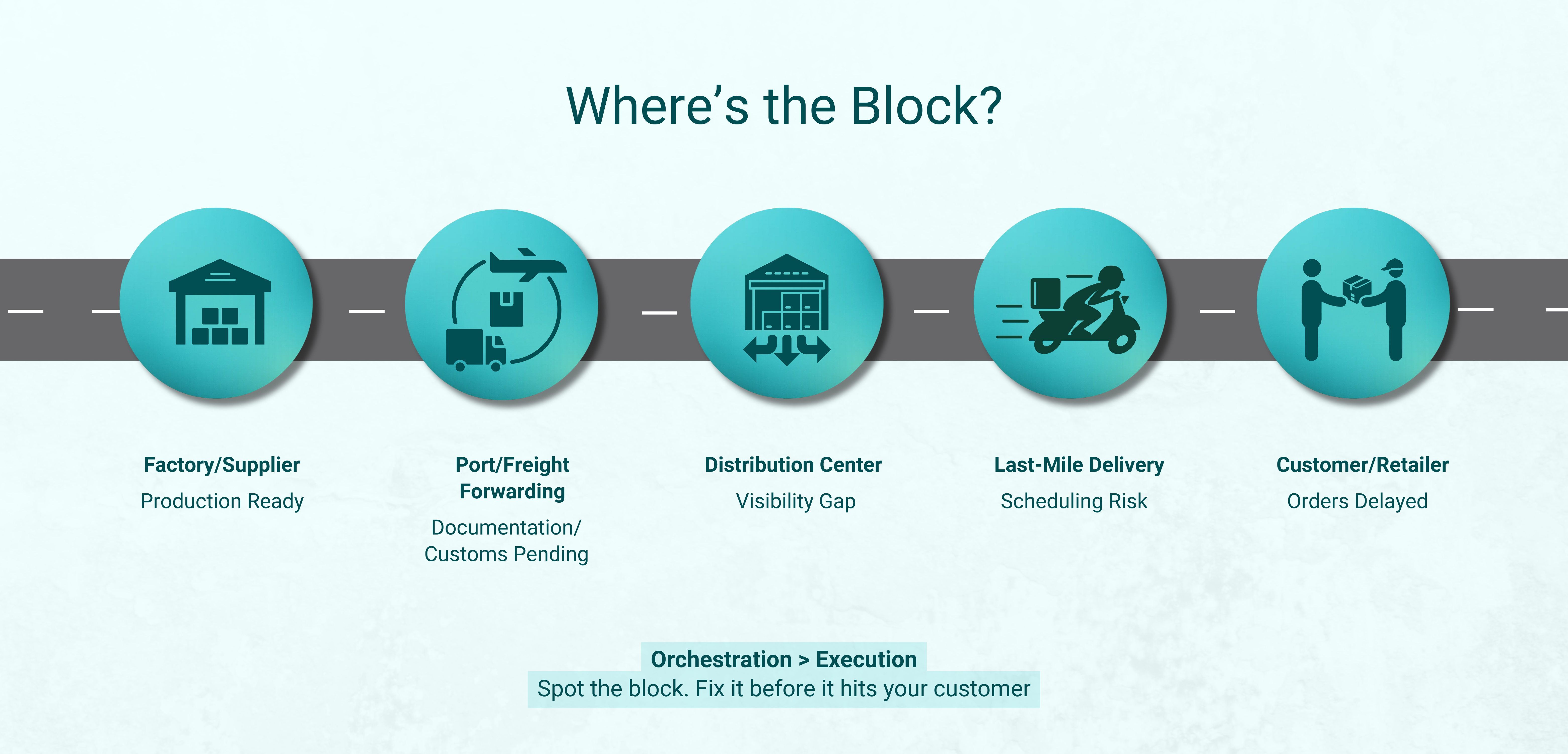
Spot the Block?

Let’s turn on our imagination: a shipper operates five 3PLs across Asia and Europe. Reports arrive weekly, often through spreadsheets. Inventory visibility lags by 48 hours. Freight disputes grow monthly. Customer service discovers delays only after the damage is done.

What’s missing here — better carriers, better tech, or better orchestration?

The missing piece is orchestration. That Aha! moment.

A 4PL connects every data source, aligns each partner under shared KPIs, and manages exceptions in real time — turning fragmented operations into one cohesive ecosystem.

Inside the 4PL Operating Model

  • 1. Commercials & Governance

    4PL engagements are structured under a Master Services Agreement (MSA) linked to SLAs and OLAs. The pricing model ties directly to performance KPIs like OTIF, cost-to-serve, dispute rate, and dwell time.

    Governance follows a cadence: weekly operational reviews, monthly performance dashboards, and quarterly network redesign sessions — aligning cost, service, and agility.

    2. Control Tower & Data Foundation

    At the heart of every 4PL lies the control tower — a multi-party data layer that integrates TMS, WMS, OMS, and carrier APIs. Exceptions are flagged automatically, not buried in spreadsheets.

    A unified data model governs every entity — locations, SKUs, contracts, and partners — assuring consistency across systems.

    3. Resilience & AI

    AI models predict ETA deviations, flag disruption risks, and simulate scenarios, making supply chains proactive rather than reactive. Early-warning systems and what-if simulations drastically reduce expedite costs and disruptions. Basically, it thinks ahead so humans don’t have to panic later.

    4. Sustainability

    Modern 4PLs embed sustainability by optimizing mode mix, consolidating loads, and tracking carbon intensity within the same control tower. ESG performance becomes measurable, not just aspirational.

The KPI Stack that Runs a 4PL

4PLs measure not just how goods move, but how intelligently they move.

Executive KPIs:

  • Perfect Order / OTIF
  • Cost-to-Serve
  • Inventory Turns
  • Carbon Intensity

Operational KPIs:

  • Dwell Time
  • Carrier Compliance
  • Forecast Accuracy
  • Exception Cycle Time
  • Invoice Dispute Rate

These metrics don’t sit in silos — they’re interconnected. When dwell time drops, OTIF improves. When cost-to-serve aligns with carrier compliance, the network gains velocity.

The 90-Day Playbook to Stand Up a 4PL

Days 0-30:

  • Baseline lanes, costs, and SLAs
  • Ingest contracts and data
  • Connect top carriers
  • Launch FBAP pilot on top-spend lanes

Days 31-60:

  • Run carrier re-bids
  • Publish milestone tracking across the chain (PO → origin → DC → delivery)
  • Release KPI Dashboard v1

Days 61-90:

  • Fix data quality gaps
  • Expand FBAP coverage to 80%+ of spend
  • Enable AI-driven ETA prediction
  • Present network redesign options
  • Deploy rapid custom workflows via LogixFlow

In three months, a shipper can evolve from scattered data and siloed vendors to an orchestrated, measurable, and resilient logistics network.

Risks and How to Ease Them

  • Single-Provider Lock-In: Mandate open standards and data ownership clauses. The shipper should always own its data.
  • Misaligned Incentives: Balance gain-share models with baseline guarantees and transparent scorecards.
  • Black-Box Decisions: Demand transparency — both in how the control tower prioritizes decisions and how data flows are governed.

4PLs succeed when trust is contractual, not just relational.

FAQ: How 4PL Solves Common Supply Chain Challenges

Common ChallengeTraditional Approach4PL Outcome
First-mile pickups from multiple vendorsEach 3PL handles separately; coordination relies on manual follow-ups4PL designs and governs pickup routes, consolidates shipments, enforces SLAs, executed via managed 3PL fleets
Imports & freight forwarding complexityShipper or 3PL manages carriers individually; documentation often fragmented4PL orchestrates carrier procurement, lane design, compliance, and exception playbooks for seamless movement
Customs brokerage inefficienciesHandled per shipment with inconsistent data; delays common4PL selects providers, enforces HS-code governance, and streamlines digital documentation workflows
Warehouse & DC network blind spots3PLs operate independently; inventory visibility limited4PL optimizes network design, strategically places inventory, and governs 3PL KPIs for efficiency
Last-mile delivery delaysCarriers selected by proximity or cost; reactive management4PL optimizes carrier mix, leverages cost-to-serve analytics, and manages OTIF performance proactively
Freight bill disputes & payment delaysManual audits; slow dispute resolution4PL validates contracts/rates, handles accessorials, automates dispute resolution, and streamlines payment workflows
Payment collection / COD reconciliation gapsCarrier-led collections; inconsistent reporting4PL defines policies, enables carriers, reconciles payments, and provides consolidated reporting via control tower
Lack of end-to-end visibility and predictive insightRelies on periodic reports; reactive problem-solving4PL integrates multi-party data, runs exception-based workflows, and delivers predictive ETAs and KPI dashboards
Difficulty improving resilience without increasing costExpedited shipments, manual intervention, fragmented visibility4PL uses unified data, scenario planning, and early-warning systems to reduce disruptions while maintaining cost efficiency
Unclear ROI from 3PLs / fragmented accountabilityMultiple vendors with separate KPIs; shipper struggles to measure impact4PL provides a single point of accountability, aligning all partners under shared KPIs and transparent governance

Implementation Blueprint:

  • Week 1–2: Discovery, lane baseline, KPI setup
  • Week 3–4: Integrations and FBAP pilot (LogixTMS & FreightNX)
  • Week 5–8: Vendor pickup orchestration (LogixDMS) and tower v1 (Alya/Analytics)
  • Week 9–12: Customs, COD reconciliation, KPI cadence. Rapid workflow apps (LogixFlow)

Where the Industry is Headed

4PL isn’t a replacement for 3PLs — it’s their evolution. As supply chains stretch across continents and data replaces guesswork, the orchestration layer becomes non-negotiable.

In the coming decade, every large enterprise will run a control tower, every logistics network will be data-governed, and every decision will hinge on predictive intelligence.

The 4PL model isn’t a luxury anymore — it’s the foundation of modern logistics resilience.

And those who embrace it early — with the right mix of partners, platforms, and purpose — will be the ones shaping the global logistics map of tomorrow.

Optimizing Warehouse Operations in Venezuela: A LogixWMS Implementation Case Study

Executive Summary

Copacker San Diego, a leading Venezuelan warehousing and logistics company, faced mounting operational challenges while managing P&G inventory for its principal client, Empresas Polar, the official distributor of P&G’s products in Venezuela. Reliant on manual processes and Excel-based systems for inventory management, the company struggled with inventory accuracy, real-time visibility, and operational throughput. As the inventory volume grew, these traditional methods fell short of providing accurate, real-time visibility and detailed control across warehouse processes, creating major challenges in receiving, validating and storing shipments efficiently and securely.

To address these challenges, Empresas Polar required a reliable and scalable warehouse management system (WMS) to support growing inventory volumes and ensure efficient fulfillment.

In collaboration with AA Consulting, a trusted local partner, Copacker San Diego adopted LogixWMS, an effective and end-to-end warehouse management solution implemented by LogixGrid. The system delivered real-time visibility, optimized palletization and picking, introduced the MATRIX Mobile app for Android operations, and integrated Augmented Reality (AR) for accuracy in tracking and picking. Post-implementation, Copacker San Diego achieved a leap in inventory accuracy (75% to 98%), increased operational efficiency, reduced costs, and assured near-perfect order fulfillment, directly supporting Empresas Polar’s distribution efficiency for P&G products.

Client Profile: Copacker San Diego

Copacker San Diego plays an important role in Venezuela’s logistics infrastructure, specializing in high-volume warehouse management. As a key partner for Empresas Polar, which markets and distributes P&G inventory across the country, Copacker San Diego’s operations include:

  • Receiving imported P&G products in containers.
  • Labeling products with Empresas Polar information.
  • Storing goods systematically for traceability.
  • Preparing and dispatching shipments to Empresas Polar’s distribution centers.

With a highly trained workforce adept at using both computer systems and mobile devices, the company manages complex consumer goods logistics. However, increasing shipment volumes aggravated operational inefficiencies under their manual system.

The Challenge: Manual Processes and Visibility Gaps

“Every day felt like chasing after errors in spreadsheets,” recalled a Copacker operations lead. Their team depended heavily on Excel for tracking inventory but mismatches and delays were constant. Staff often spent hours reconciling numbers, while Empresas Polar lost confidence in the data.

From Empresas Polar’s side, the frustration was clear: “We couldn’t trust the numbers, we’d placed an order, and by the time it shipped, stock had already changed. It forced us to over-communicate and double-check everything.”

Critical operational challenges:

  • Inventory tracking inefficiencies: Excel-based processes prevented real-time visibility, creating uncertainty about stock levels.
  • Rising volumes and operational bottlenecks: Increasing P&G shipments worsened delays in receiving, labeling, storing, and dispatching goods.
  • Customer fulfillment impact: Lack of timely, accurate data led to slower order processing and occasional mismatches with Empresas Polar’s expectations.
  • Scaling limitations: Manual workflows constrained Copacker San Diego’s ability to grow operations without multiplying errors or labor effort.

The result? Internal audits confirmed these struggles, showing just 75% inventory accuracy, meaning one in every four records was wrong. Both teams were caught in reactive firefighting, leaving little room to focus on strategic growth.

Lesson Learned:

  • Manual tracking does not scale with increasing inventory. Implementing a WMS is essential for accuracy and operational efficiency.
  • Ensuring processes are scalable prevents errors from compounding as volumes grow.

Snippet: From spreadsheets to blindfolded operations.

The Solution: A Mobile-First WMS Transformation

Copacker adopted LogixWMS to replace manual workflows and bring real-time visibility to the warehouse. This was more than a tech upgrade, it restored confidence in data and simplified operations.

“The biggest relief was that everything moved to our phones,” said a warehouse supervisor. “We could scan, label, and update stock on the spot, cutting errors and saving time.”

Empresas Polar also saw immediate benefits: “Finally, we could check livestock levels without extra calls. It gave us confidence to plan and fulfill orders accurately.”

Key features included:

  1. MATRIX Mobile App: Enabled operators to handle receiving, labeling, storing, and picking directly on Android devices, eliminating paper-based processes.
  2. Palletization & De-palletization: Optimized storage and simplified bulk handling for faster order assembly.
  3. Fast Picking & Route Optimization: Intelligent algorithms reduced travel time for staff and improved picking speed.
  4. AR Integration: Visual guidance minimized picking and labeling errors while easing new staff training.
  5. Custom Handling & Compliance: Ensured P&G labeling protocols, lot tracking, expiration management and storage standards were met.
  6. Comprehensive Visibility & Reporting: Real-time dashboards gave management insights into inventory, movements, and operational performance for better decision-making.

By combining mobile access, AR guidance, and automation, Copacker transformed daily operations, improving efficiency, accuracy, and staff confidence.

Lesson Learned:

  • Automation and mobile access significantly reduce human errors in fast-paced warehouse environments.
  • Integrating AR guidance can simplify complex picking and labeling tasks, improving both speed and accuracy.
  • Customizing workflows to specific product and client requirements ensures compliance and smooth operations.

Snippet: From spreadsheets to palm-sized control.

The Implementation Partner: AA Consulting

AA Consulting, founded in 2008, is a strategic LogixGrid partner in Venezuela. With expertise in engineering projects, production management, and logistics, the firm has executed over 55 projects across 15 companies in the country.

For Copacker San Diego, AA Consulting ensured:

  • Ideal project management and system integration.
  • Complete training for warehouse staff.
  • Ongoing support aligned with local market needs.

Their local expertise combined with LogixGrid’s technology created a solution both technically sound and culturally adapted to Venezuela’s logistics environment.

Results and Tangible Benefits

The LogixWMS deployment delivered transformative improvements:

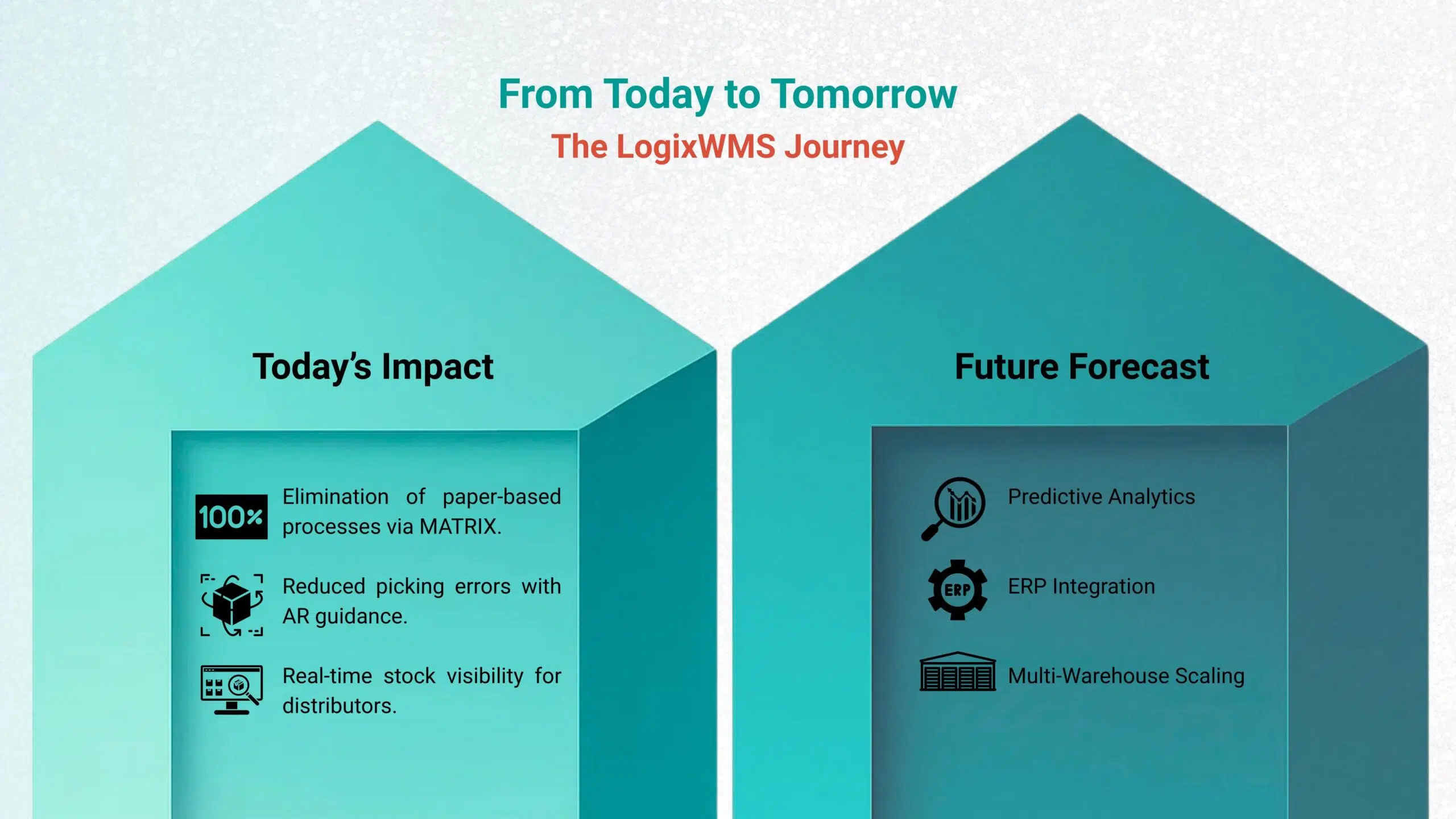
  • Inventory Accuracy: Increased from 75% to 98%, significantly reducing discrepancies and stock reconciliation issues.
  • Operational Efficiency: Receiving times dropped by 25%, while order picking throughput increased by 30%.
  • Cost Reduction: Overall operational costs fell by 18%, guided by labor optimization, error reduction, and space utilization.
  • Fulfillment Rates: Order fulfillment for Empresas Polar improved to 99%, with reduced lead times and improved delivery accuracy.
  • Visibility and Reporting: Real-time dashboards and customizable reports authorized proactive inventory and demand planning.
  • Employee Engagement: Staff quickly adopted the MATRIX Mobile app and AR tools, reporting reduced strain, fewer errors, and higher job satisfaction.

Key Success Factors

The project’s success was shaped by several critical factors:

  1. Collaborative Partnership: Strong cooperation between Copacker San Diego, LogixGrid, and AA Consulting ensured alignment with strategic goals and Empresas Polar’s requirements.
  2. Training and Change Management: AA Consulting’s training programs enabled smooth adoption of new workflows, minimizing resistance to change.
  3. Scalability of LogixWMS: The system easily scaled to handle growing P&G volumes, future-proofing Copacker San Diego’s operations.
  4. Innovative Technology Integration: The MATRIX Mobile app and AR features improved efficiency and accuracy beyond traditional WMS capabilities.

Future Outlook

Building on this success, Copacker San Diego plans to further expand its use of LogixWMS by:

    • Integrating more deeply with Empresas Polar’s ERP systems.
    • Using advanced analytics for predictive demand and inventory insights.
    • Extending LogixWMS to additional warehouses in its network.

With LogixGrid and AA Consulting as strategic partners, Copacker San Diego is positioned to strengthen its role as a logistics leader in Venezuela, ensuring reliable, efficient support for Empresas Polar’s distribution of P&G operations.

Beyond Today: What’s Next

The partnership between Copacker San Diego, LogixGrid, and AA Consulting altered warehousing operations from manual, error-prone processes into a simplified, technology-driven system. LogixWMS delivered measurable gains in efficiency, accuracy and customer satisfaction, enabling Copacker San Diego to match the rigorous demands of its principal distributor and support the distribution of P&G products across Venezuela.

By aligning technology with operational realities, this case highlights how modern WMS solutions can redefine warehouse management for fast-moving consumer goods in challenging market environments.

AI-Powered Communication

From Ports to People: Why AI-Powered Communication Is the Next Logistics Frontier

In The Terminal, Tom Hanks’s character is trapped in an airport for months, not because of a single failure but because a chain of miscommunications, bureaucracy, and fragmented systems leaves him stranded. The film, while entertaining, exposes a deeper truth: when information doesn’t flow seamlessly, even well-intentioned systems collapse under their own weight.

This is the reality logistics face today. The Gulf Cooperation Council GCC’s logistics sector is on the cusp of unprecedented growth, projected to reach US$81.3 billion in 2025 and nearly US$110 billion by 2030, figures aligned with market forecasts. But growth alone isn’t enough. Behind every shipment is a network of decisions, alerts, and trust; one missing update can disrupt an entire operation.

Henry Ford’s timeless observation still holds: “Coming together is a beginning, staying together is progress, and working together is success.”

In logistics, working together means assuring that information flows without friction, decisions are data-driven, and disruptions are anticipated, not just reacted to.

“When information doesn’t flow seamlessly, even well-intentioned systems collapse under their own weight.”

The Communication Problem in a $100+ Billion Market

Imagine the scale. Every container, every shipment, every driver, and every consignee is a node in a massive, dynamic network. Every handoff, every status check, and every exception alert is a potential point of failure. The human element, while indispensable for strategy and problem-solving, can’t keep pace with this velocity.

Here’s where the system often breaks:

  1. Vague or Late ETAs: A 2025 DHL shopper data report highlighted rising frustration among consumers, with 52% citing “long delivery times” as a pain point, up from 46% the previous year. Ambiguous or delayed updates compound this frustration, even if deliveries are technically on time.
  2. Port Dwell and Demurrage Fees: Poor communication about congestion can lead to costly, avoidable penalties. According to Container xChange’s 2023 report, the average two-week demurrage and detention fee is around US$1,219 per container. Without timely information, teams can’t act proactively to minimize these charges.
  3. Channel Mismatch: The GCC is a digital-first region, with near-universal social and messaging penetration, 100% active social IDs in the UAE, and 99.6% in Saudi Arabia. WhatsApp has become the lingua franca for communication, from drivers to BCOs. Updates buried in emails or portals risk invisibility.
  4. Manual Handoffs During Disruptions: When a critical event occurs at 2 a.m., a human drafting a notice at 9 a.m. introduces unnecessary delay. This slow response can cascade, compounding disruption and impacting downstream operations.

“In a market exceeding US$100 billion, communication efficiency determines profitability.”

Historically, trade and communication have always been intertwined. In the 19th century, telegraph networks revolutionized shipping by giving port operators real-time access to vessel movements. Today, AI is the modern telegraph, but infinitely faster, smarter and predictive.

The AI Solution: Structured, Proactive and Personalized Communication

Artificial intelligence isn’t about replacing humans; it’s about enabling them to focus on high-value tasks, while AI handles repetitive, time-consuming communication. Here’s how AI is reshaping logistics in the GCC:

  • Automated Real-Time Updates: AI-powered platforms can ingest data from IoT sensors, EDI systems and port terminals, triggering instant notifications. When a container is offloaded, the consignee is alerted immediately. If a truck hits traffic, AI recalculates the ETA and sends an update, mitigating frustration before it escalates.
  • Multichannel Orchestration: Different stakeholders prefer different channels. AI routes messages intelligently: drivers receive bilingual WhatsApp alerts with live maps, consignees get SMS notifications, and operations managers receive email summaries of exceptions. The right message reaches the right person at the right time.
  • Predictive Analytics for Proactive Alerts: Instead of reacting, AI predicts. By analyzing historical patterns and real-time conditions, AI identifies potential delays before they occur. Rather than “Sorry, your shipment is late,” stakeholders receive: “We anticipate a delay due to traffic; here’s our mitigation plan.” This transforms perception and builds trust.
  • Bilingual and Smart Templates: Clear, structured and bilingual communication is critical in the multicultural GCC. AI ensures updates consistently include essential data; Bill of Lading numbers, container IDs, timestamps, reducing human error and eliminating ambiguity.

“Success depends on moving information faster, clearer, and smarter than anyone else.”

The push for AI-driven communication is not just operational; it’s strategic. Saudi Arabia’s National Transport & Logistics Strategy, (Vision 2030) explicitly aims to position the Kingdom as a global logistics hub. As physical corridors accelerate, digital corridors, the unseen highways of data and communication, must move faster still.

GCC Logistics: History Vs Hypergrowth

The GCC has long been a crossroads of trade. From the pearling ports of the 19th century to today’s container megahubs, the region’s geography has always been a magnet for commerce. Yet, volume alone is no longer the differentiator. In a market exceeding US$100 billion, communication efficiency determines profitability.

Consider this: in 2010, many GCC ports still relied heavily on faxed documents and manual phone calls for coordination. Fast forward to 2025, and AI is now capable of managing thousands of real-time updates per hour across multiple channels, effortlessly integrating with multimodal networks. The evolution is striking, not just in speed, but in intelligence.

“AI is the modern telegraph; faster, smarter, and predictive.”

Is Your Logistics Communication Built for the Future?

The pace of change is relentless. Supply chains that once measured efficiency in days now measure it in minutes. Companies that cling to reactive, manual processes risk falling behind, while those that take up AI-driven, proactive communication gain a decisive edge.

Here’s the hard truth: in GCC logistics, it’s not enough to move containers quickly. Success depends on moving information faster, clearer and smarter than anyone else. AI provides that capability, automated, predictive, multilingual and channel-optimized.

The result? Reduced demurrage fees, happier consignees, smoother operations and a tangible competitive advantage.

“In logistics, working together means ensuring that information flows without friction, decisions are data-driven, and disruptions are anticipated, not just reacted to.”

Real-Time Logistics Starts Here: Take the Quiz

Answer these quick questions to see how prepared your operations are for the next generation of communication powered by AI.

1. How often are your shipment updates delayed or unclear?

  1. Rarely – we have structured communication
  2. Occasionally – depending on the channel or time of day
  3. Frequently – we react after issues arise

2. Which channels do you use to communicate operational updates?

  1. WhatsApp, SMS, email, integrated platforms
  2. Primarily email or phone calls
  3. Manual calls, paperwork, spreadsheets

3. Do you proactively inform stakeholders of potential delays?

  1. Yes, before they occur, with alternate plans
  2. Sometimes, when issues escalate
  3. No, communication happens too late to prevent issues

4. How often do communication breakdowns cause extra costs (e.g., demurrage, lost customers)?

  1. Rarely
  2. Occasionally
  3. Frequently

5. Do you have structured templates that include essential details (container ID, BL number, timestamps)?

  1. Yes, standardized across teams and languages
  2. Partially, depending on staff availability
  3. No, we rely on manual drafting every time

Scoring Guidelines:

Mostly A’s: You’re ahead of the curve. Your communication is structured and aligned with best practices. AI can help you scale and predict issues before they arise.

Mostly B’s: You’re reactive more than proactive. Your communication works, but it’s vulnerable to delays and inconsistencies. AI-powered automation can make you faster, clearer, and more resilient.

Mostly C’s: Your team is at risk. Manual processes and fragmented communication are costing you time, money, and trust. It’s time to adapt structured, data-driven communication with AI at the core.

Wherever you are in your journey, AI can help you move faster, smarter, and with confidence. Share your top exception types and channels and let’s build communication workflows that reduce delays, avoid unnecessary costs, and keep your operations running smoothly.

Taking the Next Step

The GCC’s logistics landscape is evolving at lightning speed. To excel, businesses must shift from reactive processes to structured, proactive, and AI-driven communication.

Ready to see how AI can transform your logistics communication for UAE to KSA lanes? Share your lane list, channels, and top five exception types. LogixGRID will map them to smart templates, wire WhatsApp/SMS/email updates, and baseline key metrics like WISMO, D&D days, and on-time communication percentage. The future of logistics is not just about moving goods, it’s about moving information with precision.

Ready to Transform?

It s simple: upgrade to LogixPlatform today. Move your logistics billing from manual, siloed, error-prone mess to automated, accurate, HASiL-compliant
workflows across your entire operation.

Let us help you transform your invoicing, so your operations run smoother, your cash flows faster and your compliance is airtight.

Talk to Logistics Experts

FAQ’s

AI ensures real-time, structured, and proactive updates across multiple channels, reducing delays, demurrage fees, and miscommunication. It allows operations teams to focus on high-value problem-solving instead of repetitive messaging.

AI can intelligently route updates to the right person, in their preferred channel and language, ensuring that drivers, consignees, and managers receive clear, timely, and relevant information.

Yes. By analyzing IoT sensor data, port congestion, and traffic patterns, AI can forecast disruptions and alert stakeholders with mitigation options before issues escalate.

No. AI complements human expertise by automating repetitive updates and ensuring accuracy, while people handle strategy, negotiation, and decision-making.

With GCC logistics projected to surpass US$100 billion, efficiency depends on speed and clarity of communication. High smartphone and social messaging penetration in the region makes AI-driven multichannel communication essential for customer trust and profitability.

E-invoice Mandate

Logistics & Warehousing: How to Adapt Your Invoicing for the UAE e-Invoicing Mandate

As a logistics, warehousing, or freight forwarding professional in the UAE, you know that efficiency and precision are the cornerstones of your business. The upcoming e-invoicing mandate from July 2026 isn’t just a new regulation; it’s a strategic shift that will fundamentally change how you handle your finances and operations. This is your guide to understanding the mandate, preparing your business for a smooth transition, and leveraging it to gain a competitive edge.

What is e-Invoicing and Why It’s a Game-Changer for Logistics

e-Invoicing is the real-time, automated exchange of structured invoice data between your system and your customer’s system. Unlike sending a simple PDF via email, this system uses machine-readable formats like XML, which allows for instant validation and processing.

For the logistics sector, which operates on high-volume, multi-party transactions, the benefits are immense:

  • Faster Payments: Automation eliminates manual data entry and errors, accelerating the entire payment cycle.
  • Reduced Costs: Say goodbye to the time and money spent on printing, mailing, and manually processing paper documents.
  • Enhanced Compliance: The system is designed to prevent VAT fraud and ensure every transaction is traceable and compliant with
    UAE Federal Tax Authority (FTA) regulations.
  • Improved Cash Flow: Faster payments directly improve your cash flow, allowing you to reinvest in your business and manage your working capital more effectively.

The UAE e-Invoicing Mandate: The Key Details

The UAE is adopting a decentralized Continuous Transaction Control and Exchange (DCTCE) model based on the Peppol network. This is a “5-corner” model where invoices are exchanged between businesses via certified third-party service providers.

  • Mandatory From July 2026: All businesses engaged in B2B and B2G transactions must comply. Read KPMG’s mandate update.
  • No More Paper or PDFs: Unstructured invoices like paper or emailed PDFs will not be considered valid for VAT purposes.
  • Structured Data: Invoices must follow the PINT-UAE standard, a localized version of Peppol International Invoice.
  • Accredited Service Providers (ASPs): Businesses must work with an FTA-accredited service provider who will validate, transmit, and report the invoice data.

Key Components of a Compliant e-Invoice:

  • A Unique Invoice Identifier (IRN)
  • A QR Code for instant verification
  • Digital Signatures to confirm authenticity
  • All mandatory fields as defined by the PINT-UAE data dictionary.

Your Checklist for e-Invoicing Readiness: A Practical Guide

  1. Assess Your Current Systems
    • Review Your ERP/TMS: Ensure your system can generate and receive invoices in structured XML format.
    • Identify Data Gaps: Compare existing data fields with the mandatory PINT-UAE requirements.
    • Audit Your Processes: Map out your current invoicing workflow and identify manual touchpoints.
  2. Choose the Right Technology Partner
    • Select an Accredited Service Provider (ASP): A must-have for compliance. List of accredited providers.
    • Look for a Unified Platform: Prefer solutions that combine operations and finance in one system to minimize errors.
  3. Cleanse and Standardize Your Data
    • Master Data is Key: Clean up your TRN records to avoid rejections.
    • Train Your Teams: Educate finance, sales, and operations staff on accuracy and compliance.
  4. Plan for the Go-Live
    • Run Pilot Tests: Collaborate with your ASP to test before full rollout.
    • Change Management Plan: Communicate clearly with stakeholders to ensure smooth adoption. Practical guidance here.

e-Invoicing for Logistics: Beyond the Invoice

The mandate also covers Credit Notes, Debit Notes, and other financial documents. For logistics businesses, this includes debit notes for demurrage charges or credit notes for canceled shipments. These too must follow the same structured format and pass through accredited providers.

Manual handling will no longer suffice—your systems must support automatic generation and submission of all financial adjustments,
ensuring a complete and auditable digital trail.

LogixPlatform: A Single System for Operations and Finance

The complexity of the e-invoicing mandate highlights the need for a fully integrated solution. A centralized platform that unifies your entire business—from the warehouse floor to accounts receivable—is no longer a luxury; it’s a necessity.

  • Integrated e-Invoicing: Supports automatic generation and submission of invoices, debit notes, and credit notes via accredited providers.
  • Unified Operations & Finance: Merge your TMS, WMS, and accounting functions into one platform for real-time visibility.
  • Automated Workflows: From booking shipments to reconciling payments, automation reduces errors and saves time.

Moving to a unified platform like LogixPlatform is not just about compliance—it’s about future-proofing your business,
driving efficiency, and positioning your company for success in the digital era.

Ready to Transform?

It s simple: upgrade to LogixPlatform today. Move your logistics billing from manual, siloed, error-prone mess to automated, accurate, HASiL-compliant
workflows across your entire operation.

Let us help you transform your invoicing, so your operations run smoother, your cash flows faster and your compliance is airtight.

Talk to Logistics Experts

FAQ’s

An e-invoice is not a PDF. It is a structured electronic document containing invoice data in a machine-readable format (like XML). While a PDF is a digital image of a paper invoice, an e-invoice is designed to be sent, received, and processed automatically by computer systems. This eliminates manual data entry, reduces errors, and allows for real-time validation and reporting. For logistics companies, this means no more manual data entry from scanned invoices.

From July 2026, all B2B and B2G invoices in the UAE must be issued and transmitted electronically through an Accredited Service Provider (ASP). The system uses a decentralized model based on the Peppol network. This means your current paper or PDF-based invoicing will not be compliant for tax purposes. You’ll need to upgrade your ERP or accounting system to integrate with an ASP to ensure your invoices are validated and sent correctly.

The e-invoicing mandate applies to all key financial documents, including credit notes and debit notes. These must also be issued and transmitted in the same structured, electronic format. For the logistics and warehousing industry, this is crucial for managing common adjustments like demurrage charges, detention fees, or credits for canceled shipments. Your system must be capable of generating these documents electronically to maintain a complete and compliant audit trail.

A unified platform is critical because it integrates your operations and finance into a single system. Instead of using separate software for freight forwarding, warehousing, and accounting, a unified platform ensures that operational events (like a completed shipment) automatically trigger the generation and submission of a compliant e-invoice. This eliminates data silos, reduces manual effort, and significantly lowers the risk of non-compliance and penalties.

  1. Assess your current systems to see if they can handle structured data.
  2. Clean your master data, ensuring you have accurate Tax Registration Numbers (TRNs) for all your clients.
  3. Find an Accredited Service Provider (ASP) that is certified by the FTA and can connect you to the e-invoicing network.
  4. Implement a unified system that can manage both your operations and the new e-invoicing requirements seamlessly to avoid operational disruptions.

Malaysia E-invoice Mandate

Malaysia’s e-Invoice Mandate: How LogixPlatform Simplifies Compliance for Logistics

In the 13th century, the Mongol Empire created one of the largest and most efficient supply networks the world had ever seen, stretching from Europe to
Asia. Today’s logistics systems might run on software instead of horseback, but the goal is the same: moving goods swiftly, reliably, and across vast
distances.

A Turning Point for Logistics Billing in Malaysia

When Malaysia decided to begin its phased rollout of mandatory e-Invoicing, logistics companies across the nation faced a fundamental challenge:
modernize or risk falling behind. The logistics industry, known for its complexity and high transactional volume, couldn’t afford fragmented systems or manual
billing workflows. And that’s precisely where integrating logistics automation with ideal e-invoicing emerges not just as a “nice-to-have,” but as a strategic
necessity.
Imagine handling freight forwarding, courier services, warehousing charges, duties, tax invoices and even credit/debit notes, all in one place. Now, couple
that with e-invoice submission directly to HASiL (now integrating with Hasil+1EY systems) and suddenly, you’re not just compliant. You’re efficient, agile and
future-ready.

What Is an e-Invoice and Why It Matters in Malaysia

By now, most of us know what an e-invoice is: simply a digital version of a standard paper invoice, complete with all the necessary information such as
supplier and buyer details, item descriptions, quantities, taxes, credit/debit notes, cancellations, and more. But the real strength lies in its submission:
electronically validated by HASiL, as a foundational part of Malaysia’s tax compliance infrastructure.
The timeline HASiL has laid out is unmistakably urgentÆ

  • August 1, 2024 – Companies with turnover above RM 100 million
  • January 1, 2025 – Turnover RM 25-100 million
  • July 1, 2025 – Turnover RM 5-25 million
  • January 1, 2026 – Turnover RM 1-5 million
  • July 1, 2026 – Companies ≤ RM 1 million

These staggering milestones reflect the government’s phased approach, giving businesses time, but also signalling: “Adapt now.” Delay or ignore, and you’re
not just inefficient, you’re non-compliant.

Key Benefits of e-Invoicing Practical, Strategic, Transformational

  • 1. Improved Efficiency & Reduced Manual Effort
    Paper invoices, manual entries and human errors have long been familiar pain points. Now, an automated workflow lets you generate, submit and validate in
    near real-time. Gone are the days of stacks of paperwork and reconciliation nightmares.
  • 2. Improved Tax Compliance & Transparency
    Real-time submission to HASiL (through Hasil+1EY compliance) not only verifies the invoice data immediately; it also delivers a robust audit trail. You’re not
    just avoiding penalties, you’re building trust through transparency.
  • 3. Faster Payments & Better Cash Flow
    Digital submission accelerates approvals and processing. Less friction means sooner payment, quicker liquidity, especially important in logistics, where
    operational cash flow can truly make or break performance.
  • 4. Lower Costs & Resource Savings
    Think about it: no paper, no printing, no postage, minimal manual labor. These are not small savings, they’re efficiency dividends that add up significantly,
    freeing your teams to focus on value-adding tasks instead of admin.
  • 5. Greater Accuracy & Fewer Disputes
    Automated validation dramatically reduces missing or incorrect data. Fewer disputes, faster reconciliation, and a smoother customer/supplier experience are especially important in high-volume operations.
  • 6. Ideal Integration Potential
    E Invoicing that plugs into your existing ERP or billing systems means no siloed operations. Everything flows. No need to patch multiple systems together
    with unified data handling; your finance, operations, and compliance teams all stay in sync.
  • 7. Environmental Alignment & Digital Transformation
    Less paper, more sustainability. Plus, this push towards e-Invoicing reflects Malaysia s broader digital transformation goals, aligning your operations with
    national innovation agendas.

Why Logistics, Freight Forwarding & Warehousing Firms Must Act, Right Now

If you’re managing

  • Logistics invoice
  • Warehousing charge
  • Duties & tax invoice
  • Credit Notes, Debit Notes, Invoice Cancellations

and those are only a part of your workflow, you know how messy billing can become. Now imagine each type needing to be separately logged,
formatted and submitted via different channels or spreadsheets.
Without an integrated system, you’re dealing with incompatible silos, duplication, errors and wasted resources. Throw in phased e-Invoice mandates,
and suddenly you re scrambling. Miss the deadline, face penalties. Don’t integrate, spiral into inefficiency or worse non-compliance.

e-invoice-through-time

LogixPlatform (LogixGRID): Your All-in-One Logistics & e-Invoice Solution

Enter LogixPlatform, the logistical Swiss Army knife that also talks tax compliance, fluentlyé

  • Unified Operations & Compliance
  • Manage courier, 3PL, freight forwarding, warehousing, duties and taxes, all invoicing, from creation to submission, under one roof.
  • Automated Invoice Type
  • Whether it’s an invoice, credit note, debit note, or cancellation, LogixPlatform automates generation, applies the necessary metadata, and submits directly, compliant with HASiL requirements.

This isn’t just about ticking boxes. The outcomes include

  • Save hours daily on invoicing and reconciliation
  • Ensure 100% compliance, sidestep fine
  • Enable faster billing cycles, improve cash flow
  • End operational friction, eliminate platform siloes
  • Gain strategic insights from structured data across operations
Pain point Logixplatform Solution
Managing multiple invoice types Unified support: Invoices, Credit/Debit Notes, Cancellations
Manual processes & human errors Automated generation, validation, submission via HASiL
Compliance risk Built-in compliance aligned with phased e-Invoice mandates
Administrative and storage overload Digital, centralized storage and issuance
Poor reconciliation & finance gaps Integrated data flows for smooth reconciliation, faster payments
Fragmented systems (logistics vs billing) Single platform unifying logistics operations & invoicing

From Problem to Solution

Imagine this: You’re a logistics manager overseeing freight forwarding, courier deliveries and warehousing. Your finance team is chasing invoices across
multiple platforms, some paper, others emailed PDFs, still others manually typed into spreadsheets. The month-end reconciliation marathon is draining. You
move from system to system, team to team, chasing signatures, approvals and cross-checks.

Then Malaysia announces its e-Invoice mandate. Suddenly, your paper-based, siloed system is not just inefficient, it’s obsolete. You don’t just need to
upgrade, you need transformation.
That’s where LogixPlatform enters. It’s not a bolt-on patch or a “maybe-we’ll-add-that-tomorrow” feature. It’s designed for logistics, from day one, built to
automate all logistical invoicing flows, with e-Invoice embedded, HASiL-ready.
You can see the difference

  • Your billing that once took hours now takes moments.
  • Reconciliation isn t a chase, it s an automated match.
  • Compliance is baked in, not an afterthought.
  • Your finance team can shift from firefighting to forecasting.
  • Green credentials? You re sending far fewer papers out, aligning with environmental goals too.

Ready to Transform?

It’s simple: upgrade to LogixPlatform today. Move your logistics billing from manual, siloed, error-prone mess to automated, accurate, HASiL-compliant workflows across your entire operation.
Let us help you transform your invoicing, so your operations run smoother, your cash flows faster and your compliance is airtight.

Try it now

Logistics & Warehousing Businesses Need a Specialized CRM

Why Logistics & Warehousing Businesses Need a Specialized CRM – And Why Generic Tools Just Don’t Cut It

Using a generic CRM is like Captain Jack Sparrow navigating the seas with a leaky compass and a pub menu instead of a map. Sure, you might get somewhere, eventually, but not without losing half your cargo and your sanity.

Imagine trying to pack a container ship using a butter knife. That’s what it feels like when logistics teams try to manage complex operations using generic CRM tools like HubSpot, monday.com or Zoho CRM. Sure, these tools are great for tracking leads, sending emails and updating contact details, but running a freight-forwarding operation or a 500-pallet warehouse on them? That’s a different universe.

In an industry where pricing depends on zones, weights and whether a package has air rights (we’re only half kidding), relying on a generic CRM is like trying to play chess on a Ludo board.

Enter LogixCRM, a CRM designed specifically for logistics and warehousing businesses. Not “flexible enough for logistics.” Not “CRM for all industries.” Nope. Just one goal: making your freight, warehousing, and sales pipelines move smoother than a pallet on a conveyor belt.

The Problem With “One-Size-Fits-All” CRMs (Spoiler: It Doesn’t Fit You)

Workflows That Aren’t Workable

Generic CRMs assume your team handles leads, deals and maybe a proposal or two. Logistics businesses? You handle RFQs, freight quotes, 4 types of approvals, document chains, transport schedules and sometimes, carrier availability based on local weather. That’s not a pipeline, that’s a maze.

Pipelines That Miss the Point

When your CRM thinks you’re selling software but you’re actually moving 10,000 kg of frozen produce cross-country, things get awkward. There’s no segmentation by warehousing, transportation or freight forwarding. Every lead looks the same, whether it’s 10 boxes or 10 containers.

You know what that leads to? Wasted time. Wasted leads. And CRM reports that make your ops manager squint like he’s reading hieroglyphs.

Rate Matrix? What Rate Matrix?

Logistics pricing is never just “price per item.” It’s a Rubik’s cube of weight, volume, distance, service type, fuel charges and sometimes, sheer luck. Generic CRMs don’t know what to do with that complexity.

So you end up toggling between your CRM and a 24-tab spreadsheet that even your CFO fears.

The Attachment Apocalypse

Let’s talk about documents. Quotations. Contracts. PODs. Rate cards. Pickup slips. Shipment instructions.

Where do they go in a generic CRM? Usually in attachments. Which means someone, somewhere, is digging through a trail of PDFs at 7:49 PM trying to figure out which version is final-final.

That’s not document management. That’s the document’s version of Russian roulette.

Why You Need a CRM That Speaks Fluent Logistics

LogixCRM wasn’t built for “businesses.” It was built for your business. The trucks, the forklifts, the storage racks, the RFQs, the angry 9 AM customer calls, all of it.

Real Opportunity Management, Real Fast

Unlike generic CRMs, LogixCRM lets you track leads and opportunities by business category: transportation, freight forwarding, warehousing, 3PL; the works.
Each pipeline reflects real-world logistics cycles. Follow-ups, quote generations, confirmations; all handled in a flow that makes sense.

Rate Matrix Magic

Create and manage dynamic rate cards with multiple pricing templates. Need weight-based rates for air freight and volume-based rates for warehouse storage? Done.
Better yet, the system automatically fetches the right rate matrix during quotation generation. Avoid copy-paste errors. The accuracy era begins.

RFQs That Don’t Make You Cry

LogixCRM comes with a built-in RFQ engine. Create and manage requests, track vendor submissions, compare them on one screen and select the winner. Begone, Excel race. Begone, inbox mess.

Documents That Stay Where They Belong

Every document; quote, contract, POD is directly linked to the opportunity or client record. No broken folders. No misnamed files. No uploading the same thing five times.
Everything lives where it’s supposed to and your audit trail finally looks like something you’d want to show an auditor.

Sales + Ops Automation = A Life Upgrade

Automate quote reminders, follow-ups, customer communications and even internal approvals. You’re not here to babysit a pipeline, you’re here to win business. LogixCRM frees up your team to do just that.

And There’s More: Unique Features You’ll Only Get with LogixCRM

  • 360° CRM View: Get a unified view of leads, customers, contracts, rates and documents, all in one dashboard. No more jumping between systems.
  • Carrier & Agent Management: Specialized modules let you manage carriers and agents with precision, a must-have for freight forwarding and logistics operations.
  • Built-in Quotation Builder: Create, edit and send smart, accurate quotations directly from the platform, integrated seamlessly with your rate cards and templates.
  • Audit-Ready History Tracking: Every change is tracked for compliance, making audits less of a headache and ensuring you’re always ready for the big review.
  • Integrations That Matter: LogixCRM supports TMS, WMS, accounting tools like Quickbook, XERO, SAGE and customer portals, no siloed systems anymore.
Feature Generic CRM (e.g., HubSpot/Zoho) LogixCRM
Lead & Contact Management Yes Yes
Rate & Quotation Builder Not specific to logistics Built-in with zone/weight-based rates
Shipment Lifecycle Tracking Requires integrations Fully integrated
WMS/Inventory Integration Not native Designed for warehousing workflows
Multi-location/Zone Pricing Not supported Native support

Numbers Talk. Here’s What You Get.

Faster Conversions

Sales teams spend less time assembling quotes and chasing updates and more time closing. Templates and automation will lead to deals that don’t die waiting.

True Pipeline Visibility

With real-time dashboards by business type, managers see where things stand, not just what stage they’re in. Forecasting finally becomes more science, less a guessing game.

Hours Saved, Headaches Avoided

Rate automation, doc integration and built-in quoting shave hours off every deal. Your team gets back 100s of hours a month and likely, a few hair strands too.

Happier Customers

Instant responses. Accurate quotes. Quicker updates. Your clients feel seen and supported which is basically the secret to loyalty in logistics.

But Can’t I Just Customize My Current CRM?

Sure. And you can also try fitting a square peg into a shipping container.

Customizing a generic CRM to support logistics workflows is expensive, time-consuming and almost always patchy. It’s like duct-taping your operations together.

With LogixCRM, you get a system that’s already aligned with your business logic; no customization acrobatics needed. You don’t adapt to the software. It adapts to you.

Bottom Line: Stop Making Logistics Work Harder Than It Has To

Let’s face it, generic CRMs weren’t built for rate matrices, RFQs, or POD nightmares. But LogixCRM was.

The choice isn’t just between two platforms. It’s between:

  • Fighting your CRM daily
  • Or letting your CRM fight for you

So if your logistics or warehousing business still runs on a CRM designed for real estate or SaaS, maybe it’s time to bring in one that actually understands zone-based pricing and pallet tracking.

Maybe it’s time for a U-turn.

Try Before You Switch – 15 Days, No Pressure

Changing systems feels risky. What if it doesn’t fit your workflow? What if your team doesn’t adopt it? That’s exactly why LogixFlow offers 15 days of free access to LogixCRM.

Use it on your actual logistics operations. Quote a shipment and track an order. See how well it integrates with your warehouse or TMS. You’ll know in two weeks whether it solves your coordination chaos.

Try it now

SRMT Case Study

Transforming Logistics Efficiency: The SRMT Story

SRMT was founded in 1944 and has since grown to become one of India’s leading providers of logistics and supply chain solutions. They specialise in integrated consolidation, distribution and transportation services for a wide range of industries like automotive, pharmaceuticals, FMCG and manufacturing.

Key Capabilities
  • SRMT’s end-to-end services help manage inventory, reduce turnaround times and improve delivery accuracy”
  • SRMT manages a wide range of shipment types and adapts to various customer requirements”
  • They use technology to increase client visibility and efficiency”
  • SRMT operates across around 400 locations spread over the 5 states of Andhra Pradesh, Telangana, Tamilnadu, Karnataka and Puducherry, which include the Agents and the Transhipment Centers, supported by well established Infrastructure, Fleet both Own & Hired, skilled workforce and IT systems that enable real-time tracking, efficient inventory management and smooth financial processing.

    Challenges and Objectives

    SRMT operates within the fast-paced and complex transportation and logistics industry, where operational efficiency and financial accuracy are important for maintaining competitive advantage.

    1. Rate Matrix Computation:

    Assuring precise and adaptive rate calculations is important for maintaining competitive pricing without sacrificing profitability.

    2. Transit Expense Management:

    Controlling variable and fixed transit related costs such as fuel, tolls and driver allowances.

    3. Billing Efficiency:

    The company requires a simplified billing workflow capable of generating accurate, timely invoices to reduce payment delays and build customer trust.

    4. Agent Commission Management:

    Accurate, transparent tracking of agent commissions and channel partners.

    5. Improved Customer Visibility:

    SRMT aims to provide real-time shipment tracking and communication capabilities.

    Addressing these challenges LogixGrid ERP supports SRMT’s goal of using technology-driven solutions to improve agility, financial control and customer service.

    LogixGRID’s Solution

    A. Complex Rate Matrix in Shipment Amount

    Generally in the Logistics Industry the Freight Computation is based on 2 parameters: the rate and the weight, the rate varying from sector to sector. In SRMT we had 3 parameters including the distance.

    Distance Matrix Submodule for Distance Computation : Automatically computes distance between origin and destination OUs (Operating Units) during shipment creation for real-time freight accuracy.

    Customer Contract and Master Contract for Freight Calculation : Supports minimum distance and amount settings in both customer-specific and master contracts. During shipment entry, charges are auto-validated against agreements.

    Key Benefits:
  • Eliminates manual errors
  • Pricing aligns with contracts
  • Speds up processing
  • Scales with volume
  • Impact :

    Simplifies pricing, reduces errors and enforces contract-compliant workflows.

    B. Demurrage Rate Calculation

    Demurrage Contract

    Allows configurable demurrage rates based on warehouse storage duration, supporting both customer-specific and master terms.

    Automated Demurrage Charge Computation at Delivery

    During Delivery Run Sheet generation, waybills are auto-verified for demurrage eligibility, triggering alerts.

    Demurrage Charge Receipt Generation

    Demurrage charges are auto-calculated and collected before delivery.

    Key Benefits:
  • Consistent charges
  • Prevents revenue leakage
  • Ensures contract alignment
  • Improves cash flow
  • Impact :

    Accurate, timely charges improve financial and operational speed.

    C. Agent Commission Calculation

    Pickup and Delivery Contract for Commission Structure

    Allows flexible commission structures based on weight or tariff percentage for both pickup and delivery phases.

    Automated Commission Calculation

    Commission is auto-computed for pickup and delivery using the relevant contract rate matrix.

    Integration with Shipment Booking

    Commission processing is embedded in booking workflows, ensuring simultaneous agent compensation.

    Key Benefits:
  • Automates complex calculations
  • Handles varied models
  • Reduces manual work
  • Enables transparent payouts
  • Impact :

    Improves accuracy and speed in agent payments.

    D. Discount Management in Shipment Booking

    Discount Contract Submodule for Discount Management

    Combines customer/master contracts to control tariff-level discount eligibility.

    Discount Requisition Process and Approval Workflow

    Other than Contract discounts, discounts to walk-in customers is facilitated through the Discount Requisition module. Discount requests are routed to approvers and tracked in- system.

    Automated Discount Application

    Approved discounts are applied automatically; rejections trigger alerts to prevent misuse.

    Key Benefits:
  • Simplified approvals
  • Policy enforcement
  • Minimizes manual errors
  • Full transparency
  • Impact :

    Enables controlled and consistent discounting aligned with business rules.

    E. Transit Expense Management

    Trip Sheet Expense Computation for Fuel and Driver Allowances

    Fuel costs are calculated using vehicle-specific mileage; driver allowances are based on travel distance and days.

    Vehicle Route Submodule for Route and Fuel Expense Management

    Tracks route and fuel data for cost optimization.

    Vehicle Movement Submodule for Tracking Vehicle Activity

    Monitors delays and inefficiencies via arrival/unloading timestamps.

    Key Benefits:
  • Automates expense tracking
  • Increases cost efficiency
  • Improves visibility
  • Enables operational control
  • Impact :

    Reduces costs and enables smarter logistics decisions.

    F. Vehicle Expenses and Spare Parts Management

    Vehicle Expenses Management

    Tracks vehicle costs and issues alerts for document expiry.

    Spare Parts Procurement via Purchase Orders

    Supports optimal inventory through timely spare procurement.

    Spare Parts Inbound and Inventory Management

    Tracks receipts, inventory and inter-OU transfers.

    Key Benefits:
  • Complete cost visibility
  • Compliance management
  • Inventory control
  • Operational savings
  • Impact :

    Improves fleet efficiency through proactive cost and stock management.

    G. Shipment Invoicing

    Cash Shipment Booking and Money Receipt Creation

    Supports all shipment related charges in a unified receipt.

    Payment Collection and Posting to Accounts

    Ensures real time payment updates and account book synchronization.

    Invoicing for Regular Customers

    Enables multi-shipment invoicing and tracks invoice-level payments.

    Key Benefits:
  • Simplifies financial workflows
  • Real-time visibility
  • Improves cash flow
  • Handles complex charges
  • Impact :

    Enhances financial discipline and scalability in billing operations.

    H. DEPS (Demurrage, Extra, Shortage and Pilferage)

    DEPS Data Entry Against Waybill

    Captures demurrage, extra, shortage and pilferage data for each waybill.

    Print Functionality for Record Maintenance

    Print-ready DEPS data supports audits and internal reviews.

    Closing DEPS Once Cleared

    Issues are marked resolved after investigation, maintaining system hygiene.

    Key Benefits:
  • Clear discrepancy tracking
  • Better record keeping
  • Quick resolution
  • Stronger audits
  • Impact :

    Reduces revenue loss and improves issue resolution timelines.

    I. Customer Portal for Shipment Tracking and Reporting

    Customer Portal for Shipment Tracking

    Customers access real time shipment statuses and locations via a 24/7 portal.

    Business Reports and Insights

    Offers shipment metrics, billing summaries and customizable reports with export options.

    Key Benefits:
  • Real-time transparency
  • Customer empowerment
  • Fewer support queries
  • Better decision-making
  • Impact :

    Improves customer satisfaction and strengthens SRMT’s tech-forward image.

    J. Automated Email and SMS Services for Shipment Updates

    SMS Notification Integration for Shipment Updates

    SMS APIs send automated milestone alerts for dispatch, arrival and delivery.

    Automated Email Notifications for Shipment Updates

    Emails are triggered at each shipment stage with detailed info.

    Key Benefits:
  • Proactive communication
  • Reduced support load
  • Transparent updates
  • Custom alerts
  • Impact :

    Strengthens customer trust with consistent, automated updates.

    Module-wise Solution Overview

     
    Feature / Module Freight Charges Demurrage Commission Discounts Transit Expenses Invoicing
    Contract Type Used Customer & Master Customer & Master Pickup/Delivery Customer & Master Route Based Customer & Master
    Automation Enabled
    Real-Time Integration
    Approval Workflow Configurable
    Alerts & Notifications

    Implementation Process

    A structured and phased implementation approach was adopted to ensure smooth integration of LogixGRID within SRMT’s operations.

    1. Planning Phase : SRMT and LogixGRID collaborated through workshops to align project goals and integration
    points, ensuring a smooth transition.

    2. Customization and System Configuration : LogixGRID was customized to reflect SRMT’s pricing, workflows and
    regional compliance needs.

    3. Deployment Phase : Phased deployment included staff training, data migration and testing to minimize risk.

    4. Change Management : Change management involved training, documentation and feedback loops to drive user
    adoption.

    5. Challenges Encountered : Challenges like data issues and user adaptation were tackled through real-time
    support and testing.

    Metrics That Matter

    Quantified Impact Across Operations

    Area Freight Charges
    Client Onboarding ↓ 40% onboarding time (1–2 weeks vs. 4–6 weeks)
    Order Efficiency ↓ 30–50% processing time
    ↓ 25% picking/packing time
    ↑ 20% throughput
    ↓ 15% dispatch lead time
    Cost Savings ↓ 20–30% labor costs
    ↓ 15–25% overheads
    ↑ 10–15% profitability
    Accuracy & Visibility ↑ 98% inventory accuracy
    ↓ 85% stock discrepancies
    ↑ 99% order fulfillment accuracy
    ↑ 20% on-time delivery
    Scalability 3× order & client volume with no added manpower or complexity
    Client Satisfaction ↑ 15–20% CSAT
    ↑ 25% repeat business

    Operational Levers Behind the Metrics

    The above metrics are the result of targeted changes in process engineering and systems architecture. Key operational transformations include:

    Complex Rate Matrix Engine

    Enabled real-time shipment amount computation across varied geographies and rate structures. It auto calculates rates considering multiple variables like location, weight slabs, contract specific pricing and surcharge rules minimizing billing errors and manual intervention.

    Modular Onboarding System

    A dynamic setup template replaced one-size-fits-all onboarding. Configurable by region, SLA and service type reducing onboarding dependency on custom dev cycles

    Rules Based Allocation Logic

    Orders are now dynamically assigned based on warehouse load, inventory proximity and SLA priority. This has slashed manual allocation effort and balanced resource utilization across the network.

    Inventory Visibility with Auto Replenishment Signals

    Real-time stock tracking across nodes and automated replenishment alerts have cut stockouts and reduced excess holding. This directly impacts the 98% inventory accuracy and reduced lead times.

    Exception Handling Automation

    Manual escalations for delays, inventory mismatches or failed scans were replaced with trigger based alerts and SOP driven workflows. This significantly reduced firefighting time and improved SLA adherence.

    Scalability Through Configurable Modules

    System modules were built to scale independently whether onboarding a high volume B2B account or activating an additional warehouse node, operational stress remains flat.

    A Word From SRMT

    “Implementing the LogixGRID system has transformed our operational efficiency. Order processing times have been cut by nearly half, while inventory accuracy now consistently exceeds 98%. Real-time data tracking empowers our team to address customer queries immediately and the platform’s scalability supports our expanding client base without added strain. Automation has not only accelerated onboarding but also delivered measurable cost savings that improve our financial performance.”

    – Operations Manager, SRMT

    “The LogixGRID invoicing module has simplified our financial workflows remarkably. Automation of invoicing and payment processing minimizes manual mistakes and frees up our team’s time. Real-time payment tracking and automatic ledger updates have enhanced financial transparency and eased reconciliation efforts. We now manage cash flow more proactively, supported by consistently accurate financial data.”

    – Finance Manager, SRMT

    Let's Talk Logistics Innovation

    If you re ready to streamline operations, improve visibility, and unlock real-time logistics efficiency—just like SRMT did—let s start the conversation.